Honey Boo Boo Needs Some Real TLC, Not Abandonment

by JC Schildbach, LMHC, de-commissioned ASOTP

Not quite a month ago, The Learning Channel (TLC) announced plans to drop production of its ‘reality’ show, Here Comes Honey Boo Boo, as well as shelving an entire season that has been completed, but not aired. The reason? “Mama June” Shannon was photographed out and about with her former beau, convicted sex offender Mark McDaniel. Even worse, a few days after the original story broke, a photo surfaced showing June, Mark, and Alana “Honey Boo Boo” Thompson together.

McDaniel was convicted of “aggravated child molestation” for sexual contact with Anna Marie Cardwell, who is June’s daughter, and Alana’s half-sister. McDaniel served a ten-year sentence for the molestation, having been released from prison in March.

Now, I’m not a big fan of Here Comes Honey Boo Boo.   I’ve seen occasional clips on other shows, and watched most of one episode when I came across it while flipping channels. But in that episode, I saw that the family was accepting of Alana’s uncle, who is gay, without making a big deal about it. And, despite my unease at the general weirdness of the child pageant circuit, the family members seemed to enjoy each other’s company. And then the show concluded with Honey Boo Boo climbing up on a chair and sticking her butt in the air to fart loudly, which, strangely enough, served as the lead-in to a very somber, ‘feed the children’ infomercial.

At any rate, speaking of the weirdness of the child pageant circuit, having seen a few episodes of Toddlers in Tiaras, the TLC show that spawned Honey Boo Boo’s spinoff, I am disturbed by what can only be described as the sexualization of little girls on that show. The contestants are small children who are essentially treated identically to adult beauty pageant contestants—made to wear too much makeup, with piled-up hairdos, wearing a variety of—I guess you’d call them revealing, although that sounds weird when talking about children—dresses and bathing suits, while performing routines involving dance moves that I pray the girls don’t understand the origins/meaning of.

I’ve had offender clients specifically mention Toddlers in Tiaras as a kind of ‘gateway’ form of visual stimulation leading to seeking out even more exploitative material. And, while such ‘gateway’ comments are often spoken with the intent to limit the personal responsibility of those clients—the whole ‘society is sexualizing young girls, what am I to do?’ complaint—it is somewhat difficult to view the show without thinking, ‘Wow—pedophiles must really enjoy this.’

So, while I could start shaming Mama June for putting her daughter in the beauty pageant circuit, or for taking up with a man who molested one of her daughters; instead it seems a better course in all of this would be for TLC to invest some more effort and money in the show, and maybe take it in some completely different directions—maybe even directions that would involve some actual learning.

Broken portrait of an exploited family unit--Anna Marie, Mama June, Honey Boo Boo, and Mark McDaniel.

Broken portrait of an exploited family unit–Anna Marie, Mama June, Honey Boo Boo, and Mark McDaniel.

That is to say, it’s very odd to have a show built on the highjinks of a family that is portrayed as a bunch of unsophisticated rubes chasing a weird dream, and then to turn around and cancel the show when the matriarch of the family does something that shows she really doesn’t understand what’s at stake in a particular situation. According to Anna Marie’s own statements to the media, June minimized McDaniel’s behavior, telling Anna Marie that McDaniel wasn’t all that dangerous because Anna Marie was McDaniel’s only victim.

Such a statement is a big red flag that Mama June just might be buying a whole lot of lies from McDaniels—the kind of lies that offenders tell all too frequently. ‘It was just the one time;’ ‘I was drunk;’ ‘It was a mistake;’ ‘The victim did X first;’ ‘I paid the price/did my time;’ ‘I won’t ever do that again;’ etc, etc.

I don’t know what kind of treatment McDaniel may or may not have received in prison. But unless McDaniel has developed some understanding of his own behaviors, and unless Mama June has been educated on exactly what McDaniel did, how he did it, how he justified it to himself, what kinds of things Mama June needs to look out for in McDaniel’s behavior (preferably coming from McDaniel’s own confession); and unless she’s been given instruction in what McDaniel’s behavior means for the safety of her other children, and how to reduce risk (risk can never fully be eliminated), then it’s a little hypocritical of TLC executives to cut her off, claiming that it is in the best interest of the safety of the children involved.

And just for context, here’s the statement issued by the network at the time of the show’s cancellation: “TLC has cancelled the series HERE COMES HONEY BOO BOO and ended all activities around the series, effective immediately. Supporting the health and welfare of these remarkable children is our only priority. TLC is faithfully committed to the children’s ongoing comfort and well-being.”

Great, TLC, but where’s the support? I’ve seen many mothers of victims continue on in relationship with the men who molested those women’s children. And a supportive and appropriate relationship with an adult partner can actually reduce risk for re-offense. However, that risk isn’t (generally speaking) reduced when the offender is allowed back around likely victims, particularly without the partner being fully informed as to the nature of the offender’s behavior, and how to provide adequate support for the offender and for other family members. But maybe TLC executives are just looking at this as another example of the stereotypes they’re comfortable promoting–of poor, Southern folk accepting child molestation as a routine part of life.

It is potentially extremely damaging for victims of molestation, like Anna Marie, to see their mothers return to relationship with the offender, or to, in any way, be given the impression that they are being treated as secondary to the perpetrator of sexual violence. It definitely sends some disturbing messages about who is being given priority, and where the concern of the mother lies. It is possible to mitigate that damage, but only with some very involved, professionally-guided therapy.

I don’t want to over-simplify things here, but a major reason for women to continue on in relationship with offenders is economic. I don’t have any idea if McDaniel has any real way of providing for June’s family, but since TLC just cut off the family’s current main source of income, they are increasing Mama June’s likely reliance on someone who can provide support—and at a time when the person June is in relationship with is an offender who is very much putting Honey Boo Boo—that “remarkable child”—at risk.

So, again, why not take the show in a new direction? A learning direction? I don’t mean to advocate for making an offender a reality TV star, but TLC could at least build in scenes to Honey Boo Boo’s show, or maybe a spinoff, that follow McDaniel through treatment, and through all of the difficulties he now faces as a convicted offender trying to rebuild a life outside of prison, in conjunction with Mama June’s exposure to McDaniel’s treatment process.  The audience could see scenes of June attending sessions with McDaniel—scenes of McDaniel explaining his ‘offense cycle’ to June, of McDaniel explaining his actual offense to June, of June going through a chaperone class where she learns just what limits need to be placed on McDaniel and his contact with June’s children.

And what about making sure Anna Marie’s okay? How about, instead of channeling any income to McDaniel, any money involved in a standard TLC reality-star fee, over and above the cost of his evaluation and treatment—funded by TLC—goes to Anna Marie to make sure she can get some ongoing treatment herself?  Perhaps let Anna Marie gain some economic benefit from the exploitation she’s already suffered? She’s had various media outlets contacting her to ask how she feels about the man who molested her being released from prison. How about making sure Anna Marie’s not being re-traumatized by all of this? After all, how many victims of molestation really want the molestation being made public, and then want to have to address it, with complete strangers, for the purposes of having it blasted out all over the airwaves and the Internet?

Of course, TLC doesn’t have to do anything in this case. Perhaps TLC executives were grateful that a scandal of this sort came around when Here Comes Honey Boo Boo was pulling ratings of less than half of its peak performance, just so they had a good excuse to cut their losses. Then again, TLC could really do some good in this case. TLC could truly support the “health and welfare” of their child stars. TLC could really help advance public discourse on offenders, offender treatment, and victim advocacy.

Or TLC could just leave Mama June, Honey Boo Boo, and the rest of the clan dangling—dangling over a cliff where falling means families torn apart and potential acts of child sexual abuse—and move on to whatever other ‘reality’ show goofballs America wants to laugh at, until ‘reality’ creeps in and undoes them as well—leaving TLC to cut its losses, abandon its ‘stars,’ and run.


Dropping Keys, Dropping Letters

by Jonathan C. Schildbach, LMHC, waning ASOTP, reforming soul-eater

An eighth-season episode of The X-Files was built around a “soul-eater”—a person who could draw the disease out from others into his own body, eventually vomiting it out. The concept of the soul eater is based in various forms of folklore involving a range of ideas about curses and cures, and the ability of some to take away those things that most harm or most sustain a person. Unfortunately for this particular soul eater, the demands of those who knew of his powers began to overwhelm his ability to process and expel the disease. He existed in a perpetual state of deformity and misery.

I like the soul eater as a metaphor for the work done by many people in “the healing professions.” In this field, many of us work at building a skill set that allows us to help extract the mental and spiritual toxins in others. Ideally, those receiving help will find a way to vomit out the toxins themselves. Yet, such toxins are in no short supply, and many who are most in need of help thrive on a constant diet of disease coupled with a willingness to let others take on the burdens of that disease. It becomes far too easy for helpers to end up like the suffocating soul eater, awash in the illness of others.

In the professional parlance, we call all that business of being overwhelmed by the problems of others “secondary trauma.” There’s a tendency to assume that, as trained professionals, we are able to recognize and address our own forms of distress. But, like many people in positions of suffering, particularly those who are considered high-functioning, it is entirely too easy to soldier on without addressing our own needs. We know how to address all this, and yet we often don’t, or we often address it in an unhealthy fashion, assuming it will pass in time. We take on more than we can handle, and think nothing of it. Whatever doesn’t kill me makes me more convinced I’m strong enough to take it.

Hey--eat any good diseases lately?

Hey–eat any good diseases lately?  The X-Files’ soul eater.

I bring this all up by way of saying that I’m in the midst of a career shift—not out of the helping professions, but into some different channels in the same field.

In particular, last night I dropped off the keys to the office where I’ve been serving as an ASOTP for the last year-and-a-half, at least temporarily distancing myself from a particular portion of the field that I have been involved with for over seven-and-a-half years—the treatment of sex offenders.

The change was forced by way of making a shift in my full-time employment in crisis services. As I write this, I am deliberately allowing myself only some small bit of awareness of the insanity of my professional life over the past several years. Yes, I have been working full time in crisis services, while also working anywhere from zero to ten hours per week with sex offenders. Such arrangements are not unusual in the helping professions—where we are pushed to learn our craft in rigorous, unpaid positions, while also attending school and working a paid job just to stay afloat. The habits of overextension established while in graduate school can extend out into professional life, and feel totally normal, even as we are pushed toward deformity and misery.

Currently in a break from a years-long pattern of toxic soul-eating, and ready engagement with secondary trauma, I realize I’ve become numb to plenty of very bizarre things. Running plethysmography assessments, I can sit through audio scenarios of sexually violent behaviors, paying them as little attention as if they were overplayed Top 40 hits from yesteryear piped over a grocery store or dentist office sound system. I’ve become entirely too comfortable asking people about their masturbation habits, and pressing them when I think they’re lying (only in the course of assessments, of course—well, mostly). Fortunately, I haven’t become so numb that I’ve lost all awareness of the twists and turns of my mind, although I frequently find myself stumbling in otherwise polite conversations when frighteningly dark and vulgar jokes spring to mind—an entirely appropriate coping mechanism in certain circumstances and with particular people—but definitely nothing you want to spring on friends of friends who don’t even have the most limited of contexts for understanding where such thoughts could come from.

And all of that was on top of 40-plus hours per week of run-of-the-mill crisis intervention, suicide prevention, utilization management…

So, if I want to mix in some metaphors, I can say I’m now a ronin—a samurai without a master—an ASOTP without a CSOTP—which, really just makes me a guy with an expensive piece of paper that says I’m an ASOTP until next September, but which conveys no real ability to treat any offenders unless and until I take on another master/CSOTP. Weighing the massive number of hours I still have to accrue across assessment, face-to-face treatment, and supervision, in order to get the full credential myself, I think this may be it for my involvement in offender-land.

I’ve dropped off the keys; and, with no further action, the letters, too, will drop—as will the level of…expulsion required of me on a regular basis. Sure, I’ll still do what I can to draw out various forms of mental/spiritual disease when that is required of m—but hopefully now in more manageable, fun-sized portions.


Happy Birthday to Me II: Contemplate This on the Cake of Woe

by J.C. Schildbach, MA, LMHC, ASOTP, Fashion Icon

(for part one, click here https://respecttheblankie.com/2013/09/20/happy-birthday-to-me/ )

Check out this picture:

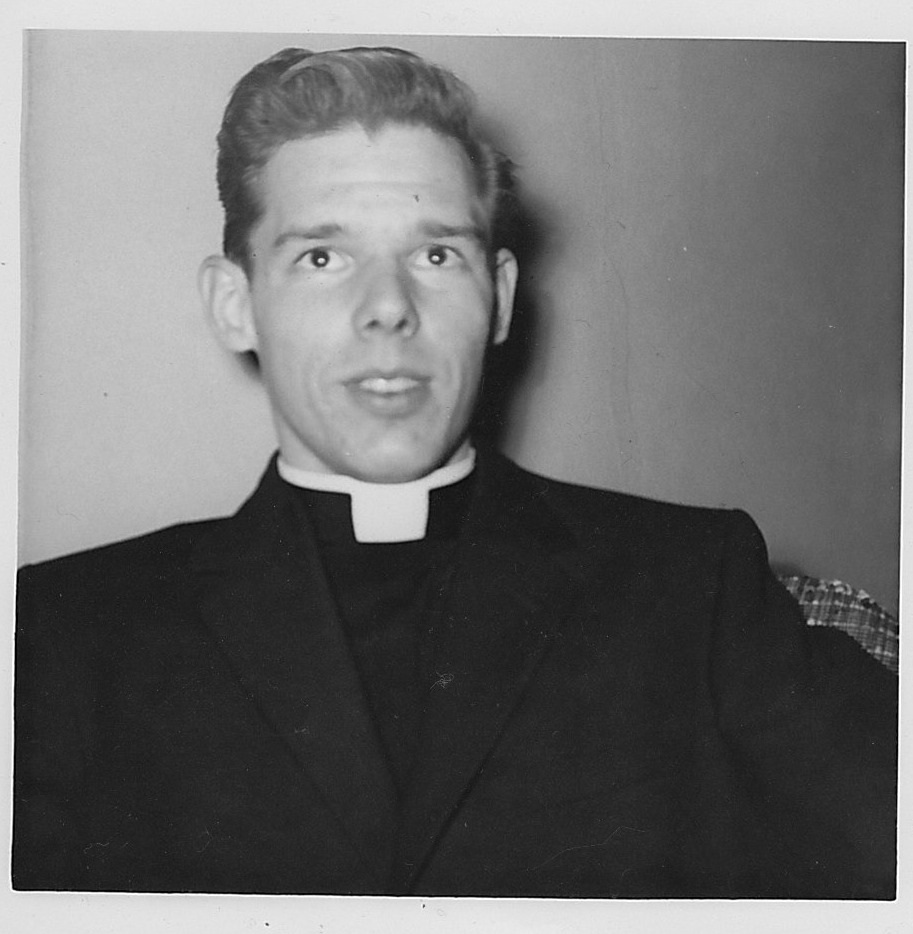
It's 1971--do you know where your emotions are?

It’s 1971–do you know where your emotions are?

Pretty amazing, right?

No, no, I don’t mean the fetching haircut accentuating the perfect, potato-esqe shape of my head. That haircut was a dad special a la 1971—the hairdo all of my brothers and I had by dad’s decree. I’m thinking a “1” setting on the clipper.   Quick and easy, nice and tidy.

And, no, I’m not talking about the fashion, although I am pretty damn suave in that dual-layer, v-neck with mock-turtleneck, combo. Or, more accurately, I guess that would be a mock-mock-turtleneck, given that it’s not even a real mock turtleneck, but just the neck and a little bit of the chest of a mock-turtleneck sewn into a shirt. The dead giveaway is that the striped part of the outfit is short-sleeved, and who ever heard of a short-sleeved mock-turtleneck? Right? The dove-gray slacks perfectly compliment the olive stripes sandwiched between the ocean blue stripes that match the mock-mock-turtleneck.*  Still, I’m thinking that this getup would definitely make it into a top ten list of my all-time most fashionable outfits, such is the limited ability I have to dress myself.

No, I’m not even talking about the gift, proudly displayed—that Fisher Price Little People airplane—the red winged version. Pure brilliance of design, down to the weird, yellow plastic string tied to the front so it could be pulled along the ground, the pilot, head flipping back and forth, ever vigilant. Of course, the pilot eventually wanted to break free from the tarmac, and I obliged. The plane today (still in a closet of my mother’s home, or perhaps in a box in the “workshop” of my house) is missing the door, and a chunk of one of it’s horizontal stabilizers, courtesy of a few attempts over the years to see if I could get the thing to fly properly. Perhaps such confusion over aerodynamics is tied to why I became a therapist, and my older brothers went into the “hard sciences.”

Anyway, any other guesses as to why the photo is so amazing? The cake? Well, I did reference it in the title of this piece, I suppose. And it is pretty impressive—home-baked, double-layer, chocolate frosting on devil’s food, set atop a shimmering, crystal cake stand, the candles, playfully askew. But, that’s not it, either.

Are you ready for it? The big reveal?

What’s so amazing about this picture is that it was taken, by my mother, one week after my father’s rather unexpected death. That the picture is so normal, that it fits in so perfectly with the small parade of yearly birthday pictures of all of my siblings and me (all featuring the birthday kid, with a cake and a gift, either posed alone or with that year’s cadre of siblings) is what is amazing to me.

My mother managed, seven days after what I assume was the absolute pinnacle of the sadness and distress in her entire life, with that sorrow still hanging heavily over her and the entire family, to make a cake, wrap a gift, and provide me and our family with some small bit of normalcy. I can imagine my mother just realizing that it was her duty to do so, that she signed up to have kids, and, well, that’s what you do when you have kids…you soldier on and keep things as stable as possible even if everything just collapsed right out from under you.

I have always wondered (and I suppose it wouldn’t take all that much to ask, but since mom will be reading this, I’m sure I’ll get an answer of some kind) if that plane was purchased before or after my father’s death…since it wasn’t until after my father’s death that what would be my first plane ride—out of Nebraska, and on to Oregon—would even be a thought. Was it a gift meant to help prepare me for that trip, or was it merely a coincidence? Was I fascinated with planes at the time? Was it just kind of a cool thing my parents thought I would like? Or was I manipulated by television commercials telling me I wanted that plane?

As a bit of an aside, here’s a Fisher Price commercial from 1972, including the plane, and narration by Dick Cavett. The gentle pitch to parents (although the images would definitely grab the attention of children) is rather quaint now, compared to todays ads telling kids that they MUST HAVE THESE TOYS NOW!!

At any rate, one thing I never noticed in this photo until I scanned it and really looked at it earlier this morning—is that the door behind me opens onto my parents’ bedroom—or what had recently become only my mother’s bedroom.   I can clearly see the same bed that my mother still sleeps in through that open door just behind me.

Not long ago, I told my mother that one of my earliest memories was of going into her bedroom (I believe after being told to leave her alone) and finding her lying on her perfectly-made bed, crying. I asked her why she was crying. I don’t recall that she said anything, only reached out to me and put her hand on my arm, which I had rested on top of the bed. Soon thereafter, somebody—a brother? Some other relative? A family friend?—stepped in and ushered me out of the room, closing the door behind us.

In my mind, the setting for this memory always defaults to our house in Oregon, because that is the only house my family lived in that I consciously remember. But seeing that, in this photo, the bed is covered in a white bedspread, just as it always was in our house in Oregon, it is easy to imagine that same scene playing out here, in the Nebraska house, although to ‘block out’ the scene would require flipping certain elements in different directions. I can definitely imagine that the dining room furniture in the photo here would have provided me with some measure of blockage between me and whoever (may have) told me to leave my mother alone, just as the short distance between our dining room and my mother’s bedroom in the Oregon house would have given me that tiny bit of time to do the same. Nebraska in September (probably more likely) or Oregon in November, it makes sense to me either way.

Getting back to the specific elements of the photo, certainly, other mothers have done the same as my mother did, in similar circumstances, just as other mother’s have fallen apart. Certainly, plenty of fathers have also had similar experiences following the loss of a spouse, and the effort to carry on and keep things stable for their children (or of falling apart). But it’s my birthday, and if I want to tell my mom she did an amazing thing—then I get to do that.

So, happy birthday to me, and thanks, mom!


*Color matches approximated using Ingrid Sundberg’s “Color Thesaurus” which can be found here: http://www.boredpanda.com/color-thesaurus-char-ingrid-sundberg/ .  If you have suggestions for better labels of the colors in the photo, feel free to submit them in the comments section below.

Dad’s Grave

by J.C. Schildbach, MA, LMHC, ASOTP, Preacher’s Kid

The Summer of 1977 is forever burned into my brain as a collection of hallowed moments experienced while on a cross-country, family car trip in a Pine-Green Chevy Impala Station Wagon: Seeing a lightning storm roll toward St. Louis from the top of the Gateway Arch, enjoying a traditional Chinese wedding banquet in San Francisco, swimming in Lake Michigan, watching “Star Wars” at a theater in Chicago when we were unable to procure tickets to the King Tut exhibit. (As a decades-long fan of the movie, it pains me to note that I nodded off sometime after the scene of R2-D2’s capture, later jarring awake to the battle cry of a Tusken Raider).

There were days-long visits to farms in communities we had lived in before I was old enough to remember, where I got to ride a horse for the first time, play in a rubber raft in a flooded cornfield, and experience the frightening speed of an angry mother pig as a newfound friend and I were made to race it to the fence of its pen after said friend pelted the sow with a dried-out corn cob. There was the morning I inadvertently released the inmates of a henhouse as I made a rather misguided effort to helpfully gather the eggs before breakfast, and the wonder of first experiencing the Beach Boys’ “Endless Summer” surf anthems from a landlocked farm community in the midwest.

Somewhat more mundane moments have stuck with me as well—attending a Saturday night church service in Sheboygan; staying up late to watch “Sssssss” on TV on a rainy night in Independence, Missouri; settling into the perfect stereo situation in the back seat of the Impala as my brothers played Blue Oyster Cult’s “Agents of Fortune” on the car’s cassette deck—“This ain’t the Garden of Eden,” indeed.

But there was one great disappointment in the whole epic adventure: the trip to my father’s grave in a small town in Nebraska. The victim of a stop-sign-running driver, and the shoddy engineering of the late-60s AMC vehicle he was driving, my father, the local Missouri Synod Lutheran minister, lost his life in the late summer of 1971. I am writing and posting this on the 43rd anniversary of that unhappy day—a day I was too young to remember or properly process—a day that gave birth to the attachment issues referenced in the subtitle of this blog.

Pops at 21...on his way to change the world.

Pops at 21…on his way to change the world.

The occasion, for me, was already lacking the appropriate sense of solemnity, with the shouting from a baseball game just across the road filling the bright, evening air. Things seemed even further amiss as we headed in the direction of…well, what seemed to be nothing.

Where was the towering monument? The magnificent marble Pieta? Or at least a moderately ornate cross?

Being a big fan of horror movies, and fascinated with the ornamentation and mythology of the church, I had built up the idea in my mind that my father’s grave would be marked by something appropriate to his stature as an important religious leader. My ideas were perhaps weirdly informed by my recent reading of Scott Corbett’s “Here Lies the Body”—a story set in a graveyard, and involving a massive grave marker with a statue of a pointing, judgmental angel—not to mention occult symbols scrawled in blood, and a murder mystery. On top of that, to pass the time on the drive from state to state, I had also read and re-read a book of “real life monsters,” which included stories of Vlad Dracula, and Haitian zombification procedures.

So when I saw the flat, drab grave marker, I wouldn’t say my heart exactly sunk, but my 8-year-old mind certainly underwent some shifts in its understanding of the world–shifts I filed away for later examination.

A little over a decade later, when I bought a copy of Tom Waits’ “Blue Valentine” album, and heard the song “A Sweet Little Bullet from a Pretty Blue Gun” (about the 1977 suicide of a 15-year-old girl who jumped from the 17th story of a Hollywood hotel with her guitar) which contains the line, “Nebraska never lets you come back home,” that scene of my father’s grave came back to me, despite not having given it much thought at all in the interim.

The passage of time, and hopefully the acquisition of some tiny bit of maturity, led me to reassess the precise meaning of my father’s grave. I realized that that grave marker wasn’t about his importance in the world, or his stature in a small Nebraska town. It was just some sign, marking the place where the material–or perhaps more preciseley, the matter-bound–part of his existence was left. His influence, his importance, extends way beyond that little concrete or stone marker.

My father’s influence in the communities he served extends to this day, in part through the connections my family made in those communities.  His impact, which, combined with the hard work and diligence of my mother, who raised five sons and a daughter in the years after my father’s passing, extends out into the world in myriad ways, through the hard work and community involvement of all of my siblings and their children—all in their own ways striving to make the world a more humane place.

For my own part, struggling to understand my father’s path in life before it was cut short, and trying to find my connection to it, has been a lifelong endeavor. And while I may have, at times, viewed my father and his life in weirdly iconic terms—iconic in the sense of symbols, signs, and signals to the outside world—I now view it as iconic in the sense of legitimate meaning and influence, the ability to impact the world positively by being a decent person…the same sort of influence I can only hope to emulate.

Happy death day, pops!

“Are All Men Pedophiles?” Who’s Asking? And Why?

By J.C. Schildbach, MA, LMHC, ASOTP

Although a significant portion of my professional life involves work with sex offenders, Jan-Willem Breure’s “Are All Men Pedophiles?” escaped my attention until a few friends alerted me to its presence on Netflix. The documentary is meant to be provocative. In fact, Breure labeled his own work “the most controversial film of all time”—which is roughly akin to describing Creed as “the most important band of the 20th Century.”

I suppose that Breure’s film is controversial, inasmuch as the bulk of its content is unsubstantiated, unquantifiable hooey, put forth by somebody who has admitted (in sources other than the film) that he is attracted to teenage girls as young as fifteen years old. Breure’s is an argument put forth by somebody attempting to normalize his own sexual desire for teens by saying he is just like all other guys, and that all other guys are just like him.

Breure doesn’t get around to delivering his answer to his title question until after the credits—that answer being that, yes, all men are pedophiles, but only if one uses an incorrect definition of pedophilia. Pedophilia, Breure clarifies, is an attraction to prepubescent children. Hebephilia, Breure explains, is an attraction to teens (although if we want to get even more specific, hebephilia really only applies to younger teens). So, Breure says, all men ARE attracted to teens, whereas NOT ALL MEN are attracted to prebubescent children—therefore all men ARE pedophiles in the popular use of the term where pedophilia includes teens, but are in actuality hebephiles if the (somewhat more) correct terminology is used. Or, to simplify things, Breure claims that all adult men want to have sex with teen girls, call it what you will.

It’s probably pointless to engage in a clinical discussion about why Breure’s terminology is overly broad, thereby negating his argument, given that Breure is casting a net so wide that he hopes to catch every adult male on planet Earth. But I will say that, clinically speaking, sexual attraction to anybody who is physically/sexually mature is not considered pathological. In addition, for somebody to be properly considered a hebephile, they actually have to have a sexual preference for teens over people in any other age category.  There is also a complicated interplay between what is culturally “taboo,” what is prohibited legally, and what is considered an actual paraphilia or sexual disorder. Under Breure’s nebulous definition, any adult male who has ever entertained a sexual thought about a minor teenager is a pedophile/hebephile—even if that sexual thought occurred before said adult male was an adult. Under Breure’s all-inclusive concept, a 16-year-old male who had sex with his 16-year-old girlfriend is a hebephile/pedophile the moment he becomes an adult, as is any male who was ever, say, a 15-year-old boy who rubbed one out to thoughts of a peer-age classmate.

The definition-exploding, argument-negating core of Breure’s presentation in support of the idea that all men are incorrectly-defined pedophiles, or correctly-defined hebephiles, is the concept that sexual attraction does not ‘age’ but that it merely expands. That is to say, he believes that because boys first become sexually attracted to teen (or younger) girls, their attraction to teen girls stays with them forever, even as those boys become men and “expand” their field of attraction to include older women.

Breure has a 14-year-old female model in makeup and a small, tight, pink dress, present his idea of expanding attraction as if it were fact, while neglecting to cite the source of the information, which, from a brief survey of the literature, appears to be Breure’s ass.

Advocating for perpetual adolescence--Breure's model tell us our teenage attraction to teenagers never lessens.

Advocating for perpetual adolescence–Breure’s model tell us our teenage attraction to teenagers never lessens.

As an aside, I’m not sure what the theory of expanding attraction is supposed to say about all of the (cisgender, heterosexual) boys whose first sexual thoughts are aimed at adult women, or what it says about my own fifth/sixth-grade infatuation with Annette Funicello who turned up on TV most weekdays in both her “Mickey Mouse Club” teen form, and as her peanut-butter-pushing mid-30s self.

Pubescent confusion, thy name is Annette.

Pubescent confusion, thy name is Annette.

And, incidentally, if Breure’s theory of attraction expansion is valid, it would mean that all women are also pedophiles, or hebephiles as it were, unless women/girls are never attracted to, say, 15-year-old males at any point of their development, or unless Breure believes that the phenomenon of “expanding attraction” is exclusive to males—as if women move on sexually, but men do not.  But since Breure is mostly fixated on male attraction to females, he doesn’t spend much time considering anybody who falls outside of that focus.

While Breure belabors the point that people use the words “pedophilia” and “pedophile” incorrectly, he also confoundingly claims that there is no universal definition of pedophilia, because age of consent laws range widely from country to country (or state to state). Of course, “age of consent” and “pedophilia” are not synonymous, nor do they define each other. Whether a country’s age of consent is 11 or 19, pedophilia still involves sexual attraction to children lacking in secondary sex characteristics.

Breure’s use of statistics is as questionable as his slippery use of definitions. Among other things, he reports that child pornography is a $3 Billion-a-year business. I’ll give him credit for at least using the low end of the unsubstantiated claims regarding the income potential of child pornography. However, he then goes on to assert that 20% of all pornography on the Internet involves minors—a claim that, to anyone who is at all familiar with the vast quantities of pornography available on the Internet, is obviously false.  There is just no way child pornographers could keep up.

At any rate, viewers are left with no clear connection between child pornography and Breure’s argument. Combined with yet another vague and unsubstantiated discussion of teen nudity in fashion shoots, delivered by the same 14-year-old, pink-dress-wearing model, Breure suggests that all those men out there using the Internet are already masturbating to images of nude, underage girls in pornography and fashion, and so are obviously sexually attracted to teen girls, and therefore hebephiles/pedophiles.

Breure even strays into an argument about how ALL men are treated like bad guys because SOME men do bad things, (something that some of his supporters have placed into the category of “reverse discrimination”) and that the problem of pedophilia is being blown out of proportion. Of course, as Breure is bemoaning the great injustice of all men being viewed with suspicion, and treated as if they were all potential pedophiles, he is, at the same time, promoting the idea that all men want to have sex with teenage girls, and implying that they should be allowed to.

In addition to condemning all adult males for already jerking off to teen girls, Breure sets himself up as an apologist for pedophile priests, saying priest pedophilia is not true pedophilia (engaged in out of true desire for sex with chidren) but only pedophilia in practice–because it’s just the natural consequence of too many guys being around too many other guys without sexual access to women/girls. Unfortunately, in his super-simplistic argument, ignoring a vast array of factors for the abuse, Breure forgets to include an explanation of why the adult guys don’t just have sex with the other adult guys if they’re not really interested in sex with children.

Breure’s film also implies that because other cultures in other time periods allowed for sex between young teens and adults (with evidence based on ancient Greece, the Virgin Mary, and a wife of the Prophet Mohammed), that sex between adults and teens should be perfectly acceptable. In other words, Breure wants viewers to believe that girls between the ages of 11 and 15 having sex with much older men is just fine, because people have done it plenty, and—y’know—the Bible tells me so. It’s a compelling argument because, of course, the only times that we, as a culture, have prohibited past practices involved misunderstandings about the true nature of humans. So, maybe while we’re working to bring back pederasty, we can lobby to allow 8-year-olds to work in coal mines again. And, hey, who’s up for a bit more human sacrifice? Legalized slavery anybody?

Speaking of advocating for salacious behaviors, for those viewers who want some prurient content with their pedophilia documentaries, Breure offers up plenty, including:

  • Breure’s sexualized 14-year-old female narrator, engaging in some slow-motion, hand-in-hand running with another teen girl, as the camera operator forgets to keep the girls’ heads in the shot.
  • A teen model embracing and kissing a much older man.
  • A woman discussing her past as a victim of incest and rape, by her father and another man, before the age of five. And, not to deny a victim of sexual assault a voice in a discussion of sexual violence, but it’s unclear why this woman’s story exists in the film, except perhaps to suggest that true pedophilia is ugly and violent, whereas hebephilia is not.
  • A self-proclaimed female pedophile describing how she digitally raped a menstruating girl in a story so contrived it sounds like it was created for a rather specific form of fetish porn.
  • An interview with a male (non-practicing/non-hands-on) pedophile discussing how he avoids acting on his attraction to children, shot in an outdoor setting where he is sitting on a park bench…eyeing little girls with bad intent (okay, there were no little girls in the scene, but I was already going out of my way to fit the Jethro Tull reference in there, so cut me some slack—Breure clearly made the decision to film the interview this way to invoke the idea of perverts lurking in a park—in contrast to perverts lurking at malls where teens gather, or at high school sporting events, or…).

Yet, despite the inclusion of all manner of ideas semi-related to his almost-thesis, one of the things that Breure doesn’t bother to include is actual data from actual studies utilizing plethysmography, among other things, to measure adult male sexual response to girls and women (or boys and men) across a range of ages—data and studies that don’t support the conclusion Breure wants us all to accept.

And maybe Breure leaves out real evidence, and real studies because he never actually manages to explain the conclusion that he wants us to accept, at least not until after the credits roll and we are only still watching if we suffered through a terrible, terrible song about angels and guilt and religion that Breure wrote and performed (I can’t help but think of a fictional album review from the movie “Spinal Tap”–“treading water in a sea of retarded sexuality and bad poetry”). And even then, he gives us a watered down explanation of what he is thinking, without acknowledging his own personal stake in the argument.

But, really, rather than asking the question, “Are all men pedophiles?”—a question completely ludicrous to anyone who is using anything like the actual, clinical definition of pedophilia, or even hebephilia, the question that should really be asked is, “What exactly is it that an adult male would see in a teenage girl that would make her more attractive as a sexual partner than an adult woman?”

I’m going to give Breure a pretty wide berth here—please bear with me. Currently, Breure is a 25-year-old male. When “Are All Men Pedophiles?” was released, he was 23. So, I’m guessing that when Breure first began his work on this project he was around 21 or 22, if not younger.

I like to imagine that the idea for Mr. Breure’s project came about after he expressed interest in, say, a 15- or 16-year-old girl when he was, say, 20. In my imagination, a friend or two of Mr. Breure, or perhaps friends of the girl or the girl herself, told Mr. Breure that he was f*cked up for trying to ‘get with’ with such a young girl; or that he was a pedophile for even expressing his interest. Mr. Breure then reacted defensively, and in the greatest overreaction of all time, decided to raise money to make a documentary defending himself against (rather limited) allegations of pedophilia—all while saying his behavior is just fine because teenage girls are hot, and all men know it.

I only hope that all of the effort that Mr. Breure put into defending his position hasn’t made him shore up his stance that it’s perfectly fine for adult men to lust after teens. I hope he’s not forever, ahem, planting his flag on the “adult men should have sexual access to teen girls” hill, but might, instead move on to have a mature relationship with an adult who he can approach as an equal.

Breure, attempting to normalize adults having sexual access to teens, advocates for nothing more than serial abuse of young people. Because, Breure’s idea of “attraction expansion” is more properly labeled as “attraction stagnation.” He is not advocating for growing up and engaging in mature relationships with adults, while still being able to appropriately acknowledge that, yes, there are teens who are attractive, but they are off limits to adult men, because otherwise we are advocating for manipulative relationships.  Instead, he is asking for permission to make teens objects of sexual gratification, while labeling manipulation and objectification “love.” He is saying that, because we start off in one place, we should be able to continue circling that one place, without ever truly advancing, as we grab at those who pass through, no matter how damaging such circling and grabbing is to those trying to make it through, or to ourselves.

God Bless Anita Bryant

Friday, May 16, I had my first experience with a mental health/chemical dependency conference hosted by a drag artist. The incomparable Aleksa Manila presided over the “Saying it Out Loud” conference, complete with multiple costume changes and delightfully tasteless jokes between various announcements, awards, introductions, and seminars. This was the thirteenth annual gathering of this conference, which was created with the goal “to continue to co-create learning, growth and understanding of the best practices and relevant clinical services needed to support members of the lesbian, gay, bisexual, transgender and questioning communities.”

Dr. Ronni Sanlo served as the keynote speaker, as well as screening a new documentary, “Letter to Anita,” about her almost-wasn’t involvement in LGBTQ activism. Now I’m going to get into a few spoilers here, but I don’t think the basics of Sanlo’s story are the heart of the documentary, as much as is the personal perspective she brings to them. So, when I say her activism “almost-wasn’t,” I mean that Sanlo, like a number of lesbian women of her generation, went about her life as a heterosexual woman, married (to a man) with whom she had two children, not really aware that there were other options.

Unfortunately, just as Sanlo was realizing that there were other options, that the attraction she felt to women wasn’t something that made her completely alone in the universe, Anita Bryant was ginning up Florida’s legislature to pass laws denying parental rights to gay parents. Sanlo’s divorce went through.  Her children, for all practical purposes, were taken away from her.

Liberty turns her back as Anita Bryant looks to the sky, expecting Jesus to fly down and smite the gays.

Liberty turns her back as Anita Bryant looks to the sky, expecting Jesus to fly down and smite the gays.

Hearing the story now, it seems unfathomable to me. In part, my disbelief comes because at the time Sanlo was being viewed as an unfit parent simply for acknowledging who she was, I was living a few doors away from a blended family—two lesbian mothers with three teenage children among them. Granted, at the time, I was in grade school and not really aware that the two parents in that household were ‘romantically linked.’ I was under the impression, for whatever reason, that the families were living together for other reasons—economic? ecological? I remember that, in the fifth or sixth grade, when our class was given an assignment to write an editorial letter about an issue of concern, I mentioned the family as I explained why we shouldn’t be mowing down forests and fields to build new houses when there were other options, including multi-family homes, that would allow greater preservation of nature. Clearly, I had missed the more important political/social issue facing the family.

At any rate, the nature of my neighbors’ relationship was eventually pointed out to me by gossiping peers, with the implication that I was stupid for not having realized it, along with the weird sexual goings-on that were certainly a part of that relationship. Not to say that I was super-forward-thinking at the time, but I knew the two women as my neighbors who had been pleasant to me whenever I encountered them. So whatever sexual things may have been going on between the two women were of about as much interest to me as those of the parents of anyone I knew. That is to say, I really didn’t devote much time at all to thinking about sexual things between various peoples’ parents, and may, as I tilted toward pubrerty and all manner of prurient thoughts, have actively avoided thinking about them.

As far as I was concerned back then, anyone who was cool and/or innocuous toward me warranted much less concern, anger, or fear than the bevy of teenage male piltdowners who seemed to have little more to do than roam the suburban streets trying to prove their masculinity by tormenting children much younger and smaller than them—a model of “manhood” I unfortunately subscribed to briefly when I hit a similar stage in life.

I can only imagine that the lives of the couple from the blended family had some parallels to Sanlo’s—at least in terms of them apparently having partnered with men to build families in order to live out the deliciously limiting American Dream. It’s not too big of a stretch to believe my neighbors, like Sanlo, had seen few other options for relationships but hetero marriage and procreation. It was my understanding that both of my neighbors were divorced, although, like same-sex partnerships, such things were not discussed a great deal at the time, despite divorce quickly becoming commonplace—something that would reach almost all of my friends who hadn’t, like me, experienced the death of a parent. And if the exes of my neighbors were still coming around to visit their teenage children, I wasn’t aware of it. Then again, I wasn’t aware of much that went on in the lives of those teens, since there was far too great of an age gap between us—that impossibly vast chasm between elementary school and high school—for us to concern ourselves with each other.

Speaking of parallels and gaps, “Letter to Anita” touches on another critical piece of Sanlo’s life that fits in with the development of my own understanding of individual rights, freedoms, and what it actually means to be something “other” than heterosexual: Anita Bryant’s crusade against, well, all people who don’t fit her very narrow definition of appropriate relationships (never you mind Bryant’s own divorce).

As I’ve noted before on my blog, I was raised religiously, in the Lutheran Church, Missouri Synod. My father was a pastor in said church. My father died when I was rather young. I spent a great many years struggling with religious ideals and how they fit into the world. And despite my current agnostic tendencies, I still hold onto an idea of religion as an expanding element in peoples’ lives, a force that should open people up to larger experiences, a force that should create love and acceptance, as opposed to a limitation on peoples’ lives that causes anger, hatred, judgment, and closed-mindedness. I spent a lot of time struggling over moral issues, their relation to legal and spiritual concerns, and how we all get along as a people who are supposed to be dedicated to personal freedom, personal responsibility, community ties, love, and all the rest of that stuff.

But Anita Bryant, with her perfectly coiffed hair and starchily-pressed orange and brown polyester outfits, was telling me, in her own, orange-juice-endorsing way, to fear, hate and distrust people I knew, people who had shown me kindness, people I knew to be funny, smart, and no threat to me at all. She put out albums (which, as a teen, my younger brother delighted in purchasing from the local Goodwill for the purposes of mocking and destroying) filled with patriotic and religious songs, promoting the goodness of the USA and Jesus. Yet, everything she said, every objective she pursued, was in contrast to freedom, goodness, and the anti-judgmental stance that Jesus and America were supposed to represent.

Yes, Anita Bryant, in contrast to all she stood for, or wanted to stand for, had helped turn this white, hetero, suburban boy, and his white, hetero, suburban friends, into supporters of gay America…into people who would forever see the gay menace she was so sure was destroying us all, as nothing more than the paranoid delusion of close-minded, controlling, angry people who were completely incapable of seeing the irony of their anti-freedom, anti-love stance as they waved their flags and thumped their Bibles.  Anita Bryant, as Sanlo notes, managed to galvanize opposition to gay rights opposition–even out into the hetero world and parts of the Christian community she was so sure she could count on to share her views.

So God bless Anita Bryant. God bless Ronni Sanlo. And God bless us everyone.

From Seed to Cocktail–In Memoriam

I had just been talking with a co-worker about growing tomatoes, and how I was late planting the tomato seeds I’d gotten at a friend’s funeral back in October, when I found out that that friend’s wife, Jodi, had died.

As usual, I’m struggling with the appropriate response…both virtually and in the real world. I’ve been on her Facebook wall repeatedly, tapping out letters and words that I then delete, feeling confused about just what is the appropriate response in the time immediately following the death of a friend.

After all, Facebook is where you wish “Happy Birthday” to people you rarely, if ever, see face-to-face, right? I’m not saying there’s anything wrong with that. I’m not saying that there’s anything wrong with posting an RIP message on somebody’s Facebook wall.   But to honor the person in this case, there’s a need for something other than drive-by (surf-by?) condolences. And, no, I’m not considering this piece to be the adequate response.

The message I kept reworking essentially came down to this…

Jodi had been battling that vicious monster since before I met her, over 12 years ago. She fought with such grace and tenacity that I was sure she would outlive us all. And if the kindness one unleashes in the world, and the reverberations of that kindness, count in the tally of one’s years, then I’m sure she will.

In case there’s any question, the above isn’t one of those bullshit eulogies, like when Richard Nixon died, and suddenly everybody remembered what a great guy he was, despite the mountains of evidence to the contrary.  Everybody who met Jodi loved Jodi.  And I’m pretty sure that would have held, even if she had been tied to some ridiculous scandal that led to a widespread loss of faith in American democracy.

Jodi was just one of those people who was funny, warm, and fun to be around. She could slap you with a sarcastic comment that made you instantly feel like a part of her family. She seemed to have a bottomless well of good will and giving. She was the kind of person who lived her life, with cancer, better than most of us live our lives in good health.

A friend of mine from college, Jared, had a semi-serious theory that when a person dies, that person’s soul explodes into a whole bunch of little pieces, which blast out into the world, and attach themselves to the souls of all the people who ever loved that person, becoming a part of all of those people. Jared’s evidence for this was that, when his grandfather died, he was suddenly taken with the urge to go out fishing—something that he had never done, but his grandfather had done religiously. Jared described a beautiful, solitary day out on a lake, where all the love he had felt for his grandfather resolved itself into a sense of peace in regard to his grandfather’s passing, and the meaning of his grandfather’s life, and the lives of us all.

Now, I can’t say that I subscribe to Jared’s theory of exploded souls.   But a weirdly similar sense of “exploded soul attachment” hit me shortly after I received the news of Jodi’s passing. Of course, I was knocked off balance. I wondered if I should leave for the rest of the shift, out of concern that I might be overwhelmed with the demands of assisting people through crisis situations. I gave my co-workers a heads up, essentially enlisting their help in ensuring I didn’t make a mess of things.

But instead of the feared distraction and destruction, I felt imbued with a sense of caring and connection with the clients, which is often difficult to engage. That is, as something of a survival technique for the job, it’s necessary to avoid getting caught up in the drama and emotion of the lives of clients, while also being able to convey a sense of empathy. It’s a difficult balancing act to keep an appropriate sense of distance, without disengaging. But all I felt was calm, a sense of presence with the clients that can be difficult to maintain while also staying on top of the other elements of the job.

Supposing for a minute that the theory of exploding souls is true, my piece of Jodi’s soul manifested itself in the feelings of calmness I experienced—an ability to connect and remain in the moment. Even my exchanges with clients I have spoken to hundreds of times were a bit more ‘in the now.’

I’m going to try to hang onto that little piece of her soul.

And for now, I’m going to get those tomato seeds in their pots, and think on how glad I am to have had the opportunity to craft and share a few lakeside, breakfast Bloody Marys with Jodi.

bloody mary


Crisis Line Prank Call Reviews: Ownage Pranks & the Wacky World of Rape Jokes

On the eve of April Fools’ Day, it only seems appropriate to look into the hilarious world of Crisis Line prank calls. The majority of prank calls to regional crisis lines and to the Lifeline Suicide Prevention Hotline involve humor of the sort that is enjoyed by middle-school males who fall on the low end of the socially-conscious and critical-thinking spectrum for that age group. And Ownage Pranks’ work in this area is no exception to that rule. (From here on out, I will be referring to the auteur/auteurs as “Ownage” since I don’t have any other name to associate with the site—withholding the names and hiding the faces of those involved being perhaps the only intelligent thing about Ownage).

The real achievement of Ownage, though, is that it has become the top Crisis Line prank call video on YouTube by exploring a juvenile fascination with anal penetration, engaging in racist stereotypes, and making light of domestic violence, rape, and spousal murder.  With this winning formula, Ownage managed to get well over 2 million views of it’s post titled “Asian Crisis Hotline Prank Call HILARIOUS!”  The title is perhaps best described as inexplicable, as it both identifies the prank as involving an Asian Crisis Hotline—whatever that’s supposed to mean, and refers to the prank call as hilarious—which is only appropriate if one believes the definition of “hilarious” to be “supportive of rape culture.”

The video, which is not exactly recommended viewing, was originally posted in March of 2009 and is comprised of audio with subtitles.  In case you haven’t had your fill of rape jokes and racist stereotypes for today, and you don’t trust me to accurately describe it, it is available here: https://www.youtube.com/watch?v=m9THBsHeODQ

Just be aware that by clicking on the above link, you’re going to build up the view tally for this video, and then have to live with yourself afterward.

Ownage Pranks is the brainless-child of some unknown person who bills it as “Nine stereotypical characters, one hilarious adventure.” Apparently, this is the tagline because Ownage believes that the people who would willingly view/listen to his pranks are too stupid to realize that the characters are based on stereotypes, and, as already mentioned, lack any knowledge of the definition of “hilarious.” The mascot for the site looks something like the Lamisil mascot “Digger,” the little toe fungus monster that, in one of the most disturbing series of commercials ever produced, lifts up toenails to crawl in under them. Visually associating Ownage with Digger is entirely appropriate, as both are roughly as pleasurable as toenail fungus and/or having one’s toenails lifted away from one’s toes.

Would you rather...have your big toenail pulled off, or listen to 7+ minutes of rape jokes?

Would you rather…have your big toenail pulled off, or listen to 7+ minutes of rape jokes?

At any rate, the Crisis Line prank involves Ownage “voice acting” as a woman that Ownage identifies as “Chinese—sorry Vietnamese.” When the crisis line volunteer, a 76-year-old woman, asks the caller for ‘her’ name, Ownage says, “Rangnahhahbilmangoyumdidahmgeh” (Ownage’s spelling from the subtitles). The Crisis Line volunteer then asks him to spell it out, and is told, “W-O-R-Q” for the first name, and “G-U-I” for the last name. Are we all cracking up, yet?

Ownage quickly dives into sexual abuse/spousal abuse/anal rape jokes with the caller explainnig that ‘she’ wants to have a family but that “every time we sleep together he want” (sic—as in deliberately ‘broken’ English) “to put it in the wrong area.”

The Crisis Line volunteer isn’t quite sure how to approach the call. Keep in mind that Crisis Line workers have to take every call seriously unless/until they can be certain it’s a prank. The volunteer’s task is made particularly difficult because Ownage keeps talking as much as possible, while asking only minimal, ridiculous questions. For instance, Ownage asks the Crisis Line volunteer if it would be a good idea to defecate on her husband’s penis while he is anally raping her in order to get him to stop.

Ownage goes on to say, “He force me. It like a rape.” Now, by saying it’s “like” a rape, I’m not sure if Ownage is making fun of the allegedly Vietnamese-American woman for not recognizing that her husband forcing her to engage in anal sex is actually rape, or if Ownage just doesn’t think that women who are married can be raped by their husbands. There are numerous other possible explanations behind what is supposed to be a joke, which I will leave out. I will just say that any woman who is forced into sex by her husband is, in fact, being raped, regardless of what part of her body is being penetrated, and regardless of what is being used to penetrate it.

Which leads us to our next point…Ownage proceeds to make jokes about the caller’s husband inserting baseball bats, wine bottles, beer bottles, and a watermelon into ‘her’ anus.

Following the watermelon comment, the Crisis Line volunteer states, “You need some help, you really do.” Ownage jumps right back in talking, I’m guessing, because he realizes that if the Crisis Line worker were to mention domestic violence shelters or resources for sexual assault victims, it would have ruined the glorious fun of his little prank. After all, nothing brings down a good rape joke like pointing out that it involves laughing at victims of sexual abuse.

Ownage also touches on the topic of men viewing porn and then expecting their wives/girlfriends to behave like the women in pornographic videos.   The caller reports that her husband watches videos that depict teen girls engaging in anal sex and enjoying it, and questions if there is something wrong with her for not enjoying anal sex like the performers in the videos. OMG, isn’t it so funny to think that men would watch porn, and then force their wives to engage in acts they viewed, whether or not their wives were comfortable going along with it? Oh, wait, that’s laughing at rape again, isn’t it?

Providing a brief break from the sexual violence jokes, the caller then mentions that ‘she’ thinks her husband is waking up and is in the bathroom. The husband in the bathroom becomes an excuse for Ownage to play some diarrhea sound effects—definitely the high point of the prank.

The husband eventually joins the conversation, and guess what? The husband is (supposed to sound like) a stereotypically abusive African-American man.  At this point in the prank, Ownage (via text) provides the little behind-the-scenes detail that, “I did both voices, by moving the mic away from me and turning away from the mic :).”  Yes, if ever there was a reason to use a smiley face emoticon, it’s when one is engaging in multiple racist stereotypes at once, all in the service of making jokes about sexual abuse.

The husband is then heard saying, “I’m not playin no games, you bitch. Now get your ass over here. Pull yo pants down nigguh” (Ownage’s subtitles). When the caller/wife protests/pleads that she does not want to engage in anal sex, and states that the “counselor” said “fack you,” to the husband, the husband gets on the phone with the Crisis Line volunteer and demands to know who is on the phone.

The prank ends with the ‘husband’ saying “fuck you” to his wife, followed by the sound of two gunshots, and then the wife wimpering for help. Are we all ROTFLOAO now?

Ownage’s prank lasts roughly 7 minutes, which can be enough time to de-escalate a person from a panic attack, or to help ground a person suffering from chronic mental illness.  It is enough time to determine a person is at serious risk for a suicide attempt, or perhaps has actively engaged in a suicide attempt, and is in need of intervention by emergency services.  It is enough time for a volunteer or paid professional to lend an ear to someone who has hit a rough patch in his/her life, and to provide that someone with a little solace.  But, instead, Ownage thought it would be funny to take up that time by trying to shock a 76-year-old woman with moronic jokes about anal rape, diarrhea sound effects, and racist “voice acting.”

As I’ve pointed out in other posts, when people point out problem “jokes” like this gem of a prank call, it is common for some backlash—accusations of excessive sensitivity, demands to lighten up, explanations that it is “just a joke.”

So, let me ask—on a scale of one to five—how many stars would you give to jokes involving racist stereotypes? How many stars does domestic violence rate? How about spousal rape? Spousal murder?

Yuck it up, clown. You really owned that 76-year-old volunteer.


The Coat: A Haute Couture Horror Story

I wasn’t exactly a fashion-forward fourth grader.  Or perhaps my complete lack of fashion sense just meant I was incapable of comprehending what a style juggernaut I was.

At any rate, one would think that a nearly-knee-length, brown, corduroy coat, with enormous brown buttons and a matted-dog-fur-esque collar/lapel would have perfectly complimented my favorite pair of pants—off-white polyester with a thin woven black and orange-ish-yellow plaid.  But I wasn’t havin’ any of it.

I was used to my wardrobe being largely comprised of hand-me-downs.  And, for the most part, those came from my older brothers, so I’d had a preview of what I’d be wearing in upcoming years.  In most cases, I was looking forward to the day when those items would become mine–that funky navy/robin’s egg/and white macrame´ vest with the tassels, those polyester pants in sea-foam green with a padded micro-waffle texture…

But that coat.  That goddamned coat.  Childhood memories are, of course, often comprised of impressions and sensations, with a few points of actual fact.  As for the jacket, I think it came from a cousin.  I can’t be sure.  But I had been looking forward to taking possession of the multi-panel, blue, red, and white, ‘normal’ ski jacket my older brother had, at the same time I would pass my own multi-panel beige, white, and blue ski jacket onto my younger brother.

But by some cruel twist of fate, that brown, corduroy monstrosity had insinuated itself into the orderly transition of jackets.  It was an interloper.  It did not belong.  I lost my ski jacket to my younger brother, but took possession of that…thing.

Nobody wore a coat like that.  I mean, for fuck’s sake, people had metallic silver NASA jackets, and puffy, stuffed ski jackets in traffic-cone orange.  But a brown, corduroy jacket?  What the hell?  That thing wasn’t even waterproof.  And damned if I wanted to deal with something so stupid and girly as an umbrella to keep me dry (although I did have a really cool, clear, plastic, dome-style umbrella—oh, the sound of rain pounding down on that while pretending to be in a futuristic car or plane with a bubble dome over my own, personal pilot’s compartment.  ‘Fuck you, rain.  I’m from the future’).

Okay, I didn’t actually say “fuck you” to the rain or anybody/anything else when I was in the fourth grade.  But I did have my own arbitrary standards of what I would allow anybody to witness.  I walked to school every morning with my younger brother and older sister.  And, as with the umbrella, I would put the coat away on approaching the school, and, at the end of the school day, would avoid putting it on until a safe distance from the school grounds and any classmates that might see me.

To avoid the suspicion of my sister (or so I thought), as we approached the school, I would mention a few times how hot I was feeling in that bulky coat.  Now, by “put away” I meant I took the coat off and draped it over my arm, or rolled it into a tight bunch, hopefully making it inconspicuous enough that nobody would ask what it was or why I wasn’t wearing it until I could make it to the jacket hooks in my classroom.  There, I would abandon the damned thing, hanging it behind other coats already present, and pray nothing would happen that would lead anyone to look at it too closely.  My mom had, of course, written my name on the collar tag.  All anybody would have to do to see it was mine was flip it open a bit, right where it hung.

To minimize the possibility of anybody accidentally seeing it was my coat, I devised ways of folding the collar down between the hook and the tag, to keep the tag blocked from all but those who would actually go to the trouble of making the effort to move the collar and read the tag…as if that were a thing somebody would do.

I would leave the coat there, hanging.  Walking away from it, I would feel a small tinge of guilt at rejecting something that just wanted a chance to keep me warm—and not just rejecting it, but trying to hide its connection to me.

Mornings, before first bell, I would hang out in the classroom, often hovering by, or leaning against, the heater that ran along the length of the far wall.  I would pretend to study the calendar or the bulletin board that surrounded it, or look at the bulletin boards near the back wall where student classwork was posted, or even pull a book from the bookshelf and lean against the heater, reading, as if this was the kind of thing people did, warming myself from the chill that would set in during the few blocks I walked sans jacket.

If my best friend at the time, Doug, showed up early enough, we would inevitably draw—I don’t think I was in my souped-up van phase yet.  I was probably drawing monsters, while Doug worked at planes and other vehicles with an architect’s precision.  At any rate, I would make sure we moved the drawing activities as close to the heaters as possible.

Recesses were a bit trickier.  I spent them all in the library—first recess—about 15 minutes around 10:15 a.m.; lunch recess—whatever time was left after our noon lunch, which I took to eating rather slowly; and afternoon recess—15 minutes at 2:15 p.m.  There was some sort of ban on spending all of one’s recesses indoors—at least one recess had to be spent outside, to make sure we were getting fresh air and exercise.  Although, if you ask me, fresh air and exercise when it is 40 or fewer degrees outside is just about the last thing anybody needs—especially a skinny fourth-grader who refuses to wear his only coat.

So, in one of my earlier acts of rebellion and coercion, I convinced Doug to blow off the oppressive guidelines that said we had to go outside, and hang out in the library with me where we strategically re-positioned ourselves from recess to recess, playing chess, drawing, listening to old “Jack Benny Show” cassettes on bulky headphones, or, of course, reading.

This went on for several weeks before we were confronted about any of it.

But in the meantime, something else happened.  One morning, on the way to school, I realized I had left a homework assignment at home.  Now, the forgotten homework assignment did not occur to me until after I had gone through my ritual of claiming I was too hot to wear my coat, and had taken it off.  When the thought of the homework struck me, I thrust my coat at my sister, asking her to hold it, while I dug through my bag to confirm what I was already certain of…that I had left my homework papers on my desk at home.

I contemplated taking off with my book bag—after all, if I didn’t have it, what was I going to do with my homework once I retrieved it?  But it could only slow me down.  I checked my brown, Timex watch and calculated whether I could make it home and back in time for first bell, and weighed which was worse—arriving at school without my homework, or maybe arriving late.  I decided I should go for it.  Leaving my bag and coat with my sister, I took off, in a dead sprint all the way home through the suburban streets.

Despite my sense of self that says I was never athletic, I was fast—at least at short-distance running.  Soon, I arrived home, burst in through the front door, charged upstairs and flew across my bedroom to grab my homework.  Of course, this wasn’t the kind of thing that would have escaped my mother.  On my way back down and out, mom stopped me to ask if everything was okay.  I breathlessly told her I forgot my homework, but everything was fine—I could make it to school in time.  Not being one to not notice such things, my mother asked what happened with my coat.

I have no recollection of what I actually said, but in my built-up remembrance of the story, I said that I had made it to my classroom, took off my coat, realized I didn’t have my homework, and so ran home, not thinking about the coat, or anything other than that I needed to get my homework turned in.  I am convinced that I was a big enough nerd/worrier that my mother would have totally accepted this answer.

Perhaps at this point I would do well to lay out exactly what my real problem with the coat was.  Brown corduroy, fuzzy lapels, and giant buttons were only a part of the problem.  Certainly, they were a problem in the face of metallic silver and traffic-cone-orange fabrics.  Brown corduroy could not compete with that.  In fact, a brown corduroy coat was probably just as weird as metallic silver or puffy traffic-cone-orange pants would have been, while brown corduroy pants wouldn’t have drawn any attention at all.  But what was really problematic for me was that the coat reached nearly to my knees.  I thought it looked like an ugly dress.  I was afraid that I would be insulted for being girly.  By this time in my life, between my curly hair, penchant for school work and art, pronounced interest in stuffed animals, and general lack of interest in sports, I had been accused of being girly enough that I realized it was a ‘bad’ thing.  In fact, I had even mostly given up on engaging in one of my sister’s favorite pasttimes for me—putting on her emerald green costume dress and wandering through the living room when we had company.

So, I did my damnedest to try and plough through to the other side of winter without having to wear that damned coat anywhere that any of my classmates might see me, so they wouldn’t add it to the heap of things that suggested I was less-than-masculine.

On that particular occasion, I made it back to the school grounds, which were deserted…at least on the outside.  As I entered the far end of the field, I heard the “final” morning bell ring.  My heart sunk.  I was going to have to go through the humiliation of checking in at the main office.  And, I had left my book bag and coat with my sister.  I had the stupidest coat ever, and was probably going to have to go to my sister’s classroom to pick it up, where I would not only be forced to apologize profusely for interrupting class, but where I would probably be forced to put on the coat so my sister and her classmates could laugh at me before I returned to my own class, where my classmates could laugh at me, and decide right then and there that I was entirely too girly for anybody to ever be friends with me again.

Instead, I had the brilliant idea to go straight to my classroom and play dumb.  What?  I’m late?  Oh, well, here’s the homework assignment.  Gee, it’s cold in here.  Can I go sit on the heater while we copy our spelling words for the week?

My teacher, Ms. W, welcomed me to the classroom, and said nothing about me being late.  Being a teacher’s pet had its advantages.  She brought my book bag over to me, which my sister had thoughtfully dropped off at my classroom.  When I realized the implications of the presence of my book bag, I whipped my head around to check the coat rack.  There, out in front at one of the first spots, was my coat.  I was sure I could read my name on the tag from across the room, and was certain that my classmates had all seen it as well, and had probably already come up with some involved plan for recess wherein I would end up locked in the girls’ bathroom, or wandering the playground in that coat, as people fled from me like I was infected with the plague.

But, due to some sort of weird technicality, I was being set free.  My sister had dropped off my things and explained that I had gone back home to retrieve my homework.  That was good enough for Ms. W.  God, I loved/hated my sister.

Speaking of my sister, there was somewhere in all of this drama where she tried to convince me that the coat was totally acceptable—cool even.  How did she do that?  Peanuts, of course…  She tried to convince me that Snoopy was wearing the same basic coat by showing me a coloring book image with this version of Snoopy in a furry, brown coat.

Check it out...Snoopy's coat is almost as stupid as your's.

Check it out…Snoopy’s coat is almost as stupid as your’s.

I wanted to embrace this.  But it just wasn’t the same coat.  Snoopy was plainly wearing a fur coat that was part of an outfit showcasing his love of football.  And, for once, I didn’t give a fuck what Snoopy was doing.  Even if he had been wearing the exact same coat, it was stupid, and I hated it.  Snoopy should just go back to being naked, and I should get a normal jacket.

The real undoing in the whole coat drama involved my library scheme falling apart.  I can picture alternate versions of this scene…one with one of the librarians confronting me (and Doug), one with the other librarian doing the same, a third with both librarians doing the same, and a fourth with my teacher confronting me—although in that version, my imagination always inserts my sixth grade teacher, which makes no sense.

At any rate, the end result was that I had to go outside for at least one recess a day…which I was supposed to have been doing all along.

If I’m remembering correctly, I chose the lunchtime recess, because I could waste time in the cafeteria until the last person was done eating.  I even tried to sign up for lunch duty in the hopes of getting stuck wiping down tables instead of going outside.  But the cafeteria duty was assigned in a rotating pattern.  I couldn’t take over for anybody, no matter how much they would have been happy to have such a thing happen.  But even without cafeteria duty, after leaving the lunch room, I could waste time in the classroom, pretending to get ready to go out.

But eventually…I would have to go outside.  And I wasn’t going to put that coat on.

Doug and I had invented some sort of (now forgotten) game, based around the monkey bars, which we called “Planet of the Apes.”  So, of course, we called them the ape bars.  I tried to get back into that game, but I was freezing my face off.  I decided I couldn’t survive on the Planet of the Apes, and so ducked into an alcove in an outside wall where a drinking fountain had once been.  It wasn’t exactly comfortable or pleasant, and some of the piping that used to connect to the drinking fountain was still poking out of the back wall.  But it kept me out of the wind.  Doug initially tried to make a game of me being wedged into that alcove, standing in front of me, telling any passers by that there was nothing to see and to move along.  Of course, this attracted attention, at least briefly.  But like most of the things Doug and I did together, most people just ignored us.  It didn’t take Doug long to get bored of hanging out with somebody who was tucked into a hole in the wall.

In my mind, these recesses went on for weeks, in the same way that one’s mind can exaggerate any terrible experience.  Each time I was out on the playground, our playground aide, Ms. Volstack, would ask me about my jacket, doing her due dilligence, but would leave it alone when I said I had a coat but was doing just fine without it.  In reality, the coatless recesses probably lasted about three days…probably a total of 24 minutes outside.  Then Ms. Volstack was out for the day and our Principal, Mr. Scribner, filled in on recess duty.

It was also the day that one of the developmentally delayed kids decided to investigate my presence in the drinking fountain alcove.  My mind keeps inserting one of two particular people into the role of that kid, somebody who I didn’t know until the eighth grade, or a friend of mine from the year before, who had moved away, who was not DD.  Anyway, this kid was flitting about the playground, arms pulled up into his sleeves, flapping them around and making bird noises.

He had passed by the alcove a few times when he decided a bird attack was in order.  He had bird-attacked multiple other people that recess—which consisted of squawking loudly and swatting at the victim with his sleeves).  He augmented his usual bird attack by turning his back to me, and slamming into me.  With the piping coming out of the wall behind me, this became very unpleasant very fast–well, even more unpleasant than somebody slamming me into a concrete wall that didn’t have pipes sticking out of it.  And then Mr. Scribner came into view, checking to see why this kid had become interested in attacking the defunct drinking fountain alcove.

Mr. Scribner shooed the kid away and then began grilling me about just what I was doing wedged into the wall like I was, without a jacket.  I insisted, as I had with Ms. Volstack, that I had a coat, I just didn’t need it.  Mr. Scribner, though, was not as easily persuaded that all was fine.

See, my mom was a widow, or as one might call her these days, a single mother.  And not only a single mother, but one with five sons and one daughter.  Women, it was insisted at the time, could not raise sons adequately.  And given my exceptional oddness, I’m sure I did nothing to help disabuse people of such a notion.

Fortunately, the bird attack had not taken place until the last few minutes of lunch recess.  When the bell rang, despite Mr. Scribner standing there in front of me, I ducked to the side and bolted.  Like I said, I was fast.

I wasn’t party to whatever happened next.  I assume there was a phone call home.  I don’t remember my mother asking me anything about the coat…or I should say, I don’t recall ever being truthful about the coat when speaking to my mother.  I am sure I complained about it to her early on, in the way I most often complain, where there is no resolution except for the target of the complaining to go away forever.

My best guess is that my sister explained to my mother what I hated about that coat.  And I’m guessing my sister casually extracted that information from me while we were playing 45s in her bedroom.  Despite her history of getting me in trouble more than any other person on earth possibly could have, I was open with my sister unlike anybody else.  I can imagine that, while switching records between “Help Me Rhonda” and the “Theme from Rockford Files,” I said that the coat was so long it looked like a dress.  Bam.  Mystery solved.  Problem solved…sort of.

The next morning, when I got up, the coat was laid out at one end of the dining room table…along with a strip of about eight inches of fabric my mother had trimmed off the bottom of the coat.  She had sewn the bottom of the coat up, so it looked just like a shorter version of the same coat.

As with any of the times that I was confronted with the knowledge that somebody had learned of one of my bizarre schemes, I felt some deep-seated terror that I was in real troubl–that my mom had fixed the problem with the coat, and now I was gonna get it (not that I ever really “got it”—my mom is one of the most level-headed people I’ve ever met).  I stiffened up, and took my seat at the table to eat my breakfast…oatmeal and buttered toast.

At some point, my mother entered the dining room and said something along the lines of “I trimmed some of the extra fabric off your coat, so maybe it will fit better.”

I thanked her.  I wore the coat to school.  I took the big leap of wearing it all the way to class…and on recess, anticipating some fallout from wearing a jacket so ridiculously different from everybody else’s.

There was no fallout.

I suppose there’s some lesson to be learned about asking for help, voicing what you want so you can get the help you need…or at least explaining the specifics of what’s bothering you.  But still, even in its altered (and to my mind, less girly) state…I hated that fucking coat.
Forced Healing: A “Girls” Beach House Retreat

(Spoiler Alert)

Season Three, Episode Seven of HBO’s Girls finds Marnie securing a North Fork (the vacation destination for people who feel the Hamptons are “tacky”) beach house from a family friend, in an attempt to engage her friends in some never-defined process of “healing”—healing that is supposed to take place over a duck dinner, leaving time for face masks, a viewing of “Queens of Comedy,” and a ceremony built around throwing slips of paper, inscribed with wishes, into a bonfire.

As she hops around in the turbulent surf, insisting it’s “the best swimming conditions imaginable,” while the rest of her friends wait uncomfortably on shore, Marnie observes, “I just think we have a lot of healing to do and we have a lot of ways that we could do it.”

The best swimming conditions imaginable--why isn't anyone joining in?

The best swimming conditions imaginable–why isn’t anyone joining in?

Healing rituals can be very powerful…I guess.  I can’t say as I’ve ever utilized any as part of a therapy or group therapy session.  And, just to be clear, I’m using the phrase “healing ritual” in the broadest way possible—essentially encompassing any kind of activity designed to provide participants with a positive outcome by engaging in some sort of symbolic action.

I have, at times, advocated that people use healing rituals, for example, when grieving.  But in those cases, I’ve suggested an individualized ritual, focused on something that is specific to the mourner’s connection to the deceased.  And such rituals come with the caveat that one cannot simply get over grief by coming up with a clever routine that serves as a reminder of a loved one.  You have to feel the hurt to get to the heal.

Personally, I’ve only ever taken part in one healing ritual, at a church.  That particular ritual involved dropping stones into water, and had something to do with establishing intentions and letting go of bad habits or negative thoughts that trap one in old patterns…or something like that.  While I enjoyed it, and found it to be engaging while it was taking place, it wasn’t something I was particularly invested in, or something that spoke to my own personal needs or expectations at the time.  So it didn’t really stick with me.

I suppose I associate healing rituals, or rituals in general, with religion or spirituality, rather than with therapy.  This is not to say that religion and spirituality are totally separate from therapy—perhaps different sides of the same street…finding meaning in, and ways to deal with, the difficulties of life.

Ritual, though, is imposed on reality.  Ritual says, ‘we are here now, and these are the steps we are going to take to create shared meaning.’  Therapy depends more on meeting people where they are, and taking steps as those steps become possible.  At any rate, for either rituals or therapy to work, they need the ‘buy-in’ of the participants.  If there’s no meaningful connection to the work being done, no personal sense that it is worthwhile, then little is likely to come of it.

Marnie, unfortunately, never gets the buy-in of her friends.  Hannah, Jessa, and Shoshanna come out to the beach house as much out of a strained sense of obligation to Marnie as they do because they’ve been offered a free, weekend getaway.  Hannah soon sabotages Marnie’s tightly-scheduled friendship renewal when, on a trip into town, she runs into past roommate Elijah and a group of his friends.  Inviting them to join Marnie’s restorative retreat, Hannah implores Elijah to, “save me from this hell.”

Strangely enough, the only actual healing that takes place is between specific members of Marnie’s healing retreat and Elijah.  Prior to inviting Elijah over, Hannah and Elijah excitedly reveal how much they miss each other, thus effortlessly mending a pointless rift that started because Elijah had slept with Marnie.  Later, after some icy exchanges, Marnie opens up to Elijah about her break-up with Charlie and about her connection to “Old Man Ray,” because she cannot, in the context of the healing she wants to pursue, reveal to her other friends that she is sleeping with Shoshanna’s ex.  Nor would she want to admit it, as Ray does not fit into the overly-planned, picture-perfect life Marnie envisions for herself.

In addition to keeping secrets, as much as Marnie tries to impose control and ritual on the gathering, her friends are not particularly in the mood for structure, ritual, healing, or therapy.  What growth these characters experience is a result of taking steps forward on their own, or being confronted with the consequences of their actions.  At the moment of this particular beach retreat, Jessa is recently out of rehab (where she “learned a lot of great communication games”), Hannah is (relatively) satisfied with her career and her significant other, and Shoshanna is re-evaluating her life, potentially involving splitting from her friends (who she characterizes as “fucking whiny nothings”) permanently.

It clearly is not the time for a ritual based in Marnie’s need for connection, and modeled after a pop-culture version of how women bond with each other (with acknowledgment of the irony that I’m using an extended pop culture reference to explore how and why ritual and therapy may or may not work in particular contexts).

In a shallow, drunken conversation about the impact of their parents on their lives, Hannah tells Marnie that she had been dreading the trip to the beach house, and “would have done anything to not be here.”  Then, to assure Marnie that they are having a valuable exchange, and perhaps in hopes of pre-empting the scheduled dinnertime healing session, Hannah assures Marnie that they are taking part in “one of the most meaningful weekends of the summer.”

Hannah’s dismissive comment speaks to the crux of the problem.  Marnie views the weekend as a reset button on their lives, a way to make things “like old times” and to get back to normal, once and for all.  But everyone else sees it as just a weekend…a break from their real concerns…time out from “normal.”  Their lack of ongoing, meaningful connection to one another has become ordinary and acceptable for everyone but Marnie, who is clinging to a Hollywood ideal of female friendship, particularly given that her Hollywood ideals of marriage and career have completely fallen apart.

Perhaps the problem with ritual as a strategy for healing, then, is that it is often a break, outside of commonplace daily activities, potentially gripping in the moment, but ultimately just a break.  There are few, if any, rituals we engage in that become transformative, except perhaps those rituals that are constants in our lives, practices based in our beliefs.  It is a delightful fantasy to think that we can come together with friends in a carefully orchestrated event that will have life-changing potential.  However, close relationships are a process of careful, ongoing cultivation, just as most things in our lives do not bend to sudden, planned transformation, resulting in perfection, or reclaimed perfection.

As for the Girls, whether the rest of the group is really thinking about how they fit together is up for debate.  None of them, aside from Marnie, seem particularly concerned with making sure they move forward together, developing deep bonds.  As it stands, their bonds seem more circumstantial than intentional.  Although they express concern for one another, Hannah, Jessa, and Shoshanna seem content to pursue their own ends, and let the relationships go where they go, even if that involves completely drifting apart.

When Marnie finally decides to throw down, and try to force the group to engage in whatever ritual it is that she has planned, any thought of such healing has jumped the track, and it becomes more like an impromptu, and leaderless, group therapy session—the kind where problems are brought up, but no resolution is sought.  Grievances are aired, and alliances shift rapidly, but the intent of the participants becomes wounding, not healing.

Shoshanna takes center stage in this process.  Having consumed numerous “North Fork Fizzes” throughout the day, or perhaps simply frustrated enough by the behavior of the people around her to finally demand attention and express herself, she unloads on the group for treating her “like I’m a fucking cab driver…like I am invisible.”  Then, delivering the final blow to Marnie’s healing weekend, Shoshanna tells Marnie, “You are tortured by self-doubt and fear and it is not pleasant to be around.”

In short, Shoshanna indicates that Marnie needs to go get some therapy rather than trying to heal things that were never whole to begin with.

The episode ends with the “girls,” waiting for the bus back to their regular lives, slipping back into the one ritual that did come together over the weekend—a dance routine taught to them by Gerald (with a hard ‘G’).  Not exactly a healing moment, but an indication that things are essentially where they’ve been for a long time—with individuals who occasionally connect as much as their circumstances and personalities allow.