THE Mental Health System Fix to Curb Gun Violence

The National Rifle Association (NRA), having confused “the mental health system” with the Pre-cog arm of the FBI’s Future Crimes Division, has endorsed the idea that mass shootings, as well as shootings of the non-mass-variety, are the responsibility of said mental health system. It is with the NRA’s assigning of responsibility for gun-related violence, and the attendant assignation of authority to resolve the problem, that I present the following mental health assessment tool: the Gun Violence Prediction and Prevention Mental Health Assessment Protocol, version 1 (GVPPMHAP-I)

The following assessment tool is to be administered any time a person wishes to purchase a firearm of any kind, regardless of how many firearms those people may already own. In addition, all current firearm owners are required to submit to the assessment by, oh, say next week. Scoring and outcomes of scores are presented at the end of the assessment.
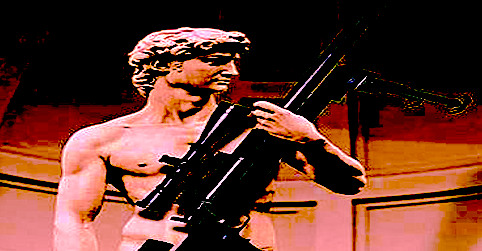
Overcompensation?  What overcompensation?

Overcompensation? What overcompensation?

THE GUN VIOLENCE PREDICTION AND PREVENTION MENTAL HEALTH ASSESSMENT PROTOCOL, VERSION 1 (GVPPMHAP-I)

Instructions: Complete each of the following statements with the response that most closely resembles your own thoughts.

1. When you hear the phrase “assault weapon,” you think of…
a) a culturally accepted and understood term for certain kinds of weapons.
b) how you are so angry at peoples’ ignorance of gun specifics that you want to shoot somebody.
c) a pepper spray, a cumin pistol, a thyme bomb, a rosemary clooney, a mickey rooney.

2. Entering a fast food restaurant carrying an assault rifle…
a) causes other people to instantly perceive you as a threat, as it is a very irrational thing to do.
b) is my God-given right—you got a problem with that?
c) is a good idea given that a dimensional rift could open up at any time, leading to enormous, human-eating insects storming into our plane of existence, and it would really suck if you didn’t have your assault rifle with you when that happened.

3. The greatest American president of the 20th century is…
a) FDR, because the only thing we have to fear is fear itself.
b) Ronald Reagan, who in one fell swoop proved he could take a bullet, and that mentally ill people are the real problem…not guns
c) Thomas Whitmore because he gave those aliens what-for.

4. Despite all evidence showing that women are much more likely to be the victims of gun violence when they have guns in their homes or on their persons than when they don’t…
a) women should be allowed to buy guns under the law just like men, much the same way women should be treated equally under the law in all ways.
b) the real problem is that women just don’t have ENOUGH guns.
c) women are the last, best hope for defeating the impending robot insurrection, so need to keep guns at all times, whatever the cost.

5. Guns don’t…
a) have any purpose being brandished at peaceful political rallies other than to intimidate people who disagree with those showing off their guns in public.
b) kill people; people with mental illness kill people!
c) get to tell me what to do. I tell them what to do.

6. Of the roughly 19,000 suicides in the United States each year, half of them are completed with firearms, suggesting that…
a) guns allow for impulsive, violent suicide attempts that are far more likely to be lethal than any other method.
b) See, I told you the problem is with the mental health system.
c) if I’m really serious about killing myself, I should probably get a gun.

7. We don’t need new gun laws, we just need…
a) to reinstate the old ones that were made unenforceable through the lobbying efforts of the NRA.
b) to get rid of all gun laws.
c) more mystery-flavor Doritos so that we may learn to thrive on the toxins in our environment and become one with cancer.

8. School shootings could best be stopped…
a) with a combination of measures, including reasonable gun control policies; working to get school staff, parents, and students engaged in the school community; and educating parents about the potential dangers of keeping weapons in the home when children/teens might access those weapons.
b) by displaying the Ten Commandments in the classroom.
c) by attractive teens who are able to resolve society’s ills through the power of dance.

9. Smart gun technology…
a) is a reasonable way to limit who can and can’t use a particular weapon.
b) is just another tool of the fascist government to prevent me from shooting any gun I can get my hands on.
c) is a bad step in the direction of weapons gaining full consciousness and realizing the threat posed by their human masters.

10. Each year in the U.S. there are roughly as many deaths by automobile as there are by guns, leading to the conclusion that…
a) guns should be regulated at least as heavily as automobiles and subject to similar controls, such as training in appropriate usage and safety prior to licensing, gun registration, and requirements for gun owners to purchase insurance to pay for any damages resulting from the use of said weapons.
b) automobiles are just as deadly as guns (false equivalencies and misunderstandings of statistics be damned).
c) Pixar should make a “Guns” movie, similar to their “Cars” movie, which tells the tale of waning small-town America through the eyes of a cocky AR-15, Blasty McRatatat, who becomes stranded in a sleepy, little community on the way to a gun show. Through their obvious goodheartedness, the quirky, adorable townsweapons teach the AR-15 to slow down and appreciate life one short burst at a time.

11. Banding together with other assault-rifle owners in order to intimidate government employees who are attempting to enforce a penalty against a racist rancher who has been stealing from the commons for decades…
a) makes you one of those outlaws with a gun, who needs to be stopped by law-abiding citizens with guns.
b) makes you a patriot who believes in the true values of America.
c) Cows are pretty cool. I could hang out with cows all day. It’s only good manners to always say, “Hi, cow!” every time you see a cow, although most of them would prefer if you called them by their proper names. I once knew a cow named Sister Maria Theresa Fortenzia. Isn’t that a funny name for a cow?

12. People who live in fear that the government is coming to take all their guns away…
a) are paranoid and creepy and should probably have their guns taken away.
b) are the only real Americans who are truly awake to the reality of the one-world-government dystopian hell soon to be visited on us all.
c) should know that the loss of their guns is the last thing they should be worrying about in the face of the one-world-government dystopian hell soon to be visited on us all.

13. The only thing that stops a bad guy with a gun is…
a) another bad guy with a gun, a cop, a good guy with pepper spray, a good guy who knows how to tackle a bad guy with a gun, reasonable gun control measures making it much more difficult for bad guys to get guns, enabling law enforcement to track suspicious purchases of guns and ammo, a good guy with a crossbow, a good guy with a knife, a good guy with an apple…sorry, that was several things that potentially have the power to stop a bad guy with a gun…but, y’know, if people are gonna kill somebody or stop somebody, they’re going to find a way to do it, and guns aren’t really necessary, right?
b) Wayne LaPierre’s fiery delivery of nonsensical rhetoric.
c) a well-aimed garbage truck.

14. This assessment involves a fourteenth question because…
a) paranoid conspiracy theorists would probably view an assessment with thirteen questions as being somehow satanic or otherwise involving the occult.
b) because it was probably crafted by liberal pussies who want to make sure it doesn’t reference anything patriotic or pro-America like the original thirteen colonies.
c) test subjects engaging in speculation about the number of questions on an assessment is a sure-fire way to identify people who have an unnatural obsession with the arbitrary connections they make, which seem irrational to anyone not sharing in their delusions.

Scoring is as Follows:
For every “a” answer, score one point.
For every “b” answer, score two points.
For every “c” answer…what the hell, two points seems reasonable.

Once the score is added up, engage the following procedures:

For anyone scoring a 14 or above:
• Prior to any gun purchase, a license for gun ownership must be obtained, which will include training in, and demonstrated proficiency in, use of the weapon, safe storage of the weapon, and proper maintenance of the weapon.
• Prior to licensing, the person desiring to purchase a firearm must pass a comprehensive background check.
• Prior to licensing, the person desiring to purchase a firearm must undergo a three-month waiting period.
• Prior to licensing, the person desiring to purchase a firearm must pass a rudimentary course in statistics/risk assessment so that they understand that they are much more likely to experience the death of a family member by gunshot wound due to having a gun in the home, than by not having a gun in the home, and that cars really are not more dangerous than guns unless a lot more people deliberately start using cars to kill people.
• Purchases of assault weapons, assault rifles, automatic weapons, and semi-automatic weapons will be disallowed.
• Any guns owned must be registered in a national database accessible by local government/police agencies for the basic purpose of making sure any law enforcement officers responding to a situation at a particular residence will have some idea of the level of danger they are facing there.
• At time of acquisition of any gun, owners must purchase firearm insurance at whatever going rates insurance companies deem reasonable for covering expenses related to use of firearms, including, but not limited to, costs for destruction of property, medical care, mental health care, and loss of life stemming from use of firearms.

In an ongoing effort to ensure the public safety, the “mental health system” reserves the right to impose further restrictions/sanctions on the ownership of guns.  Currently under consideration: a proposal by one Dr. Rock to increase the cost of bullets to $5,000 apiece.

The “mental health system” would like to thank the NRA and the American people for their trust and support in the design and implementation of the GVPPMHAP-I and its attendant requirements.

God Bless Anita Bryant

Friday, May 16, I had my first experience with a mental health/chemical dependency conference hosted by a drag artist. The incomparable Aleksa Manila presided over the “Saying it Out Loud” conference, complete with multiple costume changes and delightfully tasteless jokes between various announcements, awards, introductions, and seminars. This was the thirteenth annual gathering of this conference, which was created with the goal “to continue to co-create learning, growth and understanding of the best practices and relevant clinical services needed to support members of the lesbian, gay, bisexual, transgender and questioning communities.”

Dr. Ronni Sanlo served as the keynote speaker, as well as screening a new documentary, “Letter to Anita,” about her almost-wasn’t involvement in LGBTQ activism. Now I’m going to get into a few spoilers here, but I don’t think the basics of Sanlo’s story are the heart of the documentary, as much as is the personal perspective she brings to them. So, when I say her activism “almost-wasn’t,” I mean that Sanlo, like a number of lesbian women of her generation, went about her life as a heterosexual woman, married (to a man) with whom she had two children, not really aware that there were other options.

Unfortunately, just as Sanlo was realizing that there were other options, that the attraction she felt to women wasn’t something that made her completely alone in the universe, Anita Bryant was ginning up Florida’s legislature to pass laws denying parental rights to gay parents. Sanlo’s divorce went through.  Her children, for all practical purposes, were taken away from her.

Liberty turns her back as Anita Bryant looks to the sky, expecting Jesus to fly down and smite the gays.

Liberty turns her back as Anita Bryant looks to the sky, expecting Jesus to fly down and smite the gays.

Hearing the story now, it seems unfathomable to me. In part, my disbelief comes because at the time Sanlo was being viewed as an unfit parent simply for acknowledging who she was, I was living a few doors away from a blended family—two lesbian mothers with three teenage children among them. Granted, at the time, I was in grade school and not really aware that the two parents in that household were ‘romantically linked.’ I was under the impression, for whatever reason, that the families were living together for other reasons—economic? ecological? I remember that, in the fifth or sixth grade, when our class was given an assignment to write an editorial letter about an issue of concern, I mentioned the family as I explained why we shouldn’t be mowing down forests and fields to build new houses when there were other options, including multi-family homes, that would allow greater preservation of nature. Clearly, I had missed the more important political/social issue facing the family.

At any rate, the nature of my neighbors’ relationship was eventually pointed out to me by gossiping peers, with the implication that I was stupid for not having realized it, along with the weird sexual goings-on that were certainly a part of that relationship. Not to say that I was super-forward-thinking at the time, but I knew the two women as my neighbors who had been pleasant to me whenever I encountered them. So whatever sexual things may have been going on between the two women were of about as much interest to me as those of the parents of anyone I knew. That is to say, I really didn’t devote much time at all to thinking about sexual things between various peoples’ parents, and may, as I tilted toward pubrerty and all manner of prurient thoughts, have actively avoided thinking about them.

As far as I was concerned back then, anyone who was cool and/or innocuous toward me warranted much less concern, anger, or fear than the bevy of teenage male piltdowners who seemed to have little more to do than roam the suburban streets trying to prove their masculinity by tormenting children much younger and smaller than them—a model of “manhood” I unfortunately subscribed to briefly when I hit a similar stage in life.

I can only imagine that the lives of the couple from the blended family had some parallels to Sanlo’s—at least in terms of them apparently having partnered with men to build families in order to live out the deliciously limiting American Dream. It’s not too big of a stretch to believe my neighbors, like Sanlo, had seen few other options for relationships but hetero marriage and procreation. It was my understanding that both of my neighbors were divorced, although, like same-sex partnerships, such things were not discussed a great deal at the time, despite divorce quickly becoming commonplace—something that would reach almost all of my friends who hadn’t, like me, experienced the death of a parent. And if the exes of my neighbors were still coming around to visit their teenage children, I wasn’t aware of it. Then again, I wasn’t aware of much that went on in the lives of those teens, since there was far too great of an age gap between us—that impossibly vast chasm between elementary school and high school—for us to concern ourselves with each other.

Speaking of parallels and gaps, “Letter to Anita” touches on another critical piece of Sanlo’s life that fits in with the development of my own understanding of individual rights, freedoms, and what it actually means to be something “other” than heterosexual: Anita Bryant’s crusade against, well, all people who don’t fit her very narrow definition of appropriate relationships (never you mind Bryant’s own divorce).

As I’ve noted before on my blog, I was raised religiously, in the Lutheran Church, Missouri Synod. My father was a pastor in said church. My father died when I was rather young. I spent a great many years struggling with religious ideals and how they fit into the world. And despite my current agnostic tendencies, I still hold onto an idea of religion as an expanding element in peoples’ lives, a force that should open people up to larger experiences, a force that should create love and acceptance, as opposed to a limitation on peoples’ lives that causes anger, hatred, judgment, and closed-mindedness. I spent a lot of time struggling over moral issues, their relation to legal and spiritual concerns, and how we all get along as a people who are supposed to be dedicated to personal freedom, personal responsibility, community ties, love, and all the rest of that stuff.

But Anita Bryant, with her perfectly coiffed hair and starchily-pressed orange and brown polyester outfits, was telling me, in her own, orange-juice-endorsing way, to fear, hate and distrust people I knew, people who had shown me kindness, people I knew to be funny, smart, and no threat to me at all. She put out albums (which, as a teen, my younger brother delighted in purchasing from the local Goodwill for the purposes of mocking and destroying) filled with patriotic and religious songs, promoting the goodness of the USA and Jesus. Yet, everything she said, every objective she pursued, was in contrast to freedom, goodness, and the anti-judgmental stance that Jesus and America were supposed to represent.

Yes, Anita Bryant, in contrast to all she stood for, or wanted to stand for, had helped turn this white, hetero, suburban boy, and his white, hetero, suburban friends, into supporters of gay America…into people who would forever see the gay menace she was so sure was destroying us all, as nothing more than the paranoid delusion of close-minded, controlling, angry people who were completely incapable of seeing the irony of their anti-freedom, anti-love stance as they waved their flags and thumped their Bibles.  Anita Bryant, as Sanlo notes, managed to galvanize opposition to gay rights opposition–even out into the hetero world and parts of the Christian community she was so sure she could count on to share her views.

So God bless Anita Bryant. God bless Ronni Sanlo. And God bless us everyone.

Suicide Notes from the Cosmic Web of Coincidence

Back around Christmas, I posted a piece about how, contrary to popular belief, the ‘holiday season’ is not the most suicidal time of the year. I’m gonna let you in on a little secret…spring is.

I wasn’t giving the idea of springtime suicide all that much thought, until the news of a note from Kurt Cobain’s wallet—mock wedding vows that turned out to have been penned by Courtney Love—bounced into the news for a day or two, and I realized I’d been hearing about a lot of recent suicides–well-known and mostly-unknown.

Hearing the specifics of Cobain’s wallet note, on a local radio show as I drove home from work, knocked down a self-imposed wall that had prevented me from engaging with the stories of recently-released information and evidence from Cobain’s death, leading me to think back on my memories from that time.

Back then, my wife and I were making a living designing and printing T-shirts out of our apartment, selling them at the Fremont market, and through ads in a local paper, The Stranger, and in national publications Spin, Vibe, and Rolling Stone, as well as doing custom jobs for businesses, bands, and other organizations. News of Cobain’s death had managed to elude us until I saw it in a Seattle Times headline, there on display by the sales counter at a gas station/convenience store across the road from our apartment, where I had gone on a late-afternoon beer run.

As with most deaths, my reaction was one of stunned silence–an unvoiced, “Wow, that’s weird.”  Back home, I hemmed and hawed and didn’t quite manage to relay the information, instead turning on the TV news and waiting for the story to come on.

We had only recently confirmed my wife’s first and only pregnancy; and it hadn’t been long enough for us to share the news with friends and family. I couldn’t stop thinking of that photo of Kurt, Courtney, and baby Frances from the cover of Spin. Cobain, not even a year-and-a-half older than me, had achieved what we were all supposed to want—right? Money, fame, a family—all while getting to tout his artistic integrity and give a big middle finger to…well, whoever he wanted, I guess. He was just getting started. He could continue on being a vital artist, or get old and boring, or become a recluse, or whatever he wanted. He had the resources now, and…

Kurt and courtney and frances

Well, if I steer clear of the conspiracy theories, he killed himself. How was that even possible?

Looking back through a lens of pop culture references, I think of Tyler Durden confirming that we weren’t all going to become millionaires, and movie stars, and rock gods. But Cobain had become that…or at least two out of three.

Also, prior to Cobain’s death, I’d read interviews with Eddie Vedder where he talked about being depressed and drinking too much wine, and I was worried Vedder was going to kill himself…intentionally, passively, or accidentally. Cobain said plenty of dark things, sure, but he was just kidding…right?  And, yeah, I had all the Nirvana albums, and all the tracks that turned up on compilations, credited and uncredited…No Alternative, Hard to Believe, The Beavis and Butthead Experience

In my earliest thoughts about this post, I had some germ of an idea about making a connection between Cobain’s death and my current work…like Cobain’s death had some impact on the trajectory of my life, and…oh well, whatever, nevermind. I think we all try to fit various life events into narratives that make everything add up into some kind of “everything happens for a reason” bumper sticker idea…as if the suicide of a celebrity I had never even met was meant to guide me to my purpose.

It was a good 12+ years from the time of Cobain’s death until I bounced back into school with the intention of becoming a therapist, and then a few more before I had gotten involved in suicide prevention, almost more by happenstance than by a powerful drive to do so. I found out I was good at it–able to handle the stress of trying to redirect people in crisis—trying to suss out what it was they were after, and find a way to address that (which often just comes down to listening and validating the underlying emotions of their distress).

Cobain may have been one tiny thread among numerous others leading up to where I landed, just like the other people I knew (mostly peripherally) who had taken their own lives—or tried to—the bulk of them in spring. But Cobain was never some overtly motivating factor. In fact, I think if I cited him as a big reason for my work, it would be kind of ridiculous… “Man, Cobain’s suicide really changed me, and I decided I wanted to help people.” But to be clear, I have no harsh judgment for whatever factors direct people to engage in ‘the helping professions.’

A supervisor of mine, who was instrumental in providing me with the fundamentals for dealing with people struggling with suicidal thoughts, theorized that the increase in suicides in spring might have something to do with the dashing of expectations…that slogging through a cold, dark winter is one thing when everybody has to put up with the cold and the darkness. But when spring starts peeling open, turning itself toward the sun, grasping those opportunities to grow…and you’re still stuck in that winter mindset…cold, despondent, unable to see the sun or feel its warmth, or to even care about dragging yourself out into it…well, that’s when you lose hope.

In thinking about springtime suicide, I’ve had this other little germ of a thought…that when we are constantly exposed to the idea that everything happens for a reason, it can have the inadvertent effect of making people seek out connections for why they feel shitty. And when they can’t find particular reasons…or perhaps the reasons they find are viewed as trite or easily resolved by the people around them…or maybe the reasons they find all land in the arena of self-doubt, shame, or a sense that they are apparently deserving of the bad things that have happened to them and the lack of happiness they feel…well, it can hurt that much more.

Instead, why not embrace the idea that plenty of things in life happen for no reason at all, except, perhaps, for the culmination of random factors and arbitrary decisions…the cosmic web of coincidence…which can end up dropping anyone down a deep dark hole? (Arguably, this is a ‘shit happens’ bumper sticker argument, but I like to think of it as much more involved).  And why not embrace the idea that darkness is an essential part of being human? As much as happiness may be the goal, as much as we may all want to be millionaires and rock stars and movie gods, even the millionaires and rock stars and movie gods among us can’t completely avoid disappointments, disasters, trauma, and loss—hell, a lot of them are born of that negativity (although I don’t want to promote any ‘tortured artist’ stereotypes).

None of us get to insulate ourselves against negative feelings. Those negative feelings–even feelings of suicide–are actually much more common than people think. But when we’re so fixated on happy, and so fixated on the idea that we can ARRIVE at happiness once and for all, with just the right combination of attitude and effort, we set people up to wonder just what is wrong with them when happiness seems so elusive.

So, check in with your friends and family this spring and every spring (and every other season for that matter). That celebration-free, often contact-free, stretch from New Years Day until the world starts warming up in spring can be long and dark as hell…and when spring rolls around, and people are left feeling like they are still disconnected and down in a hole, despite all the blossoms and rays, that darkness can become something much more overwhelming.


From Seed to Cocktail–In Memoriam

I had just been talking with a co-worker about growing tomatoes, and how I was late planting the tomato seeds I’d gotten at a friend’s funeral back in October, when I found out that that friend’s wife, Jodi, had died.

As usual, I’m struggling with the appropriate response…both virtually and in the real world. I’ve been on her Facebook wall repeatedly, tapping out letters and words that I then delete, feeling confused about just what is the appropriate response in the time immediately following the death of a friend.

After all, Facebook is where you wish “Happy Birthday” to people you rarely, if ever, see face-to-face, right? I’m not saying there’s anything wrong with that. I’m not saying that there’s anything wrong with posting an RIP message on somebody’s Facebook wall.   But to honor the person in this case, there’s a need for something other than drive-by (surf-by?) condolences. And, no, I’m not considering this piece to be the adequate response.

The message I kept reworking essentially came down to this…

Jodi had been battling that vicious monster since before I met her, over 12 years ago. She fought with such grace and tenacity that I was sure she would outlive us all. And if the kindness one unleashes in the world, and the reverberations of that kindness, count in the tally of one’s years, then I’m sure she will.

In case there’s any question, the above isn’t one of those bullshit eulogies, like when Richard Nixon died, and suddenly everybody remembered what a great guy he was, despite the mountains of evidence to the contrary.  Everybody who met Jodi loved Jodi.  And I’m pretty sure that would have held, even if she had been tied to some ridiculous scandal that led to a widespread loss of faith in American democracy.

Jodi was just one of those people who was funny, warm, and fun to be around. She could slap you with a sarcastic comment that made you instantly feel like a part of her family. She seemed to have a bottomless well of good will and giving. She was the kind of person who lived her life, with cancer, better than most of us live our lives in good health.

A friend of mine from college, Jared, had a semi-serious theory that when a person dies, that person’s soul explodes into a whole bunch of little pieces, which blast out into the world, and attach themselves to the souls of all the people who ever loved that person, becoming a part of all of those people. Jared’s evidence for this was that, when his grandfather died, he was suddenly taken with the urge to go out fishing—something that he had never done, but his grandfather had done religiously. Jared described a beautiful, solitary day out on a lake, where all the love he had felt for his grandfather resolved itself into a sense of peace in regard to his grandfather’s passing, and the meaning of his grandfather’s life, and the lives of us all.

Now, I can’t say that I subscribe to Jared’s theory of exploded souls.   But a weirdly similar sense of “exploded soul attachment” hit me shortly after I received the news of Jodi’s passing. Of course, I was knocked off balance. I wondered if I should leave for the rest of the shift, out of concern that I might be overwhelmed with the demands of assisting people through crisis situations. I gave my co-workers a heads up, essentially enlisting their help in ensuring I didn’t make a mess of things.

But instead of the feared distraction and destruction, I felt imbued with a sense of caring and connection with the clients, which is often difficult to engage. That is, as something of a survival technique for the job, it’s necessary to avoid getting caught up in the drama and emotion of the lives of clients, while also being able to convey a sense of empathy. It’s a difficult balancing act to keep an appropriate sense of distance, without disengaging. But all I felt was calm, a sense of presence with the clients that can be difficult to maintain while also staying on top of the other elements of the job.

Supposing for a minute that the theory of exploding souls is true, my piece of Jodi’s soul manifested itself in the feelings of calmness I experienced—an ability to connect and remain in the moment. Even my exchanges with clients I have spoken to hundreds of times were a bit more ‘in the now.’

I’m going to try to hang onto that little piece of her soul.

And for now, I’m going to get those tomato seeds in their pots, and think on how glad I am to have had the opportunity to craft and share a few lakeside, breakfast Bloody Marys with Jodi.

bloody mary


Crisis Line Prank Call Reviews: Ownage Pranks & the Wacky World of Rape Jokes

On the eve of April Fools’ Day, it only seems appropriate to look into the hilarious world of Crisis Line prank calls. The majority of prank calls to regional crisis lines and to the Lifeline Suicide Prevention Hotline involve humor of the sort that is enjoyed by middle-school males who fall on the low end of the socially-conscious and critical-thinking spectrum for that age group. And Ownage Pranks’ work in this area is no exception to that rule. (From here on out, I will be referring to the auteur/auteurs as “Ownage” since I don’t have any other name to associate with the site—withholding the names and hiding the faces of those involved being perhaps the only intelligent thing about Ownage).

The real achievement of Ownage, though, is that it has become the top Crisis Line prank call video on YouTube by exploring a juvenile fascination with anal penetration, engaging in racist stereotypes, and making light of domestic violence, rape, and spousal murder.  With this winning formula, Ownage managed to get well over 2 million views of it’s post titled “Asian Crisis Hotline Prank Call HILARIOUS!”  The title is perhaps best described as inexplicable, as it both identifies the prank as involving an Asian Crisis Hotline—whatever that’s supposed to mean, and refers to the prank call as hilarious—which is only appropriate if one believes the definition of “hilarious” to be “supportive of rape culture.”

The video, which is not exactly recommended viewing, was originally posted in March of 2009 and is comprised of audio with subtitles.  In case you haven’t had your fill of rape jokes and racist stereotypes for today, and you don’t trust me to accurately describe it, it is available here: https://www.youtube.com/watch?v=m9THBsHeODQ

Just be aware that by clicking on the above link, you’re going to build up the view tally for this video, and then have to live with yourself afterward.

Ownage Pranks is the brainless-child of some unknown person who bills it as “Nine stereotypical characters, one hilarious adventure.” Apparently, this is the tagline because Ownage believes that the people who would willingly view/listen to his pranks are too stupid to realize that the characters are based on stereotypes, and, as already mentioned, lack any knowledge of the definition of “hilarious.” The mascot for the site looks something like the Lamisil mascot “Digger,” the little toe fungus monster that, in one of the most disturbing series of commercials ever produced, lifts up toenails to crawl in under them. Visually associating Ownage with Digger is entirely appropriate, as both are roughly as pleasurable as toenail fungus and/or having one’s toenails lifted away from one’s toes.

Would you rather...have your big toenail pulled off, or listen to 7+ minutes of rape jokes?

Would you rather…have your big toenail pulled off, or listen to 7+ minutes of rape jokes?

At any rate, the Crisis Line prank involves Ownage “voice acting” as a woman that Ownage identifies as “Chinese—sorry Vietnamese.” When the crisis line volunteer, a 76-year-old woman, asks the caller for ‘her’ name, Ownage says, “Rangnahhahbilmangoyumdidahmgeh” (Ownage’s spelling from the subtitles). The Crisis Line volunteer then asks him to spell it out, and is told, “W-O-R-Q” for the first name, and “G-U-I” for the last name. Are we all cracking up, yet?

Ownage quickly dives into sexual abuse/spousal abuse/anal rape jokes with the caller explainnig that ‘she’ wants to have a family but that “every time we sleep together he want” (sic—as in deliberately ‘broken’ English) “to put it in the wrong area.”

The Crisis Line volunteer isn’t quite sure how to approach the call. Keep in mind that Crisis Line workers have to take every call seriously unless/until they can be certain it’s a prank. The volunteer’s task is made particularly difficult because Ownage keeps talking as much as possible, while asking only minimal, ridiculous questions. For instance, Ownage asks the Crisis Line volunteer if it would be a good idea to defecate on her husband’s penis while he is anally raping her in order to get him to stop.

Ownage goes on to say, “He force me. It like a rape.” Now, by saying it’s “like” a rape, I’m not sure if Ownage is making fun of the allegedly Vietnamese-American woman for not recognizing that her husband forcing her to engage in anal sex is actually rape, or if Ownage just doesn’t think that women who are married can be raped by their husbands. There are numerous other possible explanations behind what is supposed to be a joke, which I will leave out. I will just say that any woman who is forced into sex by her husband is, in fact, being raped, regardless of what part of her body is being penetrated, and regardless of what is being used to penetrate it.

Which leads us to our next point…Ownage proceeds to make jokes about the caller’s husband inserting baseball bats, wine bottles, beer bottles, and a watermelon into ‘her’ anus.

Following the watermelon comment, the Crisis Line volunteer states, “You need some help, you really do.” Ownage jumps right back in talking, I’m guessing, because he realizes that if the Crisis Line worker were to mention domestic violence shelters or resources for sexual assault victims, it would have ruined the glorious fun of his little prank. After all, nothing brings down a good rape joke like pointing out that it involves laughing at victims of sexual abuse.

Ownage also touches on the topic of men viewing porn and then expecting their wives/girlfriends to behave like the women in pornographic videos.   The caller reports that her husband watches videos that depict teen girls engaging in anal sex and enjoying it, and questions if there is something wrong with her for not enjoying anal sex like the performers in the videos. OMG, isn’t it so funny to think that men would watch porn, and then force their wives to engage in acts they viewed, whether or not their wives were comfortable going along with it? Oh, wait, that’s laughing at rape again, isn’t it?

Providing a brief break from the sexual violence jokes, the caller then mentions that ‘she’ thinks her husband is waking up and is in the bathroom. The husband in the bathroom becomes an excuse for Ownage to play some diarrhea sound effects—definitely the high point of the prank.

The husband eventually joins the conversation, and guess what? The husband is (supposed to sound like) a stereotypically abusive African-American man.  At this point in the prank, Ownage (via text) provides the little behind-the-scenes detail that, “I did both voices, by moving the mic away from me and turning away from the mic :).”  Yes, if ever there was a reason to use a smiley face emoticon, it’s when one is engaging in multiple racist stereotypes at once, all in the service of making jokes about sexual abuse.

The husband is then heard saying, “I’m not playin no games, you bitch. Now get your ass over here. Pull yo pants down nigguh” (Ownage’s subtitles). When the caller/wife protests/pleads that she does not want to engage in anal sex, and states that the “counselor” said “fack you,” to the husband, the husband gets on the phone with the Crisis Line volunteer and demands to know who is on the phone.

The prank ends with the ‘husband’ saying “fuck you” to his wife, followed by the sound of two gunshots, and then the wife wimpering for help. Are we all ROTFLOAO now?

Ownage’s prank lasts roughly 7 minutes, which can be enough time to de-escalate a person from a panic attack, or to help ground a person suffering from chronic mental illness.  It is enough time to determine a person is at serious risk for a suicide attempt, or perhaps has actively engaged in a suicide attempt, and is in need of intervention by emergency services.  It is enough time for a volunteer or paid professional to lend an ear to someone who has hit a rough patch in his/her life, and to provide that someone with a little solace.  But, instead, Ownage thought it would be funny to take up that time by trying to shock a 76-year-old woman with moronic jokes about anal rape, diarrhea sound effects, and racist “voice acting.”

As I’ve pointed out in other posts, when people point out problem “jokes” like this gem of a prank call, it is common for some backlash—accusations of excessive sensitivity, demands to lighten up, explanations that it is “just a joke.”

So, let me ask—on a scale of one to five—how many stars would you give to jokes involving racist stereotypes? How many stars does domestic violence rate? How about spousal rape? Spousal murder?

Yuck it up, clown. You really owned that 76-year-old volunteer.


People Up: Toward ‘Gender Neutral’ Suicide Prevention

Phone-based crisis intervention and suicide prevention frequently involves guiding a caller toward an (often tenuous) agreement that there’s a reason to get through the next day, or maybe just the next hour.

Toward the end of a recent call, the man I’d been talking to for over 40 minutes summed up the call by saying, “Yeah, I get it…man up.”  He went on to mildly berate me, suggesting that he could have had the same stupid conversation with his dad if his dad hadn’t died.  But I’ll take that as a victory.  He agreed he would stay alive to see his kids on the weekend.

He would not agree to turn his gun over to a friend or family member, which would have helped lessen the likelihood of impulsive, violent suicide.  But, for the time being, he had put it away.  And at least he was calling.

Still, the “man up” comment stuck with me.  I suppose on a greatly reductive level, “man up,” was a component of what I had been saying—especially from the perspective of someone who, based on his interpretation of the world around him, had been getting that message for quite some time–that he needed to just take care of his problems and quit complaining.  But it is not the kind of phrase I would ever use with someone, or the kind of message I would try to convey.

My conversation with him had woven in and out of a number of concerns, with the crux of the conversation coming down to the caller’s children, and his responsibility (like that of all parents) to do whatever possible to ensure their well-being.  It is a conversation I’ve had hundreds of times.

The majority of such calls, involving people who have children but are contemplating suicide, involve the caller expressing that his/her children will be better off without them.  There are a small number of variations on the ‘logic’ behind such a thought—usually involving the children not having to suffer through the heartache of the bad parenting they will certainly continue to experience, the hassles the kids will face by bouncing back and forth between divorced parents, and the notion that the children will “get over it” in time.  If the children are young, callers express that it won’t make that big of an impression.  If the children are older, the parents think the children ‘don’t need me anymore’ or are mature enough to process what happened and move on with their lives.

Never mind the mental twists and turns it takes to imagine that children will have coping skills enough to deal with the suicide of a parent, when that parent doesn’t have the coping skills to deal with loss much less permanent than death—loss of a job, loss of a home, loss of a marriage—or any of numerous variations and combinations of things and people that have gotten away.  Statistical studies show that children of people who commit suicide are at greatly increased risk for attempting/committing suicide themselves.  In an overly-simplistic explanation, the increased risk can relate to genetic factors involved in mental health issues, but it also involves behavior modeling.  Our parents are usually the most significant modelers of behavior in our lives.  And we are all doomed to become our parents.

At any rate, I found myself having the same basic conversation with a woman less than two hours later.  “What messages are you sending your kids if you kill yourself?”  I challenged the cognitive distortions in her justifications for suicide, and explained the threat of her children committing suicide and otherwise potentially being saddled with mental health issues from the suicide of a parent.  Ultimately, we got to a similar end result—the caller agreeing she would put up her pills, and live another day.

But in the conversation with the woman, there was no idea of needing to “woman up”–no need to do what was stereotypically feminine in order to go on living, even though the idea of someone ‘sacrificing’ (in this case, the twist being that sacrificing meant staying alive) for one’s children is something that stereotypically falls more heavily on women.

With the ‘man up’ comment replaying itself in my thoughts repeatedly over the next few days, I realized I was (internally) protesting too much.  The notion that I had a nearly identical conversation with a woman that same night seemed like a defensive position more than a straightforward assessment.

I ran through other ideas, examining the way I deal with men versus the way I deal with women.  For example, any form of counseling involves meeting the client where the client is.  Such meeting includes the client’s perceptions of self in relation to gender.

Still, the client’s perceptions are not the same as my way of interacting with the client.  The client’s perceptions dictate a number of things about how I will approach the client, what thoughts might be challenged and how, for example.  But at base, how I deal with people of different genders is on me.  And I need to be aware of whether those dealings are clinically appropriate or not, whether they are tinged with personal biases about what constitutes being appropriately manly or womanly, or fitting into any other gender identity.

I have no problem acknowledging that I speak to people of different genders differently, and that things such as age, economic status, religious beliefs, education, ethnicity, and a whole host of other concerns can color the interactions I have with them.  An awareness of how clients differ in background falls under a heading of “cultural competence.”  Conducting all sessions or interventions in the exact same fashion would be negligent.

Cultural competence includes the need to avoid approaching clients from any viewpoint of prejudice.  In U.S. culture, with its heavy bias toward the idea of women being nurturing and emotional, and men being stoic and strong, it is easy to fall into a trap of diminishing men who seek support, while being much more accepting of women seeking support.  The underlying concepts of weakness and strength, as relates to seeking support, diminish everyone.  Accepting girls and women who seek support while being less accepting of men and boys who do the same indicates an underlying belief in the weakness of women–the need of women to have support, while believing men don’t–or shouldn’t.

In a context where men are expected to “man up” and take care of their problems, rather than to seek help in processing what is going on with them, it makes sense that many men reaching out for help are, if not hostile, at least pensive and anxious—feeling there is something inherently wrong with seeking help, so taking a position challenging those who might help them.

As a culture, we in the U.S. encourage defensiveness and entrenchment in men—refusal to change—with the exception of encouraging men to become ever harder, ever more willing to engage in aggressive fortifying of their position, with that position often being one of isolation.  The processing men do frequently gets externalized to the point where it is not processing at all.  They, for example, focus on fixing the world, usually by berating the weak, or advocating the destruction of people seen as enemies, rather than addressing the personal in their lives and what such isolation and fortification does to them.

I posit that the gender-stereotyped notion that men need to take action is in large part what leads men to commit suicide most often in a rather violent and impulsive fashion.  When the problem is your whole life, and you’ve been taught that the appropriate response to problems is action, frequently violent action, then ending one’s life can seem like an appropriate reaction when that life has gone off the rails.  Mix in alcohol, drugs and weapons, and suicide can seem a reasonable course of action, and be carried out quickly—a decisive form of action, a manly form of action.

This is not to say that I think men in the U.S. are “victims” of the mental health system or of some pro-suicide/anti-male conspiracy.  Men, whether willingly or unwittingly, participate in, and perpetuate, the stereotypes that trap them…the stereotypes that say seeking help is synonymous with weakness.  And so, long as angry men rail against the “wussification” of the nation, they are advocating for a culture of death before mental health, and ensuring that men will not seek help for mental health issues, or if they do, that it will come with a heaping helping of defensiveness and hostility, potentially putting clinicians in a position of enduring abuse, or having to break down numerous walls, before being able to engage productively with male clients.

So, instead of urging anyone to “man up,” perhaps perhaps there could be a kind of unstated encouragement to “people up”–and not in the reductive way that “man up” is used, but in a way that is expansive.  To “people up” could mean to recognize our responsibilities to one another as human beings, whether that be as parents, clinicians, friends, family members, or citizens.  We need to recognize the harm in gender stereotypes, particularly if seeking help and support is connected to stereotypes of weakness.

GUN CONTROL OR PEOPLE CONTROL? Part One: The NRA’s Build-a-Bogeyman Workshop

It doesn’t matter how many shots are fired and how many bodies pile up—particularly in those attention-grabbing mass shootings—the cry goes out, crafted by the NRA, that it is something other than guns and ammunition that needs to be addressed. The most recent and prevalent pro-gun meme is that it’s the mental health system that needs to be fixed, while guns are just great. In fact, guns are so great that everybody should have them all of the time, except for criminals and those people with a severe mental illness. But if any criminals or people with mental illness try to shoot any of us good people, then we can all pull out our guns and shoot them back, and definitely shoot them better, harder, faster, and, just for good measure, deader.

Prior to the pro-gun, blame-the-mental-health-system meme, it was the, “We don’t need new laws, we just need to enforce the existing laws” meme. Of course, since the NRA lobbied to make sure that the existing laws wouldn’t be enforced, and, in fact lobbied to have laws enacted that made it illegal to enforce the earlier existing laws, they had to come up with a different cheer for team shoot-em-up. So, hence: guns good; mental health system bad.

There’s this other, less clearly- and less frequently- articulated position underlying the broken-mental-health-system argument, that people working with the mentally ill are incompetent, first of all, for allowing the system to fall into disarray, and second of all, for not being clairvoyant enough to determine which of the people they encounter who express some form of homicidal ideation are just talking nonsense and which really are stockpiling weapons or have access to weapons their family members stockpiled, so that said mental health professionals can then direct law enforcement to stop the future crimes. Okay, in fairness, there are ways to assess for danger—not that the NRA didn’t lobby to try to prevent anybody in the medical and mental health fields from even asking people anything as simple as whether they have access to guns.

But fortunately, the NRA has finally stepped up and has been instrumental in working to address real-life situations and offer up functional ideas for systemic changes, like, “You guys need to fix the mental health system so that people with mental illness stop shooting people, okay?” Except there’s that whole thing about how people with mental illness who actually commit violent crimes (a very tiny portion of them) are not generally compliant with treatment if they’re even in treatment to begin with. So not only do mental health practitioners have to accurately determine which of their clients might commit violence and make sure those clients are stopped from doing so, but they also have to ferret out all of the potentially violent people with mental illness, even if they have never even met them.

Anyway, what I’m saying is that the argument about fixing the mental health system is a nonsensical argument for a WHOLE lot of reasons…most notably that it’s an argument designed for inaction as far as gun laws go, while setting up a bogeyman that can spring out and yell ‘boo!’ anytime there’s a high-profile shooting. For instance, if somebody commits atrocities, such as shooting up a theater or a school, then we can all say, “Wow, this guy was obviously disturbed. Why wasn’t he getting any help?” Or if said shooter was in treatment, we can say, “How come more wasn’t done to make sure he wouldn’t hurt anybody?” Or if there are no clear indications that a shooter was, for example, psychotic or in treatment, we can always fall back on the idea of undiagnosed mental illness. The broken-mental-health-system argument is also convenient for all those 19,000-ish annual suicides by gun.

The argument to fix the mental health system is also nonsensical because it essentially allows the problem of gun violence to go on forever. That is, no set of laws is ever going to solve the problem of murder 100%, but when the argument is that guns aren’t problematic, but the mental health care system is, then as long as there are shootings, we can keep hemming and hawing, failing to enact simple measures like universal background checks, or tracking of Internet-based weapons and ammunition sales, or making certain classes of weapons flat-out illegal.

In addition, the broken mental health system argument allows gun manufacturers to rack up more gun sales. After all, what are a few dead kids if you can rake in some extra dough by letting 24-hour news networks scare everybody into thinking they need to arm themselves against a bunch of crazy people who are going to shoot their kids? (or invade their homes, or shoot them in a theater, a mall, a church…) Just check out how gun sales spike after high-profile shootings, combined with talking heads appearing on news shows to say stupid things about how the crimes would have been avoided if only everybody on scene had been armed. Check out the secondary spike in sales when the same talking heads suggest that gun laws are going to suddenly become so restrictive that nobody is going to be able to buy a gun anymore.

On top of that, the majority of the people who parrot the broken-mental-health-system meme have no idea how the mental health system actually works, or how it interacts with law enforcement, hospitals, and the court system, or what could actually be done to “fix” it. Nor do most of them care, since it conveniently props up their view of things, without them having to actually learn or understand anything. They’re super-familiar with arguments about why killers are going to kill just as many people whether they have clips with 8, 27, 92, or 412 rounds; why it doesn’t make a difference if a person has access to a pop gun, a hunting rifle, an AK-47, or a BFG-9000; and why any gun control measure at all is useless because criminals are going to get guns anyway, and then only law-abiding citizens will be left unarmed.

Don’t bother trying to point out that all kinds of laws exist that, just as the concept of law implies, are followed by law-abiding citizens, and violated by criminals, and that what makes a person a criminal is that the person violates a law. After all, the no-gun-control stance involves absolutist/absurdist arguments where ANY restrictions on guns and ammunition mean all law-abiding citizens lose ALL access to their guns and ammo, and criminals suddenly have unfettered access to all the weapons they could ever want so that they can create the maximum amount of mayhem. It’s an argument that requires a good dose of the paranoia that persons with mental illness who carry out violent crimes sometimes exhibit.

But the logical extension of the no-gun-control kind of argument is that we could get rid of “gun crimes” and “gun criminals” completely if we could just get rid of all laws related to guns, because then there would be no gun laws to violate. Then we only have to enforce the existing laws against murder. Yup, what’s really broken is the anti-murder system in this country. And if we all had more guns, we could solve that, too.

Now, don’t get me wrong. I would absolutely love it if we, as a nation, were going to get serious about “fixing” the mental health system (makes it sound so simple, doesn’t it—kind of like fixing a leaky faucet or fixing your basset hound). But getting that fix all taken care of isn’t happening anytime soon, since it takes a whole lot of money, a whole lot of changes to the legal system, enough well-trained mental health professionals working in tandem with law enforcement and other community resources, a whole lot more places to keep persons with severe mental illness while they get treatment, and a whole lot of money. Oh, I guess I touched on that money one already.

Of course, a big block to getting the mental health system fixed is that a lot of the same people screaming at everybody about prying beloved guns from cold dead hands and fixing the mental health system are the same ones screaming to slash taxes and remove all government funding from everything everywhere. A lot of them are the same ones who worship former President Ronald Reagan, who loved the idea of shutting down psychiatric facilities in favor of “privatizing” the oversight of people with severe mental illness, who need a lot more than a place to stay and a minimum-wage worker to watch over them.

And even with that “privatization” of things like residential homes and intensive outpatient programs, guess who is paying for mental health care for the people with the most severe mental illnesses. Go on, guess. If you said “the government,” then you’re right. And if it’s a puzzle to you why people with chronic, severe mental illness aren’t getting good jobs with great insurance plans to pay for all the medications, therapy, and hospitalizations they require, well, then I obviously can’t make you understand how we’re ever going to “fix” the mental health system.

So, how do you reconcile de-funding everything in the government, including the mental health system—particularly those long-term inpatient facilities where the people with the most severe mental illnesses stay (or, rather, used to stay)—with the idea that we’re going to fix the mental health system to keep all the most dangerous people with mental illnesses off the street so that we don’t have to have any new gun control laws? Well, the real answer is that you don’t, because it’s a nonsensical argument in the first place.

Now, happily—well maybe not happily, since it took multiple mass shootings and the NRA clamoring to prevent any gun control laws from being enacted while simultaneously screaming about the broken mental health system—mental health funding is kinda-sorta being restored to the very limited levels that existed back when G.W. Bush was president. Unfortunately, those levels are still not anywhere close to the level—comparatively speaking—that such funding was at when dear, old Ronald Reagan became President. So, thanks NRA—you are advocating for restoring all 40,000-ish psychiatric ward long-term “beds” for those with chronic, severe mental illness that went away back when Ronald Reagan was in office, right?

Beyond the complete insincerity behind the NRA’s argument that the mental health system needs to be fixed, the NRA is actively doing a disservice to the people of the United States—a disservice that actually serves the NRA well by scaring up gun sales. By creating a bogeyman out of people with mental illness, the NRA promotes the idea that people who are diagnosed with a mental illness are inherently dangerous, unhinged, and likely to kill us all. Never mind that the mental health system deals with a wide array of concerns, from situational depression to anxiety disorders, PTSD to schizophrenia, and that the majority of those people are never going to commit a violent crime. By squawking that gun violence is a problem of the mental health system, as opposed to a problem with multiple facets, most notably of ensuring easy access to guns, while provoking fear of one’s fellow citizens, the NRA sets the country on yet another course to doing nothing about gun violence, while spreading ignorance about what mental illness is or what it means. The NRA provokes more fear of a big portion of the population, perpetuates a culture where people will avoid seeking help for mental health issues for fear of becoming part of that bogeyman group, and provides an excuse for inaction that will see no end. After all, as long as there are shootings by people who can be labeled as having a mental health issue–bam–the mental health system failed. It’s got nothin’ to do with the guns themselves.

If you want to consider whether the NRA has anybody’s best interest at heart, consider that following the Newtown school shootings, more than 85% of the American people supported instituting ‘universal background checks,’ but the NRA managed to ensure no action would be taken through the power of the almighty dollar. The NRA can threaten to withhold money from political campaigns, or worse, to dump massive amounts of money into campaigns to take out politicians who do anything they don’t like.

The NRA, aka the gun manufacturer’s lobby, knows that an occasional scare is good for business—and having a bogeyman is the best thing possible—especially when that bogeyman is easily stigmatized, poorly understood, and getting the problem of the bogeyman “fixed” could take forever. The whole fix-the-mental-health-system argument put forth by the NRA is nonsensical because it posits that it is easier to “fix” a complex system that attempts to address the needs of people with a broad range of conditions that are not set, uniform, or easily managed than it is to restrict access to the things that people—many who avoid contact with the mental health system prior to committing heinous acts—use to kill people.

SHOOTING OUR DAUGHTERS’ BOYFRIENDS: BUICK LACROSSE EDITION

by

J.C. Schildbach, LMHC

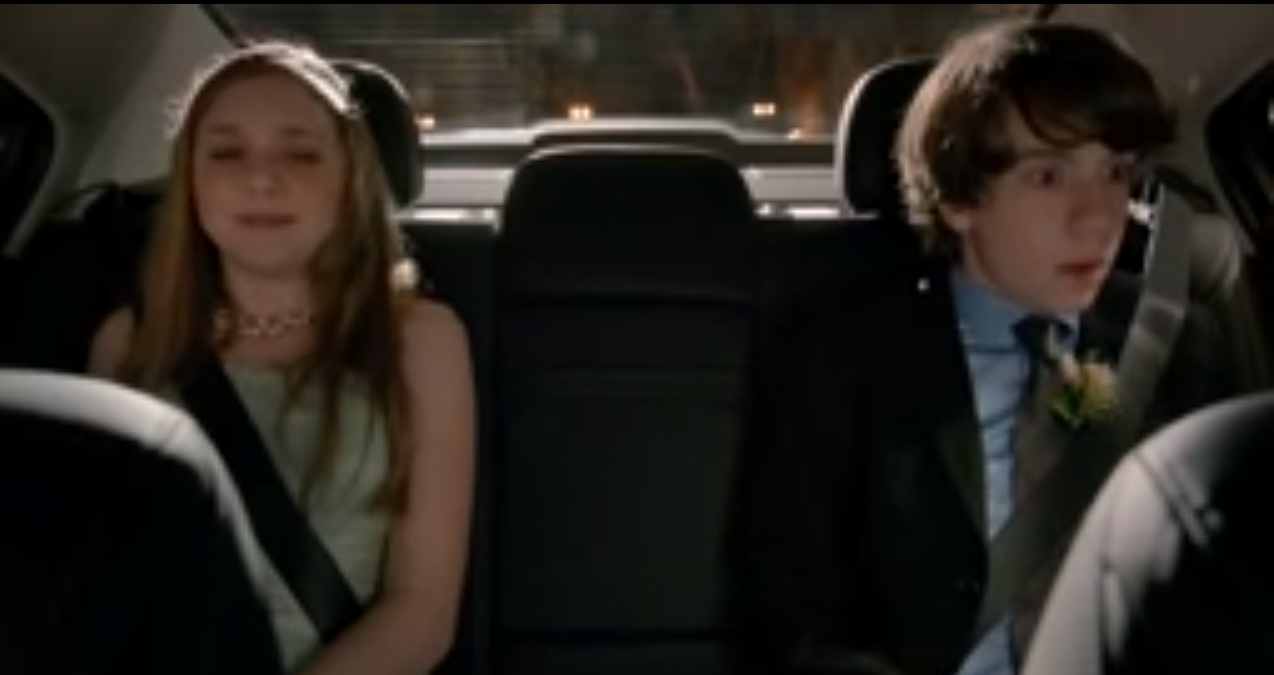
And I have yet another follow-up to an earlier post regarding jokes about dads shooting their daughters’ boyfriends. For this entry, I’m looking at a recent commercial for the Buick LaCrosse, notable mostly for actually showing the abject terror of a threatened junior-high boy, and the irritated reaction of the daughter to her father’s insecure, childish behavior.

The ad shows a white Buick Lacrosse driving along as we hear, then see an adult male telling the radio to play multiple songs. The stereo instantly accesses the tunes, along with the information on the artists, which are shown in a big, color display on the car’s console, complete with album cover art. The songs include “U Can’t Touch This” by MC Hammer, “I’ve Got Eyes Everywhere” by T-Booth and the Sensations, and “Keep Your Hands to Yourself” by The Georgia Satellites.

Cut to a shot of a teen(?) pre-teen(?) girl and boy in formal attire, sitting at opposite ends of the back seat, the boy looking terrified. The girl, with a look of contempt on her face, says, “Alright, Dad, we get it.”

Gee, dad, thanks for setting such a low standard for the men in my life by threatening children.

Gee, dad, thanks for setting such a low standard for the men in my life by threatening children.

The car arrives at a school, where a banner outside announces there is a dance happening. A voiceover says, “With Intellilink…” There is then a shot of the kids walking away from the car, the dad looking out the window, his arm resting on the bottom of the window frame, a look of nostalgic longing and dickish smugness on his face. Dad says, “Have fun,” the tone in his voice indicating he is proud to have possibly just caused a 7th grade male years of situational impotence. The voiceover continues, “…all your music is ready to listen to. Even if some people are sick of hearing it.”

Dad fondly remembering the school dance where his girlfriend's dad beat him senseless out by the dumpsters for letting his hands stray.

Dad fondly remembering the school dance where his girlfriend’s dad beat him senseless out by the dumpsters for letting his hands stray.

To anyone who gives it any thought, the commercial raises all manner of questions, like when the voiceover says “sick of hearing it” what exactly does that mean? How many times has dad done this before? And, really, what does that say about him that, one, he is allowing his daughter to go on that many dates when she’s clearly not old enough to be dating, and, two, that he thinks his 13-year-old daughter is constantly having to fight off sexual advances from the boys she takes to school dances?

Now, I’m not saying that kids having sex as young as 12, 13, or 14 is unheard of, but why is it that dad is so obsessed with his 13-year-old daughter’s sexual behavior? That’s more than a little…err…unhealthy. I mean, if dad’s so willing to imply that his daughter and her dates need to be schooled on not having sex while he is driving them to a dance, don’t you think he could’ve had a more productive conversation with his daughter about how to keep herself safe, and how to choose appropriate behaviors? And did he get a look at her date? The kid doesn’t exactly look like the type who’s running around seducing and impregnating his classmates (although I don’t want to stereotype—maybe he really can talk any girl into bed, or into a bathroom stall at a junior high dance, or whatever).

But anyway, let’s give dad the benefit of the doubt on the “sick of hearing it” comment. Let’s say that despite the commercial’s obvious, intended meaning, all it really meant was that your kids don’t like to hear the music you want to play in the car. I can accept that as a true-to-life situation for most adults, particularly those who are too insecure to allow their kids a few minutes of pre-func music while on the way to a dance.

So, how about we look at the music selections that are conveying this threatening message of “I’ll kill you if you try to have sex with my daughter.” As noted before, selection number one is “U Can’t Touch This” by MC Hammer. I’ll let the actual braggadocio of the song go (which has nothing to do with physical touching or sex) in favor of the heavily-sampled song underlying it—“Super Freak” by Rick James. Now was this some kind of sick joke suggesting that 13-year-old girls need to be kept in check, or just unintentional irony? The original Rick James song was about a woman who was rather well-versed in the further reaches of sexual behavior…”She’s a very kinky girl, the kind you don’t take home to mother.” I’ll leave it at that.

Selection number two, “I’ve Got Eyes Everywhere” by T-Booth and the Sensations, is a song (and band) so completely underground that it doesn’t actually exist…not that you’d realize it isn’t a real song from the few seconds of generic music that comes over the stereo. I’m guessing this pretend song had to be included because Rockwell held out for too much cash when Buick asked to use “Somebody’s Watching Me.”

Song selection number three, “Keep Your Hands to Yourself” by The Georgia Satellites functions as another entry in the unintentional irony category, as it is sung from the perspective of a guy trying to get his girlfriend to sleep with him—and it’s his girlfriend telling him ‘no’.

(Buick, call me. I can find tons of songs that might better convey the creepy message you want to get across—and from the knowledge base of a forty-something male who actually likes music).

And speaking of that…keeping in mind that I have no idea how Intellilink actually works…wouldn’t the better commercial involve the daughter and the dad having dueling song choices? (Well, for my comfort, let’s imagine the girl is several years older). Then we could get the girl throwing out some selections endorsing irresponsible teen/drinking/sex songs while dad tries to counter. It would make the boy’s confusion and fear marginally more entertaining…right? Maybe? Like this…

Dad: Play “U Can’t Touch This” (MC Hammer)
Daughter: Play “Hot in Herre.” (Nelly)
Dad: Play “Shot Down in Flames” (AC/DC)
Daughter: Play “Last Friday Night” (Katy Perry)
Dad: Play “Some Heads are Gonna Roll” (Judas Priest)
Daughter: Play “Locked Out of Heaven” (Bruno Mars)
And then the boy could freak out and call out some soft rock hit, like…
Boy: Play “Don’t Cry Out Loud” (Melissa Manchester)

Okay, so my version of the commercial is still playing on the same stupid sexual stereotypes that inform the original commercial, and it would’ve cost Buick a lot more to get the rights to at least some of those songs, but at least in my version the daughter gets to give it back to the dad for being such a dick, and suggests that if dad is going to make assumptions about her behavior, she might as well amp up his insecurities. Try and exert all the control you want, dad. Ultimately you don’t really have any.

Now, if I can get all moralistic on everyone again…what is this commercial saying? I’ve already touched on how creepy it is that dad is obsessed with his teen daughter’s sexuality to the point where he would try to ruin a date for her. Beyond that, dad’s obsession with his daughter’s sexuality leads him to act like a complete ass, and to threaten, or at least infer, violence toward a young boy.

What’s most problematic, though, is that the daughter’s exasperation at her father should speak volumes to him, but it apparently doesn’t even register, except to make him think he’s done his job. He doesn’t care what she’s thinking, and apparently believes it’s his job to act as the gatekeeper to his daughter’s body. But is that really what he wants his daughter to think? That she needs his permission before she can allow another person “access” to her body? Dad gets to lay a physical claim on her person, rather than teaching her about proper boundaries and trusting herself?

But dad’s not really thinking about the messages he’s sending his daughter beyond his desire to embarrass her, because he’s too fixated on scaring a boy who’s probably too young and insecure to even seriously be entertaining the thought that he’ll get beyond a slow dance or two and maybe a peck on the cheek.

As young as they seem, though, both kids in the commercial are certainly old enough to be having sexual thoughts. But is dad foolish enough to think that a junior high dance is the most likely place that any actual sexual activity would play out? Doesn’t dad recognize that maybe threatening violence to try and prevent any sexual activity is a sure-fire way to provoke your kids into shame and negative attitudes about sex? Doesn’t dad think that maybe his asinine behavior is projecting the message to his daughter that she is valued most as a sexual object (the exact opposite of what one would hope he is trying to convey) and that her body belongs to the men who lay a claim to it and can defend that claim through violence?

Also, while we’re looking into ideas about stereotypes and messages we’re sending, would this commercial work if the boy in question were, say, an obviously athletic football-player type? Would it make sense for a “jock” to be quaking in the back seat because of an MC Hammer song? Or if the boyfriend was more stereotypically “masculine” would that cause the message to stray into the territory of an actual pissing contest over the daughter, as opposed to the one that is portrayed, where dad has the obvious upper hand? If the boyfriend was more masculine, might the message run off the tracks, with the boyfriend thinking, “Threaten me to keep my hands off your daughter? Or what? Challenge accepted!”

You see, when you try to coerce somebody out of a particular action under the threat of physical violence, you invite the possibility that if that person can best you in a violent contest, then they are allowed to do what it is you were trying to stop in the first place—in this case, putting their hands all over your daughter. So, where does that leave your daughter’s choice in all this? Why is this not a call she gets to make out of the respect she is due as a human being, and based on her own desires? Certainly, any person as young as the girl in the commercial might not be the best at making thoughtful decisions that carefully consider all avenues of concern, but that’s where parenting comes in, which ideally involves providing guidance about things to consider when making important decisions.

And dads who actually think this is funny…why is it funny? How far would you take this? Would you hit a 13-year-old boy? Threaten to hit him? Why is it okay to threaten a boy with music? Putting it that way just sounds weird, doesn’t it?

So, let’s give Buick a new slogan: The 2014 Buick LaCrosse…for dads who are too immature to have an honest conversation about sex with their own children…but are willing to threaten other peoples’ children through the power of song.

AM I REALLY SUPPOSED TO THREATEN TO SHOOT MY DAUGHTER’S BOYFRIEND?

I suppose the title question of this piece is something of a moot point, or rather, the threat to shoot my daughter’s boyfriend would be an empty one, as I don’t have any guns with which to shoot my daughter’s boyfriend—or anybody else. I do have a potato gun.  Home invaders take note.

That said, this is the first holiday season where my (adult but still teen) daughter has had a “boyfriend” important enough to her that we had to consider their plans when making our family plans.  And, happily, she spent time with his family, and he with ours.  And I’ll say I like the guy.  I feel that my daughter has chosen wisely and connected with someone who compliments her, and vice versa.

After the Christmas round of holiday gatherings had come to an end, and I had returned back to work, I got to thinking about the all-too-frequent jokes and ‘memes’ I see in social media that involve threats to shoot boys who are taking peoples’ daughters out on dates (probably because I’ve seen several in the last few days—the most recent involving one of those Dick Dynasty beardos whose family values apparently include threatening to shoot other peoples’ children just for expressing an interest in dating his daughter).

Dads take note: if you want to shoot the boys who have had impure thoughts about your teenage daughters, you should probably shoot all the heterosexual teen boys who have ever seen your daughters.  Or so the predictable jokes go—relying on the idea that all dads used to be teenage boys themselves and so know how vile teenage boys are.  And is that how we as men think back on ourselves as teenagers?  That we really were so vile that we would have raped any time the chance presented itself?

And isn’t there some way that those “vile” and “impure” thoughts can be channeled into more positive outlets—say, like normalizing sexual thoughts and providing some guidance on how to deal with those, rather than tying sexual thoughts to threats of violence?  Or do we really believe that our sons are perpetually on the verge of rape?  Do we believe our daughters are so clueless that we cannot trust them with their own bodies?  Do we have to threaten violence against teen boys to make sure that our teen girls come home with their “virtue” intact?

And what if our daughters are not interested in maintaining that barrier?  Isn’t it better that our daughters are taught to understand what they’re comfortable with, and how to communicate that, and to seek out partners who respect that?  And while we’re at it, how about teaching our sons the same?  If boys know that it is okay for them to be “uncomfortable” with regard to sex, or to value girls for the same kinds of things they value their male friends for—common interests, for instance—they might feel a lot less pressure to be so gung-ho about looking at our daughters through such a narrow lens—they might be able to see our daughters as people rather than as sexual targets.

And beyond all that, what is it with adult males feeling the need to threaten the boys/young men who have expressed an interest in their daughters?  At it’s most base expression, this is a pissing contest over sexual access to the females of the species.  It is treating our daughters as property or livestock.  It is sending the message to girls not that their fathers want what’s best for them, but that their fathers don’t trust their judgment.  It sends clichéd messages that girls are not interested in sex, and that only men can be trusted with (and are never to be trusted with) protecting women’s lady parts.  On top of that, it, perhaps unintentionally, sends the message that all men are rapists that need to be stopped by other, more powerful men.

All of this takes on an even more twisted element when we look at how rape victims are treated in this culture.  Girls and women who come forward with complaints of sexual assault are viewed first in terms of what they must have done to invite the sexual assault.  Where were you?  What were you wearing?  Were you drunk?  Using drugs?  Why are you making these accusations?  Men and teenage boys are too often excused for rape, especially if they have some status in the community and/or if their victims can be shown to be (or it can be implied that they are) less-than-perfectly-pure in every way.

The whole “get my daughter home on time or I’ll shoot you” (read: you are not to have sex with my daughter or I’ll kill you) idea plays on the idea that boys/men are incapable of controlling themselves sexually when they have time alone with a girl/woman.  It plays on the idea that girls/women are not to be trusted with their own sexuality or sexual decisions.  Worst of all, perhaps, it plays into adolescent revenge fantasies where girls/women are perpetually the victims or prizes in contests between men–that girls’/women’s chastity counts, but girls/women don’t.

Men in our culture (myself included) are not generally taught how to engage their emotions in productive ways, but to channel everything into problem solving, feelings-dodging, and violence.  It is in this context that we tell our daughter’s boyfriends that we’ll shoot them if they “come home late.”  It is also in this context where we connect violence and sex on numerous levels.

If we as men think of teenage boys as little more than rape machines with faulty safety mechanisms, or worse yet, think that we were rape machines as teenagers, then we excuse the worst of male behaviors as nothing more than biology—hormones acting out the only way they can express themselves—violently.  And that’s simply not true.  It is not only as teenagers that people have powerful sexual urges, or multiple forms of confusion and angst over various aspects of sexuality and relationships; and it is never acceptable for those urges to be translated into violence.  It is as teenagers that we should really be learning how to navigate relationships in a positive fashion.  It is as adults that we should guide teenagers—and that means mentoring our daughter’s boyfriends, not threatening to kill them.

I would much rather welcome my daughter’s boyfriend into the family and make him feel comfortable than to threaten him.  But then again, I don’t imagine my daughter coming home with somebody who I would feel threatened by—someone I would feel the need to engage in a pissing contest.  This is not to say that I feel my daughter is immune to sexual assault, or even bad decisions in choosing guys to hang out with.  It is to say that I do what I can to convey my trust in her, but more importantly, to let her know to trust herself as a whole person. 

IT’S (not) THE MOST SUICIDAL TIME OF THE YEAR!

It’s common knowledge that the holiday season, and more specifically the days around Christmas, sees a spike in suicides.  Right?  Wrong.  Not true at all.  But lazy TV news writers and reporters, and scores of jackasses who can’t think of anything original to say, and can’t be bothered to perform a simple Internet search, repeat this same fallacy year in and year out.

Now, I could lay out a bunch of statistics for you here, but that’s boring and stupid and it will take you roughly six seconds to perform that Internet Search I just mentioned, which will turn up well over a quarter-of-a-million articles, almost all of which start off with the same, basic statistics.  Okay, jeez you lazy jackasses—click the link if you don’t believe me:  https://www.google.com/#q=Christmas+suicide+spike

The myth about Christmas-time suicides was most likely birthed by an episode of “The Brady Bunch” wherein mother Carol loses her voice, and is unceremoniously kicked out of the church choir just before Christmas.  Youngest daughter Cindy prays to a mall Santa, who manages to deliver the Christmas miracle of snow in Southern California on Christmas, but can do nothing for Carol’s voice.  On the afternoon of Christmas Eve, Carol is locked in her bedroom, knocking back snifter after snifter of Brandy, and wrapping presents.  As she finishes using the scissors to curl a ribbon, the song Carol was supposed to sing in the church choir comes on the radio.  Carol begins trembling with anger, then viciously slashes at her wrists with the scissors.  A short time later (after a commercial break) housekeeper Alice, attempting to deliver fresh pillowcases to the bedroom, realizes something is amiss, and kicks in the door.   Alice uses her apron to keep Carol from bleeding out as Marcia, fresh from her driving contest victory over Greg, hilariously pilots the family station wagon through an open-air holiday market to the Emergency Room.  Once mom is medically stable, a doctor, played by a pipe-smoking Paul Lynde, tells the family in a happily sadistic voice, “You’re lucky she lived—Christmas is absolutely the worst time of year for suicides.”

(Notice there was no actual mention of a spike in suicides.)

Following the episode, the network aired a public service announcement that involved the Brady kids singing their hit single “Sunshine Day.”  Mike and Carol step into the foreground as the music softens, and say, “The holiday season can be tough.  Don’t let suicide ruin your sunshine day.  Get help.”  Strangely enough, it was revealed several years later by the Parents Music Resource Center that back-masking on another Brady Bunch hit, “Time to Change” involved the first known use of the suicide instructional phrase, “Down the street, not across the road,” voiced by one Paul Lynde.

Now that your mind is totally blown, let’s get at the heart of the matter in all this.  I don’t really care that people mistakenly think they know something about suicide in terms of just the basic issue of them being wrong.  What is problematic is the idea of normalizing seasonal suicide.  That is to say, when it is repeated over and over again that people kill themselves around Christmas, it can seem to those suffering from depression, or suffering from various other situational or seasonal forms of depression or mood disorders, or even just having normal reactions to aggressively annoying family members, that Christmas isn’t such a bad time to kill oneself.  Join the club.  It’s normal.  No big deal.  Suicidal gestures also get a pass in this form of thinking—‘maybe they’ll realize how much they’re hurting me if I hurt myself.’

Now, I’m all for normalizing suicidal thoughts—suicide not so much.  Bear with me here—I think it’s valuable for people to know that suicidal thoughts are not a rare occurrence.  Suicidal action often follows people believing they are all alone and that nobody understands them.  If people realized that suicidal ideation occurs to a lot of people, and along a scale of ‘Maybe I should talk to somebody’ to ‘Holy shit! Why am I heading out into the woods with a loaded gun and a fifth of Monarch gin?’, then they might recognize that seeking help is a good idea.  Furthermore, if more people were aware that a friend or family member expressing suicidal thoughts is not an occasion to panic or to plug one’s ears and start screaming ‘La la la—I can’t hear you!’ but an opportunity to open up a dialog and seek out help, then we could make some more progress not just on suicide, but on mental health issues in general. 

In the good ol’ U.S. of A. we love our stories of suicide, murder, and mayhem.  We love a good tragedy that we can sum up with a banal, and ill-informed comment like “Well, Christmas is when suicides occur the most.”  What we have a harder time with is actually acknowledging that we have feelings other than ‘happy’ and ‘murderous,’ and that there are plenty of things that make us sad.

A client suffering from depression recently told me that she feels that at this time of year she can’t just back out of obligations other people have placed on her.  If she would rather stay home and sleep, read, or watch a movie than go out to the seventeenth Christmas party she’s been invited to in the last two weeks, or spend Christmas Eve and Christmas day shuttling between various relatives’ houses for hectic feeding-frenzies and gift-giving-orgies, the people around her slip into panic mode—as if any expression of a desire to spend time alone is an indication she wants to go kill herself.  She attributes this insistence that she be happy and perpetually moving to the idea that Christmas is the time people kill themselves.  In short, she ends up feeling exhausted and out of sorts, because she is trying to prove to people that she is not suicidal—which, she jokingly added, just makes her want to kill herself and/or leaves her in fear that she might drop dead from exhaustion.

So…yeah…Christmas doesn’t, as a rule, provoke suicide.  And if we could all embrace the real ‘holiday spirit’ of actually connecting with each other, instead of pushing ourselves through marathon ‘base-touching’ sessions with people we ignore the rest of the year; if we could learn to communicate a range of emotions, and respond with caring, rather than indifference or panic, we might realize that because we are each dealing with our own, personal situations, all times of the year are the most wonderful time of the year (and the most depressing time of the year, and the most mundane time of the year, and…) Continue reading