The Great MLK Day Snack Experiment

by JC Schildbach, LMHC

My wife, M–, or Ms. M– to her students, is a Montessori-certified preschool teacher, and darn good at it. Each year in the lead-up to MLK Day, she teaches a (age appropriate) unit on Martin Luther King, Jr. that is largely built around discussions of treating people fairly, and all that good, old Golden Rule stuff. I absolutely love this exercise and the stories that come out of it.

The lessons typically start off with a “circle” (full-class lesson time) involving the ‘snack experiment.’ In this exercise, the class is divided in half, or roughly in half. Usually, the division runs along gender lines, as that’s the easiest split to make, and one that the children will easily grasp. It also speaks to other forms of false divisions in our society, but I don’t think they get into all of that.

Anyway, depending on the age and temperaments of the children, there may or may not be an advanced warning that circle time involves an exercise in fairness and feelings. Each year, M– switches whether the boys or the girls get the snack at the outset of the experiment. For 2015, the girls got the snack first.

The group with the snack is encouraged to go ahead and eat the snack, while nothing is said to the group without the snack about whether or not they’re getting anything.

Inevitably, the group without a snack starts into fidgeting, and then a bit of grumbling, about why they aren’t getting the snack. Or they start asking if they’re going to get a snack at all.

Most often, there is also some hesitation on the part of those who have received something to eat, or at least from some of them, about whether or not they should be eating before everybody has been provided with a treat.

MLK blue

M— sits silent for a while, then starts the discussion. She asks, essentially, how everyone is feeling right at that moment.

The hands start to go up—usually from the slighted group. This year, the big word among the boys was “disappointed,” since the first respondent used that word, and it apparently sounded pretty good.

“I feel disappointed.”

“I feel mad…and disappointed.”

“I’m angry…and disappointed.”

“I’m disappointed…and sad…and mad.”

The side that got the snack sometimes has to be encouraged to give some input, which usually starts with some hesitant, and sheepish remarks.

“I feel good.”

“I liked the snack.”

It can take a little goading to get some other responses. But this year, the big breakthrough came from one of the older girls who raised her hand and said, “I don’t like it. I’m not happy. Because ( ) is my friend, and { } is my friend. And if they’re not happy, I’m not happy.”

Before long, other girls were joining in, offering up their thoughts on why it’s better when everybody gets a snack, and how it’s more fun when everybody gets to join in, why it’s hard to be happy when others are deliberately deprived of that same happiness.

When those empathetic thoughts start to come out, there is the beginning of a transformation throughout the class. Even without a treat, the snackless start to feel happier, realizing that others care about them, and are sticking up for them.

Of course, balance is inevitably restored. The snackless become…the snacked? Okay, let’s just go with ‘the hungry are fed.’

The discussion continues on, the children offering up sentiments that are occasionally amusing, occasionally profound, and sometimes both.

And, this year, the discussion was closed out when the youngest boy among them, after being prompted several times to raise his hand if he wanted to share his thoughts, finally did so. Then, talking through full cheeks, said, “I want more crackers.”

Happy MLK Day!

The Stigma of Mental Illness and the Noble Savage Myth

Okay, I’m kind of cheating here.  I haven’t posted anything for a while, so I’m popping this up.

This is an article I worked on with Dr. Jeffrey Guterman, based in part on a post I did for this blog (which was a great deal snarkier, and which I will re-post at a later date).

Enjoy… The Stigma of Mental Illness and the Noble Savage Myth

noble savage photo

Supercharged Sex Pets: The Kia Soul EV Commercial, and Weird Sexist Hamster Science

by J.C. Schildbach, MA, LMHC, ASOTP

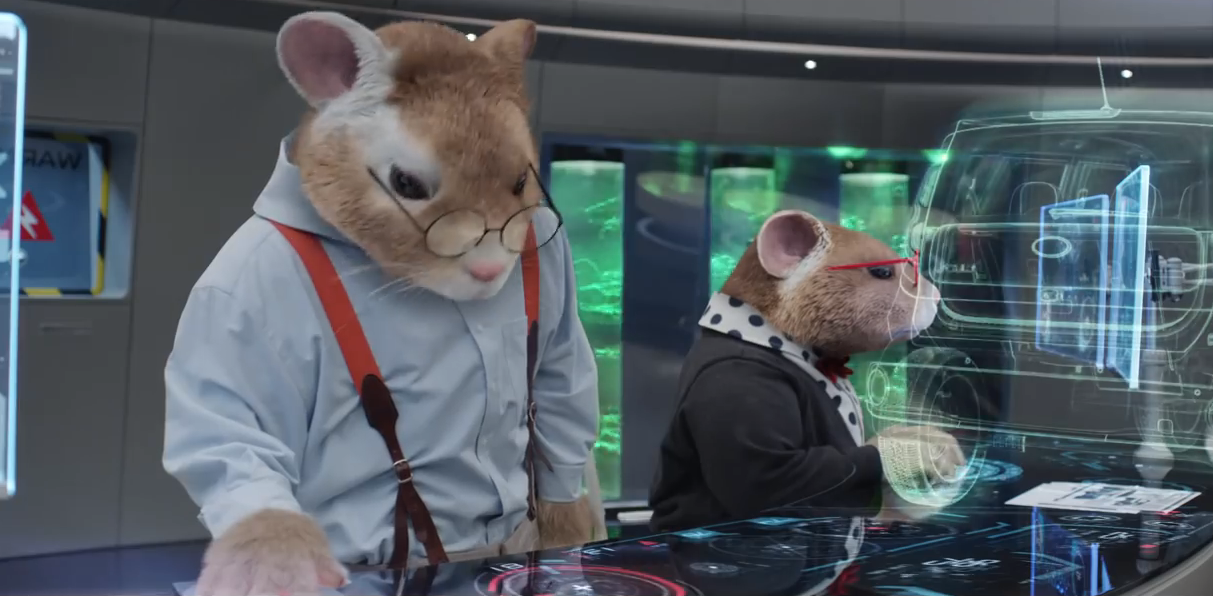
In the commercial for the Kia Soul EV (Electric Vehicle), these hamsters…

Hamster scientist

…have just created some kind of electric-beam-shooting machine that transforms cars with combustion engines into electric cars, but which also inadvertently transforms this hamster…

Hamster ball

…into this hamster…

hamster hottie

…which leads the scientists to run out and get these hamsters…

Hamster cage

…in order to turn them into these hamsters:

Hamster sorority

You can watch the whole commercial here:

Now, I don’t know much about the normal behavior of the average anthropomorphic male hamster scientist, but the ones in this commercial are impulsive and reckless, and just plain engaging in bad scientific practices. It’s bad enough that they leave the newly-created anthropomorphic female porn-hamster alone in the lab, apparently irritating her, and leaving her to do God-knows-what with billions of dollars worth of barely-tested, super-high-tech equipment.

But they also, with complete disregard for their own safety, jump into an untested vehicle and race out of the lab with the intention of creating more female porn-hamsters. They don’t do any kind of systems check on the car, or even wait 30 seconds to, for instance, see if the porn-hamster they just created might have significant problems. Perhaps it suffers from severe physical or mental abnormalities. It could be hyper-aggressive or violent. One of its first actions, after all, was to blow a kiss across the room at one of the scientists, which actually had the electrified power to knock him to the floor. Guys, I don’t think you should be taking this so lightly.

Thankfully, the male hamster scientists make it to the pet store and back, nobody gets hurt, and the porn-hamsters only want to have a dance party.

Still, one has to wonder why these male hamster scientists are so enthralled by what they’ve created. I’ve not paid enough attention to the whole series of hamster commercials to know if the other female hamsters (are there other female hamsters?) in this Kia-commercial world have similar physical attributes to the male hamsters, as in looking like ‘real’ hamsters wearing clothing, or if all the female hamsters have the bodies of (human) Playboy playmates.

It bears asking, would the male hamsters really be attracted to some hideous abomination with the head of a hamster and the body of a human? After all, the female porn-hamsters seem to be attracted to the hamster-bodied males—or else they’re just tolerating them until they can escape. They would have to escape, right? The hamster scientists wouldn’t be so irresponsible as to just unleash these monstrosities on the world without knowing what they might do, right?

In any sci-fi/horror scenario, everything always seems great up front, and then rapidly goes to hell. First it’s a dance party, and then the killin’ starts. Just what can we expect from the porn-hamsters’ Frankenstein/Brundlefly/Jurassic Park moment? Or perhaps the better parallel is with Vincenzo Natali’s “Splice”—wherein genetic experiments lead to the creation of a hybrid human/insect thing that has sex with Adrien Brody and then kills him, and several others.

But, hey, for the Kia Soul EV, it’s still a dance party. We don’t have to worry about sex and murder. They even carefully edited the Maroon Five song that plays throughout the commercial to eliminate the lines “we get along when I’m inside you…I get so high when I’m inside you,” despite leaving in the lines about ‘hunting you down’ and ‘eating you alive.’ So, really, what happens if the porn-hamsters have some sort of melt-down, or revert back to their pre-porn-hamster selves?

Maybe I’m just taking this in the wrong direction. I mean, really, the ad is just a wacky homage to “Weird Science”—right? It’s light and fluffy, and titillating in a bestiality-inspiring way. And having a commercial that’s based on a film where two teens create a woman to satisfy their creepy urges, then turn Bill Paxton into a talking pile of turd, and accidentally end up with a nuclear weapon in their living room in the middle of a house party with uninvited bikers is all just in good fun. No harm done.

Yet, underlying the whole Kia Soul EV commercial is a bunch of disturbing assumptions about gender stereotypes, the ideal woman, and sex in general.

If you break it down we have 1) scientists who are all male;  2) a female who is, at first, kept as a pet locked up in a plastic ball, and then turned into a an anthropomorphic human-Playboy-playmate-bodied porn-hamster; 3) the all-male scientist group racing out to buy more pets that they can turn into a whole roomful of porn-hamsters; and 4) the female porn-hamsters instantly falling in love with the anthropomorphic, male, hamster-bodied hamster scientists.

So, the “men” in this commercial have jobs and are intelligent and seeking to advance science (I mean, holy shit!!–they invented a big ray-gun that can transform the power system of a car, when they could have just worked on engineering a better battery). The “women” in this commercial are initially tiny pets who are kept locked up, and can be sold at any time. Eventually, the pet-women are transformed into sex objects who instantly fall in love with the men, despite nothing happening to inspire love aside from being shot with some mysterious ray-gun that also turns gas-powered cars into electric cars.

And, again, maybe I’m just looking at this the wrong way. Personally, though, I was really creeped out the first time I saw it, and that had nothing to do with the use of a Maroon Five song. I just couldn’t help but think that the underlying story of buying pets to turn them into potential sex partners was just wrong and disturbing.

If you don’t see that, then let me ask you what would be the equivalent if this commercial involved humans instead of hamsters? Would the “pets” be chimps? Monkeys of some sort? Human babies? Tiny little humans that are sold in pet stores? If they weren’t human to begin with, would they retain their monkey/ape faces? If they were human… Well, whatever the angle, it’s pretty damn creepy.

And maybe you don’t see the supercharged sexism because they’re just hamsters, after all, and it’s basically just a cartoon. But cartoons still carry messages, and plenty of them carry messages involving and reinforcing gender stereotypes—most commonly that boys/men are action-oriented and assertive, while girls/women are passive and interested in socializing and being cute.

At base, this Kia Soul EV ‘cartoon’ relays the message that men act on the world, even as they are controlled by their sexual urges, while women (and pets?) exist to be the focus of men’s sexual urges.

Take it into your lab, dissect it, throw it under a microscope, zap it with whatever you want—if you take the time to study it, even a little, it’s far from a cute little ad with fun intentions.  Rather, it’s an ugly, dangerous Frankenstein’s monster of a message to send.

How About We All Stop Using “Schizophrenic” as an Insult?

by J.C. Schildbach, LMHC, ASOTP

One night about two years ago, I challenged a friend for describing his behavior as “schizophrenic.” In an admittedly snide tone, I asked a quick barrage of questions referencing various types and symptoms of schizophrenia: Are you catatonic? Paranoid? Suffering from delusions? Auditory hallucinations? Visual hallucinations? And so on…

Somewhat unexpectedly, my friend responded with an apology for his use of the term, and didn’t engage in any kind of defensive posturing or attempts to justify his word choice. He clarified that he meant he had changed his mind back and forth several times in relation to a particular situation.

I was a little surprised that I had reacted in such a way to what was supposed to be a self-deprecating comment from a friend. But there were a number of things weighing on me at the time, not the least of which was that my friend was seeking advice on a matter that was best kept between him and his partner, and maybe a good couples counselor. As with most of the times he sought advice, he had already made up his mind about what he intended to do, and was looking to have his intentions validated, or to have them challenged with an argument so compelling that he would have no choice but to turn from that position.

Aside from my irritation with the immediate situation that evening, I had been in contact earlier in the week with a young man diagnosed with schizophrenia. He was in some pretty serious legal trouble, and did not appear to comprehend all that much about it except in the most concrete of terms. That is, he knew what law he had broken and why it was problematic. That information had been drilled into him during his time in court and a stay in jail. But his sense of what the crime meant, and how it was going to impact him, his connection to others, and the choices he was going to have to make, both short- and long-term, was murky at best. It struck me that he was so used to being marginalized that his current situation involved just one more bureaucratic system to interact with—as if this latest set of restrictions was little more than an additional cluster of tasks to occupy his time.

Working in crisis intervention, I also have fairly frequent (phone) contact with people coping with schizophrenia and other mental illnesses that involve psychotic symptoms of varying levels of severity, and which often fluctuate over time. There are few, if any, blanket statements that would accurately cover them all, or make a nice, tidy explanation of what they are dealing with. But, unlike the popular usage of the term “schizophrenic,” the way my friend had engaged it, the behavior, thoughts, and challenges of those dealing with schizophrenia are not simply a matter of being indecisive or changing their approach to an issue.

In the time since I first barked at that friend about his use of the word “schizophrenic,” I have seen it become more and more commonly used (or, perhaps, it was used a great deal before that, and I just hadn’t noticed). Currently, in addition to the way my friend used it, to describe his somewhat erratic decision-making behavior, it is used quite often in relation to politics, and often by writers and other figures I respect or at least tend to agree with. Such uses, though, are potentially offensive, and even insulting in a way that is beneath anyone attempting to make a serious point.

For example, in recent weeks it has been relatively easy to find articles, or to come across people on television news/opinion shows, complaining of politicians behaving in a “schizophrenic” fashion toward immigration policies. Generally, what the use of the term “schizophrenic” means in such a context is that the politicians are saying one thing and doing another, or that they have changed their position on an issue multiple times. It is basically used to mean that a politician or group of politicians have been inconsistent on an issue.

A quick Internet search can find all manner of uses of "schizophrenic" as a derogatory label--frequently in political discourse.

A quick Internet search can find all manner of uses of “schizophrenic” as a derogatory label–frequently in political discourse.

But the problem with using “schizophrenic” to describe contradictory political positions is that it suggests the politicians are suffering from a diagnosable mental illness that is beyond their immediate control, and which can interfere with their perceptions of reality, rather than that said politicians are making rational decisions based on what they think will get the most traction with their “base” or constituents. Politicians shifting their political positions is something that is done with the assistance of political strategists in an attempt to get a message out to voters in a way that might provoke support of a carefully crafted message, even if that message is inconsistent over time.

Schizophrenia, on the other hand, is not volitional. It is not deliberate. People who are living with schizophrenia are not choosing one day to deal with only minimal or well-managed psychotic symptoms, and the next day to pursue the exact opposite. People coping with schizophrenia do not, for example, determine that they will change the content and intensity of their auditory hallucinations based on political polling and messaging strategies. They are not thinking of the gains to be made by crafting an elaborate delusion wherein their friends and family are colluding with various government agencies to monitor and control them.

In short, saying that one’s political opponents are “schizophrenic” is just a different way of labeling one’s political opponents with the big, sloppy label of “crazy”—of indicating that their ideas do not merit any consideration because the people presenting those ideas are not grounded in reality. But, because “schizophrenic” is being used as an insult, as a way of accusing somebody of being worthy of ridicule and dismissal, by extension, it implies that people with schizophrenia are also worthy of ridicule and disrespect. Using “schizophrenic” as an insult encourages ongoing stigma towards those with mental illness. It encourages a lack of understanding of mental illness, and of how to address the needs of those struggling with it. It is dehumanizing in the way that all insults aimed at one’s “enemies” are intended to dehumanize.

And people with schizophrenia are not our enemies. They are people struggling with something that we only barely understand. They are people who, at the very least, do not deserve to be lumped in with politicians who are fine-tuning messages of anger and outrage to try and get votes.

Now, lest anyone think I’m engaging in “word policing,” let me say that I am. As much as language is a dynamic thing, there are still right and wrong ways to use words, or rather, more and less accurate ways of using them. We still make daily decisions about whether we are going to use words to clarify or to obscure, to increase understanding or to confuse. The word “schizophrenia,” unlike a number of other words used in mental health diagnoses (anxiety, narcissistic, etc.) was coined, by Eugen Bleuler around 1908, specifically to refer to the mental illness. It literally means “split mind.”

Arguably, the literal definition of schizophrenia could easily be applied to various other situations such as the one’s already described, and it would not be inaccurate. And, arguably, the mental illness or cluster of illnesses known as schizophrenia involves a broad enough range of symptoms and presentations that the diagnosis requires specifiers for clarification in individual cases. Still, rather than taking a word created to refer to a mental illness, one that will always have ties to that mental illness regardless of how one claims to be using it, and expanding the use of that word to include any behaviors one perceives as inconsistent or otherwise in opposition to one’s own beliefs about appropriate behavior, why not pursue more accurate understanding of the word, and a greater understanding of what the mental illness means, and does not mean?

It seems to me that, rather than calling politicians “schizophrenic,” it would be much more damning to say that one’s political opponents are completely inconsistent in their approach to an issue because they feel that they can achieve greater political gains by changing their position and their message, instead of sticking with real principles or working hard to find real solutions to complicated problems.

And instead of labeling our own actions, or the actions of others as “schizophrenic,” simply because they are inconsistent, appear contradictory, or we disagree with them, why not just acknowledge that most of us are not as steadfast and true as we like to imagine, and that we often don’t make decisions unless and until we have to? Why insult people with schizophrenia by suggesting our poor decision-making skills are the result of a serious mental illness, one that involves much deeper struggles than indecisiveness or occasional mild impulsivity?

How about we all stop using “schizophrenic” as an insult?

God Bless Anita Bryant

Friday, May 16, I had my first experience with a mental health/chemical dependency conference hosted by a drag artist. The incomparable Aleksa Manila presided over the “Saying it Out Loud” conference, complete with multiple costume changes and delightfully tasteless jokes between various announcements, awards, introductions, and seminars. This was the thirteenth annual gathering of this conference, which was created with the goal “to continue to co-create learning, growth and understanding of the best practices and relevant clinical services needed to support members of the lesbian, gay, bisexual, transgender and questioning communities.”

Dr. Ronni Sanlo served as the keynote speaker, as well as screening a new documentary, “Letter to Anita,” about her almost-wasn’t involvement in LGBTQ activism. Now I’m going to get into a few spoilers here, but I don’t think the basics of Sanlo’s story are the heart of the documentary, as much as is the personal perspective she brings to them. So, when I say her activism “almost-wasn’t,” I mean that Sanlo, like a number of lesbian women of her generation, went about her life as a heterosexual woman, married (to a man) with whom she had two children, not really aware that there were other options.

Unfortunately, just as Sanlo was realizing that there were other options, that the attraction she felt to women wasn’t something that made her completely alone in the universe, Anita Bryant was ginning up Florida’s legislature to pass laws denying parental rights to gay parents. Sanlo’s divorce went through.  Her children, for all practical purposes, were taken away from her.

Liberty turns her back as Anita Bryant looks to the sky, expecting Jesus to fly down and smite the gays.

Liberty turns her back as Anita Bryant looks to the sky, expecting Jesus to fly down and smite the gays.

Hearing the story now, it seems unfathomable to me. In part, my disbelief comes because at the time Sanlo was being viewed as an unfit parent simply for acknowledging who she was, I was living a few doors away from a blended family—two lesbian mothers with three teenage children among them. Granted, at the time, I was in grade school and not really aware that the two parents in that household were ‘romantically linked.’ I was under the impression, for whatever reason, that the families were living together for other reasons—economic? ecological? I remember that, in the fifth or sixth grade, when our class was given an assignment to write an editorial letter about an issue of concern, I mentioned the family as I explained why we shouldn’t be mowing down forests and fields to build new houses when there were other options, including multi-family homes, that would allow greater preservation of nature. Clearly, I had missed the more important political/social issue facing the family.

At any rate, the nature of my neighbors’ relationship was eventually pointed out to me by gossiping peers, with the implication that I was stupid for not having realized it, along with the weird sexual goings-on that were certainly a part of that relationship. Not to say that I was super-forward-thinking at the time, but I knew the two women as my neighbors who had been pleasant to me whenever I encountered them. So whatever sexual things may have been going on between the two women were of about as much interest to me as those of the parents of anyone I knew. That is to say, I really didn’t devote much time at all to thinking about sexual things between various peoples’ parents, and may, as I tilted toward pubrerty and all manner of prurient thoughts, have actively avoided thinking about them.

As far as I was concerned back then, anyone who was cool and/or innocuous toward me warranted much less concern, anger, or fear than the bevy of teenage male piltdowners who seemed to have little more to do than roam the suburban streets trying to prove their masculinity by tormenting children much younger and smaller than them—a model of “manhood” I unfortunately subscribed to briefly when I hit a similar stage in life.

I can only imagine that the lives of the couple from the blended family had some parallels to Sanlo’s—at least in terms of them apparently having partnered with men to build families in order to live out the deliciously limiting American Dream. It’s not too big of a stretch to believe my neighbors, like Sanlo, had seen few other options for relationships but hetero marriage and procreation. It was my understanding that both of my neighbors were divorced, although, like same-sex partnerships, such things were not discussed a great deal at the time, despite divorce quickly becoming commonplace—something that would reach almost all of my friends who hadn’t, like me, experienced the death of a parent. And if the exes of my neighbors were still coming around to visit their teenage children, I wasn’t aware of it. Then again, I wasn’t aware of much that went on in the lives of those teens, since there was far too great of an age gap between us—that impossibly vast chasm between elementary school and high school—for us to concern ourselves with each other.

Speaking of parallels and gaps, “Letter to Anita” touches on another critical piece of Sanlo’s life that fits in with the development of my own understanding of individual rights, freedoms, and what it actually means to be something “other” than heterosexual: Anita Bryant’s crusade against, well, all people who don’t fit her very narrow definition of appropriate relationships (never you mind Bryant’s own divorce).

As I’ve noted before on my blog, I was raised religiously, in the Lutheran Church, Missouri Synod. My father was a pastor in said church. My father died when I was rather young. I spent a great many years struggling with religious ideals and how they fit into the world. And despite my current agnostic tendencies, I still hold onto an idea of religion as an expanding element in peoples’ lives, a force that should open people up to larger experiences, a force that should create love and acceptance, as opposed to a limitation on peoples’ lives that causes anger, hatred, judgment, and closed-mindedness. I spent a lot of time struggling over moral issues, their relation to legal and spiritual concerns, and how we all get along as a people who are supposed to be dedicated to personal freedom, personal responsibility, community ties, love, and all the rest of that stuff.

But Anita Bryant, with her perfectly coiffed hair and starchily-pressed orange and brown polyester outfits, was telling me, in her own, orange-juice-endorsing way, to fear, hate and distrust people I knew, people who had shown me kindness, people I knew to be funny, smart, and no threat to me at all. She put out albums (which, as a teen, my younger brother delighted in purchasing from the local Goodwill for the purposes of mocking and destroying) filled with patriotic and religious songs, promoting the goodness of the USA and Jesus. Yet, everything she said, every objective she pursued, was in contrast to freedom, goodness, and the anti-judgmental stance that Jesus and America were supposed to represent.

Yes, Anita Bryant, in contrast to all she stood for, or wanted to stand for, had helped turn this white, hetero, suburban boy, and his white, hetero, suburban friends, into supporters of gay America…into people who would forever see the gay menace she was so sure was destroying us all, as nothing more than the paranoid delusion of close-minded, controlling, angry people who were completely incapable of seeing the irony of their anti-freedom, anti-love stance as they waved their flags and thumped their Bibles.  Anita Bryant, as Sanlo notes, managed to galvanize opposition to gay rights opposition–even out into the hetero world and parts of the Christian community she was so sure she could count on to share her views.

So God bless Anita Bryant. God bless Ronni Sanlo. And God bless us everyone.

Suey Park Out of Context, or How a Bunch of (Liberal) White Guys Proved #CancelColbert was Necessary and Didn’t Even Realize it. Part 4: Colbert Gets Snarky, Dodges the Issue

With Cliven Bundy and Donald Sterling grabbing the headlines for their overt, easily-condemned racism, I really should have cranked out these Park/Colbert-related posts a lot quicker. After all, in the U.S.A. we can’t go all that long without another disturbing, race-related story coming to light. And so long as we have people like Bundy and Sterling saying such outrageous things, we can go along ignoring more subtle examples of racism, which really aren’t that subtle at all, as we pat ourselves on the back for not being as bad as those guys.

Still, when I started these posts calling #CancelColbert necessary, the underlying idea wasn’t that it was necessary to cancel “The Colbert Show,” but that the discussion that arose out of the #CancelColbert campaign was necessary, especially given the rather harsh, negative reaction to the campaign, not by the usual hard-right, proud racists, or even the Fox News fan base of racism deniers, but by a large group of people who count themselves among Colbert’s enlightened fans, those people largely being liberals or progressives. The necessity for the discussion was furthered by the severe freak-out aimed at Suey Park, the person behind the #CancelColbert campaign, and the avoidance of actually talking about whether it is okay for white people to use racist language targeting one group in order to criticize/satirize white racism against another group.

“It was a joke,” or “It was satire,” is simply not an adequate answer. It is exactly the kind of thing that Rush Limbaugh fans say anytime anybody criticizes him for his vulgarity and stupidity—“It’s just a joke. Get over it. Why are you so sensitive?”

The underlying debate is, arguably, another version of whether it is okay for white people to use “the n-word,” in any of its variations, and if they can expect that people will take it in the way they intend—or if it’s just plain offensive regardless. If you want to get down to finer points, it is possible to argue that Colbert’s language wasn’t specifically a racial slur against people of Asian descent, in the same way that “the n-word” is a slur against people of African descent. (Of course, maybe “people of African descent” isn’t the best description, since that includes everybody on the planet–but I think you take my meaning).  Still, the language Colbert used was not innocuous.

Consider it: “The Ching Chong Ding Dong Foundation for Sensitivity to Orientals or Whatever.” Just imagine you heard this language, or more specifically, the “Ching Chong” or “Orientals” part, coming out of the mouth of a white person in a restaurant, or a bank, or pretty much any other public setting. Would it strike you as odd? Offensive? Would it seem perfectly okay? If one of your white friends used this language, would you call them on it? Ignore it? Analyze the context to determine if it was an acceptable use of those words?

My guess is that, unless you’re cool with racist digs at people of Asian descent, it might seem more than a little ‘off.’

Yet, despite the clearly offensive (sorry if I’m making assumptions) nature of the language, when Park called Colbert on the use of this language, a bunch of people attacked Park as lacking a sense of humor and failing to understand the context of the joke.  Rather than an exchange of reasonable viewpoints, the ugliest garbage the Internet can produce came flooding out—including targeting Park with unquestionably racist and sexist language, rape threats, and death threats. There was an all-out effort to tear Park down, without ever giving any real consideration to whether the language is, at base, offensive.

Several people, including Park, have noted that Colbert chose to craft the joke with offensive language targeting Asian people rather than other ethnic groups, exactly because it was accepted that the “Ching Chong” language would be seen as an obvious joke, whereas other racially-charged language wouldn’t be so readily viewed as ‘satire’—one underlying message being that Asian people are in on the (white people) joke, and cool enough not to get all freaked out about white people saying racist things in service of satire. Such a belief falls into ideas of Asians as the “model minority”—willing to go along to get along. When Park raised an issue by objecting to the language, fans of Colbert immediately shifted the issue away from Colbert using the language, and on to Asian people who “can’t take a joke.”

Now, I get that Colbert is arguably painted into a corner in that the character he plays on “The Colbert Report,” and the kind of person that character represents, would never issue an apology or acknowledge any kind of mistake or wrongdoing. And given that he is playing a character, it is more than difficult to say anything that would be taken sincerely, or really understood as him breaking character. Still, Colbert’s response, which notably did not refer to Suey Park by name even once despite showing a picture of her, was sadly lacking. It never once addressed the use of the particular language, or why it might be offensive, and instead, chose to repeat the language multiple times, while saying “not my fault” and “don’t take jokes out of context.”

You can watch the whole piece here:  Colbert’s Dodgy Response

Colbert’s response can be summed up in the following points (now drained of humor, sorry):

  1. I am playing a character.
  2. I was mocking Dan Snyder.
  3. The joke was repeated several times (reruns and social media) with no reaction.
  4. Somebody other than me sent the problem tweet.
  5. The tweet did not provide any context for the joke.
  6. The news media blew this out of proportion
  7. Michelle Malkin attacked me over this, and she is clearly worse than me.
  8. This took the attention off Dan Snyder and put it on me.
  9. I’ve done a number of other pieces involving race issues that would seem really bad out of context.

So much of this response seems as if it were crafted by handlers following social media reaction, who then ran it by a focus group just to make sure it would resonate with Colbert’s adoring public. It was a joke/satire—check. You’re taking it out of context—check. Don’t you get it?—check. Why now?/Why this?—check. Snyder is the issue here—check. This was blown out of proportion—check. Michelle Malkin sucks—check.

Colbert’s response, by failing to name Park, implies that Michelle Malkin—someone many Colbert fans despise—is the person most associated with the #CancelColbert campaign. It also has this creepy mythological undertone of refusing to name one’s enemy—“She Who Must Not be Named” in Harry Potter Parlance. Or, if you want to go into a history of racial issues involving naming and claiming, Columbus declaring, well, everything for Spain while refusing to acknowledge or accurately identify those he was claiming it from, or even concern himself with whether they were speaking the same language…

Okay, maybe that’s being a bit dramatic, but why couldn’t Colbert say who started the campaign, or even identify what she said was the underlying point? Don’t want to add any more to her (as every hack has written) 15 minutes of fame? Sorry, I don’t think Park is going away that soon, unless it is by her own choice. (And, btw, you don’t get to claim somebody and her particular form of communication is insignificant while also blaming her/it for allegedly derailing an important national conversation. Calling attention to a joke, thereby creating a national conversation is not the same thing as derailing a conversation that was already taking place). Don’t want to direct any attention toward her because then people might see that she has already engaged the same kinds of “hashtivist” campaigns in service against racist mascots? I guess it really doesn’t serve your attempt to tag someone as ‘anti-First-Nations’ if she’s shown support for First Nations people. Don’t want to answer the question regarding the use of particular forms of language? That sounds more like it.

I’d have at least a little more faith that Colbert’s audience is laughing at the sophisticated satire and context of the joke if they didn’t all giggle each time he used the “Ching Chong” language, as if they were toddlers hearing someone say “poopy.”

I’ll concede that Colbert isn’t the poster boy for racist comedy.  He’s been a voice for progressive causes, and has called out hypocrisy in politics, religion, and the media for a good long while.  Still, if someone questions something he does, it doesn’t speak highly of his audience if they are going to react with anger and hate–regardless of who is asking the question.  If someone asks whether Colbert’s language was racist, supporters of Colbert replying with name-calling, particularly grossly racist name-calling, doesn’t really lead to the conclusion that they are enlightened consumers of sophisticated comedy.

And when those supporters, and Colbert himself, dodge the actual question that was raised, they don’t appear to have some amazing sense of humor that the questioners lack.  They just look like they’re afraid of the question.

I’m still not sure why it was so impossible for (white, liberal) people to have this conversation in particular. I’m still not sure why Park had to be attacked by Colbert fans who were unable to accept the idea that maybe this kind of language should be dropped. After all, when Rush Limbaugh mocked Chinese President Hu Jintao with a ridiculous verbal stream of mock-Chinese “ching chong” talk, plenty of people rightfully criticized him.

Some have said the use of the language comes down to intent—that Limbaugh was talking in ignorance, while Colbert was talking with satire in mind.  And, sure, there’s a difference there. But isn’t that just a way of saying that we are laughing with Colbert, and laughing at Limbaugh? Or that Limbaugh was laughing at Asian people, while Colbert was laughing with Asian people?  But, then, where does that leave you when you find out that not all of the Asian people are laughing with you? Or at you? Or at all?

At base, it’s the same language. It’s the same stupid joke. Whether someone is laughing at or with somebody, they’re still laughing at the idea that all that “ching chong” talk is the basis of a good joke.

And when Colbert fans start decrying the people who questioned the use of the language in the first place, and acusing them of being anti-white, they sound an awful lot like those racism-denying Fox News fans—you know, the ones who think that the real race issue in America is that non-white people dared to admit that they aren’t all that happy with the way white people treat them—or talk about them.

Suey Park Out of Context, or How a Bunch of (Liberal) White Guys Proved That #CancelColbert Was Necessary and Didn’t Even Realize It. Part Three: Chez Pazienza’s Double-Filtered White Whine

Chez Pazienza of “The Daily Banter” wasn’t even able to make it past the title of his piece about Prachi Gupta’s Salon.com interview with Suey Park, auteur of the #CancelColbert Twitter campaign, without stepping in it. Yes, Pazienza thoughtfully titled his non-analysis of the interview “We Read Salon’s Interview with Suey Park So You Don’t Have To.” That is to say, when a controversy blew up in regard to the use of racist terms in humor, based heavily on the idea that white privilege is at play, Pazienza (a self described “white guy”) responded by telling his audience not to read what the originator of the conversation, a person of color, had to say. Instead, Pazienza filtered what he calls Park’s “hashtag outrage” down to a more appropriate white-guy outrage at Park’s ideas, all while failing to actually address the bulk of the ideas Park touches on in the interview.

Pazienza provides two full paragraphs of his own vitriol before actually beginning to speak directly to anything Park said, proclaiming that the #CancelColbert campaign was never really about addressing racism, and all about Park calling attention to herself. Sounding like a Fox News curmudgeon/commentator decrying the elitism of educated folk, Pazienza bashes Park for her “mindless repetition of buzzwords and narratives drilled into a willing mind by a modern humanities and critical race theory education.” Pazienza’s imposed narrative, then, is that Park is a narcissist whose education has made her an academe-bot who is completely out of touch with reality and so should be duly ignored.

Pazienza further reports that he would “be curious to approach some of the Twitterati I respect who have inexplicably defended her and ask” (following the publication of the Salon.com interview), “if they feel like they still can.” Sending off a few private messages, or e-mails, making a phone call, or even reading through tweets that those “Twitterati” have posted is apparently too time-consuming for Pazienza, since it is much easier to make the blanket statement that such support is “inexplicable,” thereby avoiding the risk of being confronted with more ideas that Pazienza would then have to either ignore or misrepresent.

You can read the whole piece here: Pazienza strikes a blow for…well…even he doesn’t know.

Pazienza goes on to state that he “is not going to fully and seriously analyze the interview” but will instead “post some of the best excerpts of it here” and “leave it to you to decipher in the comment section,” because, of course, website comments sections are where real critical thinking and reasoned debate shines. Abdicating the writer’s responsibility to actually provide any kind of coherent analysis of the interview or the points therein, Pazienza instead lifts portions of the interview and makes snide comments about them without even attempting to show any understanding of anything, aside from how annoyed he got at reading said portions. It’s anyone’s guess as to why Pazienza thought he had put together a winning strategy for proving that Park, not Pazienza, is the unreasonable one.

Following his first selection from the interview, wherein Park says that the particular context of her #CancelColbert campaign is irrelevant to the larger conversation, Pazienza slams Park for her “combative tone.” Pazienza’s roughly-400-word introduction, trashing Park and (Paziena’s interpretation of) her intentions, is, in Pazienza’s view, appropriate to “reasonable, sane” people, while Park steering the conversation away from questions of specific context somehow shows she’s out of control.

Pazienza then skips over the part where Park explains her view that the ‘default position’ in the whole debate over #CancelColbert has been to read everything Park has said as literal while reading everything Colbert said as satire, and to assume Park didn’t understand why Colbert made the joke that he did. Among other things, that default position has led to the much-repeated storyline that Colbert’s use of hyperbole is justified, while Park’s use of hyperbole is simply misplaced anger. But, since Pazienza is trying to make a case that Park is aiming her anger at the wrong target(s), it’s best not to explain that she might have intentions/targets other than the ones Pazienza assigns to her.

Pazienza then includes several lines from the interview which involve Park explaining follow-up issues to the paragraph he left out, such as the idea of people of color being made to “use the right tone…in order to be heard.” But Pazienza already belittled those ideas up front, by labeling them “the problem with the world, according to Suey.” Funny that Pazienza chastises Park for her combative tone, then suggests Park is being ridiculous for pointing out that people of color are told to keep their tone in check. Or maybe that’s some of Pazienza’s own “sheer madness—or willful bullshit” to use his own words.

At any rate, Pazienza’s only takeaway from the tone-related excerpt is that Park uses the phrase “whiteness at large,” a phrase that Pazienza apparently believes to be so ludicrous that all he needs to do is repeat it to make it clear that the phrase, and whatever Park said in relation to it, is worthy of derision. (Perhaps if Pazienza hadn’t skipped that paragraph about hyperbole, he might be able to process some of this a little better). Of course, Pazienza does not bother to try and explain or contextualize the phrase—again inadvertently proving Park’s points for her. That is to say, Park connects the idea of “whiteness” or “whiteness at large” (as opposed to the specific Colbert joke and Colbert’s response to Park’s criticism) to the overall idea that it is made incumbent on people of color to understand the intentions of white people, while it is not considered reciprocally necessary for white people to try to understand the position of people of color. For example, Park has been repeatedly asked if she understands the context of Colbert’s joke, while those asking the question assume they understand what Park meant by her criticism of the joke—that assumption being that Park did not understand the context of Colbert’s joke or she would not have criticized it.

Park also made the comment about “whiteness at large” while explaining that she did not want the discussion of “oppressiveness” narrowed down and confined to either “The Colbert Report” or the particular joke that led to the #CancelColbert campaign. In other words, Colbert’s joke was not an isolated incident, and certainly such use of language is not only confined to Colbert. One can only guess that Pazienza believes that it was reasonable for Gupta to ask the question of whether it was Colbert’s TV show as a whole, or just one joke by Colbert, that was “oppressive,” and that that Park could have answered in any way that Pazienza would have found acceptable.

The next excerpt involves Park responding to a question about what she wants out of her “revolution,” which ends with Park asking for the question to be repeated because she was “distracted” by “a bird outside my window.” Pazienza labels this “the best Millennial-ADD moment or affected impression of an ADD-moment…you could possibly imagine.” For the time being, I’ll leave off any detailed discussion of the politics of using a diagnosable mental illness as an insult, and just ask what the hell is a “Millennial-ADD moment” or an “ADD-moment” at all?

Perhaps the more interesting question, though, is why, in an interview allegedly “edited for clarity and length,” the Salon.com editors thought there was some legitimate reason to include Park’s comment about being distracted, especially given that the editors set the sentence on it’s own—which they did not do with any other sentence in the interview. So, it appears that the editors deliberately set the particular sentence apart in such a fashion in order to call attention to it so they could paint Park as a flake. Or does Salon.com routinely print such comments in interviews? It seems impossible that Park was the first person ever in the history of Salon.com to get distracted during a phone interview and to ask for a question to be repeated. Yet Pazienza mocks Park for losing her train of thought, as if it is evidence of mental illness or some deep character flaw.

Pazienza goes on to accuse Park of “staggering narcissism” and “putting her work writing Twitter hashtags on the same level as civil rights pioneers who truly put their lives and futures on the line to advance noble causes.” And maybe it would have been pretty narcissistic for Park to put her work on the same level as civil rights pioneers, if she had, in fact, done that. But what she actually said is that “white America” has repeatedly asked people of color to be “reasonable” if they want white America to support them, and that “big historical figures in racial justice were never reasonable” and were “painted as crazy.” Park may be positioning herself in a historical pattern (a positioning which Pazienza inadvertently validates by accusing Park of being unreaonable and unstable), but she didn’t say anything like ‘my #CancelColbert campaign is set to eclipse MLK’s “I Have a Dream” speech in terms of civil rights milestones’—although Pazienza implies Park has committed some such blasphemy.

One might also note that, on the matter of placing one’s life and future on the line, Park has received numerous death threats, rape threats, and been hit with a barrage of exceedingly offensive sexist and racist insults because she criticized something that her detractors have repeatedly characterized as “just a joke.” The threats, as Park notes in the interview, led to the necessary cancellation of some of Park’s public appearances due to safety concerns. I hope Pazienza thinks trolls who threaten rape and murder are a real problem, and wish that the existence of such trolls and threats would have provoked a more powerful response from Pazienza than his statement that Park “doesn’t deserve to be threatened” and that nobody should mock her for her “background or gender.” He does say, though, that Park should be mocked for her “deeply absurd opinions” which are “deserving of every bit of ridicule and derision that’s been heaped on them”–an argument that would hold more water if Pazienza showed any ability to articulate what those opinions actually are. One can only guess that Pazienza’s failure to examine Park’s arguments slips over into a failure to really consider the damage done by trolls who think nothing of engaging in assaultive behavior via Internet, and his unfortunate choice of diction leaves open the question of who Pazienza believes is actually deserving of threats.

Pazienza goes on to get offended that Park answers in the affirmative in response to the question of whether “white men are sort of the enemy.” Oh, Lord, what atrocities will she commit next? Why, she might even say that she thinks white men should acknowledge that they have a privileged position in society!! ¡Qué horror!

Of course, Pazienza fixates on the “enemy” word, instead of on the idea that maybe white guys should acknowledge that they have privilege in society. He says “there’s nothing wrong with” acknowledging white privilege (although he uses a whole a lot of words to cushion the blow of this devastating concept), and only utters it after complaining about Park’s “youthful moral certitude” and “black and white” thinking. Apparently in Pazienza’s world, “sort of” and “acknowledging white privilege” are words and concepts associated with all-or-nothing thinking. Pazienza then lobs accusations that Park, by making statements acknowledging white privilege and labeling white men as “sort of” enemies, while at the same time failing to point to the accomplishments of white allies, is “unbelievably childish” and “shockingly stupid and counterproductive.”

So, once again, we are treated to the finger-pointing tantrum of somebody falling miserably short of understanding the perspective of someone other than himself, or even trying to understand it. Pazienza says Park’s perspective is about “incremental but important positive changes not being enough for those who believe it’s all or nothing.” And, not to draw the MLK-Park connection, but what was all that stuff in that Birmingham jail letter thingy about ‘how long are we supposed to wait for white people to achieve the ability to be comfortable enough for real equality with people of color?’

Yes, Pazienza thinks Park, who he summarily dismisses as ridiculous, is in the wrong for lacking the maturity to acknowledge all the amazing things white people have done for people of color in the context of an interview regarding the problem of using racist terminology in comedy.

So, Pazienza accuses Park of alienating allies and potential allies by using hyperbole, when Park’s initial point was that Colbert’s use of (particular forms) of hyperbole is (potentially) alienating to people of color. But, again, in Pazienza’s view, it is up to Park to be conciliatory and to have the right tone, not Colbert. Strangely enough, this pressure for people of color to “behave” so that (white) people understand their good intentions and may just decide to help them to become equals with whites, while white people can say what they want and expect/demand to be understood (by people of color AND white people), is exactly what Park spends much of the interview explaining.

Pazienza goes on to accuse Park of not caring about Native Americans because (in his view) she made herself the focus of Colbert’s joke about Dan Snyder’s ignorantly-named Redskins society, instead of just letting Colbert’s audience laugh at Colbert’s joke and return to doing nothing about the issue of racist team names/team mascots. Never mind that it was Pazienza and his ilk that turned the spotlight on Park and her personal flaws rather than having an actual discussion about Park’s criticism of racist jokes being used to criticize racism. Pazienza, like his pouty brethren, ignores the fact that Park has been involved in other “hashtag activism” campaigns in relation to the issue of racist mascots. After all, it’s much easier to say Park is all about herself than to acknowledge anything she has done that might go against the ludicrous narrative that Park ruined everything that Colbert was fighting for—y’know, because his original joke was aimed at making sure people pushed Snyder to change the name of the football team he owns.

Pazienza can’t resist tacking on the whiny white-guy complaint that Park would invalidate his opinion simply because he’s a white guy, and then asserts that just because he is white doesn’t give Park a pass from criticism. Okay, but if you’re going to say Park is deserving of criticism, how about addressing the ideas Park raises instead of just getting angry and defensive, and spouting a bunch of bullshit that doesn’t even touch on said ideas? I mean, really, what part of Pazienza’s argument is Park supposed to validate? The part where he accuses her of seeking attention, or the part where he explains that he has no cogent argument to make?

I’ll grant Pazienza that Park can ramble, and that she uses a lot of language that is common to social justice theory, but perhaps not so accessible to mainstream America. But to say that Park’s form of activism is so off-putting that it is going to turn away people who were otherwise right on the cusp of casting off their white privilege, is to give far too much credit to people who don’t already recognize the problem, and to place far too much blame on Park.

Then again, I’m guessing Pazienza recognizes that there is some underlying truth to a lot of what Park says. And if he were to actually attack her arguments, he would put himself in a bad position of having to side with the people who deny white privilege exists and who argue that racial slurs are okay so long as they are in the right context–as defined by white people. So, Pazienza attacks Park’s character, and the way Park presents her information, rather than actually taking on the challenge of meeting her arguments in a more direct fashion. Because, in the end, all he really says is ‘I don’t like her,’ and ‘She’s being too confrontational’—which are points that really don’t amount to anything except the same old white guy crap, where everybody needs to quit being so sensitive, until the “jokes” and criticism get aimed at the white guys, at which point excessive sensitivity is magically transformed into a concern with civility and the need for people to behave like reasonable adults instead of calling names and using angry language.  It is the assertion that demanding that others “get over it” while insisting “you need to understand me” is the exclusive domain of white guys.

And while Pazienza bemoans all the terrible, exhausting work it took him to read Park’s interview, I can’t imagine the trauma he would have been put through if he had actually taken the time to try to understand it and respond to it in some way that wasn’t totally reactionary.  After all, calling your adversary ‘immature’ while you stamp your feet, shake your fists, and hold your breath, is not exactly a good strategy for proving your point. Neither is trying to claim that a bunch of people of varying races and genders agree with you by linking to their posts—some of which don’t really show all that strong of an agreement with you, and most of which take the same, childish ignore-the-argument-attack-the-arguer stance—which Pazienza does at the end of the article, right before he suggests that Pazienza talking about Park was Park’s end goal. So, now, who’s the narcissist?

Suey Park Out of Context, or How a Bunch of (Liberal) White Guys Proved That #CancelColbert Was Necessary and Didn’t Even Realize It. Part Two: Josh Zepps Gets Stupid

Suey Park Out of Context, or How a Bunch of White Guys Proved That #CancelColbert Was Necessary and Didn’t Even Realize It. Part Two: Josh Zepps Gets Stupid

It’s a pretty long trek from “I hear what you’re saying, and it’s worth considering,” to “Your opinion is stupid.” It is, however, just a small step from conducting an interview with the subtext “I don’t have to listen to you,” to actually coming out and saying, “Your opinion is stupid,” which is exactly what Josh Zepps did in his “HuffPost Live” interview with Suey Park on March 31st.

Park made an appearance on Zepps’ show, via webcam from her home, to discuss the #CancelColbert campaign (related to a segment on “The Colbert Report” where Colbert used racist terms for people of Asian descent in order to mock Dan Snyder’s use of the racist Redskins football team name in the name of an organization created with the alleged goal of supporting First Nations people). Channeling Ron Burgundy, Zepps spent the bulk of the interview pushing Park to acknowledge that the Colbert segment that led to Park’s campaign was just a joke, and to chuckle along with him.

Zepps’ preparation for the interview seems to have involved little more than getting a couple of screen grabs off of Twitter, watching the Colbert segment, and coming up with different ways of saying, ‘Come on, it’s a joke. Get over it,’ while smugly smirking and chuckling. It’s unclear if he actually prepared himself to follow the indignant, defensive white male playbook, or if that just came naturally to him.

Apparently incapable of hearing anything Park said, Zepps stooped to asking her if she even knew what satire was, explained the definition of satire, and made multiple attempts to tell her why Colbert’s joke was funny/not offensive, as well as trying to tell her she shouldn’t be upset about racist language if it’s used in a satirical fashion.

Oddly enough, despite his attempt to educate Parks on the meaning of various words and concepts, Zepps didn’t seem to recognize at least one word Park used: “Orientalism.” Zepps failed to distinguish between Colbert’s use of the word “Orientals” (a derogatory term for a huge swath of people from Northern Africa, throughout all of Asia) and Park’s use of the word “Orientalism” (which I will loosely define as the practice of viewing/referring to the region previously mentioned, and the people from that region as exotic, strange, and “other”). Park took Colbert to task for engaging in Orientalism–in this case, making a joke that relied on viewing people of Asian descent as “other” and making them the punchline of a joke allegedly aimed at white racists–not just using the word “Orientals,” although using that word didn’t help anything.

Apparently, realizing he was not going to get any traction with Park on the point of how funny the Colbert segment was, Zepps tried to pull his fellow commentator, Jason Linkins, in on the debate by addressing him directly, saying, “Jason, a part of the whole gag here is the use of the term Orientalism which is such a weird, old, loaded (laugh) like, it’s just a stupid, stupid word. But to get upset about the use of that word when it’s in a satirical context strikes me as misguided.” Yes, that’s right. Zepps attempted to enlist the support of his fellow white guy in an effort to tell Park that having a negative reaction to the use of racist terms that are aimed at people of Asian descent (as Park is) is misguided—y’know, because it was a joke. Or, to put it more bluntly, Zepps asserted the right of white people to tell people of Asian descent how they should react to a joke using racist terms for Asian people.  (In an even more ludicrous exchange Zepps and Linkins spent a short time after the Park interview bemoaning the fact that, as white men, Park was denying them the ability to express, or even have, opinions–this coming from two guys who are paid to sit around and give their opinions on issues on a high-traffic website).

Park responded to Zepps insistence that the use of the racist terms was okay because it was satirical by saying that “satire caters to the audience that you’re speaking to,” and is an indication of “what the audience finds humorous or acceptable.” In other words, Park said that Colbert’s audience was willing to laugh at a joke wherein, to mock a racist, people of Asian descent were used as a punchline. The language Colbert used is still degrading, and the history behind those words is such that it can still provoke some rather powerful responses. But that idea was ignored, or perhaps not even considered. To put it more concisely, Park explained that “white liberals feel like they are less racist because they can joke about people that are more explicitly racist.” But in that equation, the joke still involved the use of racist terms and the joke was still built on the idea that racism is funny.

To further his argument that Park (and, by extension, anybody who had a problem with the Colbert joke) was simply wrong, Zepps suggested Park would better spend her time actually “attacking Dan Snyder’s racism” rather than attacking “a satirical attack on Snyder’s racism.” Again, Zepps tell’s Park what her reaction should be, and what the appropriate issue is, as well as what the appropriate course of action (for Park) should be.

Park’s response to this challenge contained a number of intertwined and somewhat complicated points, all of which Zepps ignored. First of all, Park argued against ‘individualizing’ the issues regarding racism by breaking them down into issues particular to separate ethnic groups, especially when her critique was, at base, against racism, and the use of racism to mock racism.  Park also pointed out that she has been involved in the campaign against racist mascots like the Redskins (see the above point regarding Zepps’ failure to prepare for the interview), and that regardless of the specific issue raised with regard to racism, the response—backlash against the person pointing out the racism, rather than focus on the actual racism—tends to be the same. Park further explains that, even as Zepps tells her she should be directing her attention at Snyder’s racism, he (and many others) choose to spend their energy coming to the defense of Colbert and a joke, while attacking Park, rather than doing anything about the racist mascot that Zepps tells Park to address.

Park made the rather biting comment that for “white liberals” and other supporters of Colbert, “it’s not really about whether or not the Redskins exist or whether or not racism is over, it’s really about feeling like they can’t have fun anymore and feeling entitled to be able to laugh at things that aren’t really funny.” If there’s any doubt about this point, one need only look at how Park has had much more ire directed at her for raising a question about Colbert’s joke than has been directed at Dan Snyder or the Redskins organization, despite decades of people attempting to focus attention on the issue of racist mascots, and a complete refusal by those with the power to do so to change the name of the Redskins. There has been movement on the issue with regard to mascots at the high school and college levels. But, as Park points out, Zepps is directing his efforts at defending a joke that used racist terms, while telling Park what her reaction should be to hearing racist terms used against people of Asian descent, and where she should direct her attention and political activism.

But none of Park’s arguments sunk in with Zepps. What did sink in was when Park criticized Zepps more directly, saying it was “incredibly patronizing for you to paint these questions this way, especially as a white man.” Park attempted to actually have a discussion about the issues she was trying to raise with the #CancelColbert campaign, while Zepps repeatedly defaulted to the idea of “it was a joke” or “it was satire” and insisted that Park was merely misunderstanding Colbert’s intent, and did not know what satire is.

Park went on to say that she didn’t expect Zepps “to be able to understand what people of color are actually saying.” Zepps, and many others, took this to be a completely unfair argument, even racist on Park’s part (Oh no! She said that white people don’t listen to people of color–and in a context where a white guy was clearly not listening to a person of color!). But, throughout the entire interview, Zepps did not once acknowledge anything that Park said, or give any credence to the idea that anybody of Asian descent might be offended by the use of the “Ching Chong” and “Orientals” language that Colbert used. Zepps simply insisted it was a joke, so Park should not be offended. In other words, Zepps didn’t listen to Park at all—and she pointed out that he wasn’t listening to her at all.

Park gives her best

Park gives her best “Thanks for talking down to me” smile.

So, this resulted in Zepps engaging in a little defensive tantrum, wherein he said that being white does not “prevent me from being able to think and doesn’t prevent me from being able to have thoughts…reasoned perspectives on things.” Note, first, that Park did not say that being a white person prevented Zepps from thinking, she said it was getting in the way of his ability/willingness to listen to what she was saying. He wanted to argue a particular point.  She was trying to explain that she had a different perspective. Zepps simply continued to assert that his perspective was the right perspective, without acknowledging that he had any understanding whatsoever of Park’s point of view.

If there’s any question about Zepps’ intent, or Zepps’ belief in his own rightness, when Park pointed out that he was minimalizing her experience and minimalizing her opinion, read: he wasn’t listening at all, and denied that anything she said was valid—which is exactly what he did—Zepps said he was not doing any such thing, then said, “It’s just a stupid opinion.” Let that sink in. Zepps said that he was not minimalizing Park’s experience or opinion, but then called her opinion “stupid”—a word that could not more clearly demonstrate that Zepps had no intent of considering anything Park said, because her arguments did not fit in with Zepps’ overriding premise that Park had a “misunderstanding of what satire is…a misunderstanding of what irony is.”

Perhaps Zepps can understand this little bit of irony, though. Early on in the interview, Zepps said, in defense of Colbert’s use of slurs against people of Asian descent, “isn’t his point that there are lots of stupid racist people who, even in their attempt to be conciliatory on race end up putting their foot in it, and saying something dumb?”  Yes, Mr. Zepps, that was Colbert’s point, delivered in a way that some found objectionable. Still, thanks for providing another example of just that point.

Suey Park Out of Context, or How a Bunch of (Liberal) White Guys Proved that #CancelColbert was Necessary and Didn’t Even Realize It. Part One: She Said What?!?

Way back on March 27 or so—an eternity in Twitter time—Suey Park, a 23-year-old writer, comedian, and activist, in response to a post from the Twitter account of Comedy Central’s “The Colbert Report” (but not actually Stephen Colbert’s account), started a (Twitter-based) campaign: #CancelColbert. Park’s point (overly simplified): using racist jokes to mock racism isn’t really an effective way to combat racism, or particularly funny. The outcome: a bunch of (mostly) white (mostly) guys told her to shut up and learn how to take a joke.

Colbert’s original segment, which aired on Wednesday, March 26, mocked the racist name of the newly-established “Washington Redskins Original Americans Foundation,” in part, by claiming that Colbert (in the person of his mock-right-wing character) was establishing his own charity, named after an Asian character with a racist name, in support of “Orientals…or Whatever.”

Late on Thursday, March 27, “The Colbert Report” Twitter acccount posted a tweet announcing the establishment of the foundation for “Orientals…or Whatever,” which, due to a limited number of available characters, and a lack of forethought, made the use of the racist terminology that much more blatant.

It was at this point that Park entered the (Twitter) picture, calling for the cancellation of “The Colbert Report,” by pointing out that mocking racism with racism is still a form of encouraging people to laugh at racism and racist stereotypes. Park has since explained that she is a fan of Colbert, and did not literally mean that she believed Colbert’s show should be cancelled, but that she was using hyperbole as a means of calling attention to a particular idea. In other words, a Twitter campaign called #PleaseKindlyAskColbertNotToUseRacistJokesToMockRacism is much less attention-getting than #CancelColbert.

Never mind that Colbert had used hyperbole (involving racist stereotypes uttered by Colbert’s clueless commentator character) to make his original joke, Park’s hyperbole was, at first, dismissed as the misguided ire of somebody who was not aware of the context of the joke, and soon thereafter, dismissed as the ignorance of somebody who did not understand comedy, or, more specifically, satire.

The dismissal was accompanied by an insistence that if Park just recognized the context of the joke and/or was capable of comprehending the joke, she would recognize her mistake, demurely apologize, give a little giggle, and we could all feel good about our (her) little misunderstanding.  But to believe such an outcome is possible one has to assume that when Park started the campaign, she had no idea who Colbert is, or what his comedic persona involves.  To believe that Park misunderstood the joke because it was out of context, one has to believe that Park saw the ‘partial joke tweet’ and believed that the joke was not related to anything else, and was being presented as a self-contained idea.

Not surprisingly, all the people who insisted or implied that the joke was lost on Park because the Colbert Report tweet existed outside of the joke’s original context were, themselves, choosing to take Park’s criticism out of context. Rather than give Park credit for understanding the joke, and recognizing that Park was actually criticizing the joke, and with good reason, many Colbert supporters/Park detractors kept coming at her with a variation of, “It was a joke. Don’t you get it?” When that didn’t get the desired result, objections to Park slipped, unfortunately but all-too predictably, into the territory of personal attacks—refusing to hear Park and meet her ideas with careful consideration, because it was much easier to tear her down, in many cases by resorting to stereotypes of women, people of Asian descent, or women of Asian descent.

It didn’t help that virtually every news story, in almost every format, explained Park’s campaign as the result of a joke tweet that was made out of the context of the original segment that was aired on “The Colbert Report.” Rarely was any space given to explaining Park’s actual position, as it was much easier to state or imply that Park’s misunderstanding was the real problem.  After all, when a news organization devotes several small chunks of time, over the course of several days, to an entertainment-related news story, why bother to insert any challenging ideas into that story?

I recognize that there have been plenty of occasions of people taking Colbert’s (and others’) satire as a serious statement of position, and reacting out of that misunderstanding. But that is not what happened here. To continue to insist that Park was upset because she misunderstood a joke is to continue to willfully and deliberately misunderstand Park.  Even worse, it is continuing to willfully and deliberately misunderstand Park because that is much easier than considering the implications of what she is saying—that maybe by laughing at Colbert’s joke, people are complicit in supporting racist stereotypes.  In that light, misunderstanding Park serves a very important ego-defense mechanism for people who may not, at base, be so much in disagreement with Park as afraid to acknowledge that their own behavior might be a part of the problem.

Of course, it’s natural for people to become defensive when they feel they are being called out on something. But rather than taking a little time to try and take in a criticism and give it some consideration, a large number of people reacted swiftly and harshly to Park’s criticism.  And “it’s a joke, calm down,” quickly turned into something much more vicious.

To reiterate, Park was saying that to use racism to mock racism still encourages people to laugh at racism and stereotypes, when it would be preferable to just steer clear of racism and stereotypes altogether.

To state it another way, using racism as a punchline keeps racist stereotypes in common use as something to laugh about. It involves maintaining a low standard for how we choose to interact, and ensures ongoing marginalization of several groups.  For instance, it is easy to recognize that a skinhead with swastika tattoos extending his arm and barking “Heil Hitler!” is racist, and it is easy to avoid being racist in that same way.  It is also easy (although apparently not easy enough for Dan Snyder and many others) to recognize that naming an organization that allegedly supports an ethnic group by using a slur against that ethnic group in the name of the organization is a racist thing to do.  Park was urging people to consider a little higher standard–perhaps one where Snyder remains the punchline/butt of the joke, rather than people of Asian descent.

So, maybe rather than insisting that Park just needs to learn how to take a joke, or how to understand a joke, it would be better to do the work of learning how to listen to other viewpoints, rather than just reacting to them without even taking them in.  Hammering on somebody for their lack of understanding, while demonstrating a complete lack of understanding of that person’s viewpoint, would be funny if it weren’t so sad.